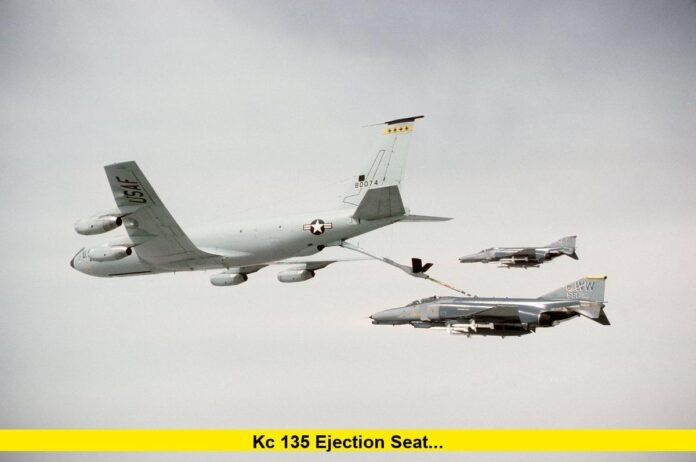

A sudden surge of online searches and social media discussions has pushed the topic of the kc 135 ejection seat into the spotlight. The conversation exploded after news that a U.S. Air Force KC-135 Stratotanker crashed in western Iraq during a recent military operation, prompting questions about how crews escape from the aircraft in emergencies.
The KC-135 is one of the most recognizable aircraft in the U.S. military—a flying refueling tanker that has supported missions for decades. But as details about the incident spread, many people discovered something surprising about the aircraft’s safety design.
The result: a wave of viral posts, aviation discussions, and renewed curiosity about how crews survive emergencies aboard this iconic tanker.
Have you seen the debate online yet? Many readers say they never knew this detail about the aircraft.
Below are five key facts fueling the conversation right now.
What Sparked the Conversation
The renewed attention started after a KC-135 Stratotanker went down in Iraq during a U.S. military mission. Officials confirmed the incident happened in friendly airspace and was not caused by hostile or friendly fire.
Because the KC-135 is commonly used for aerial refueling—supporting fighters and bombers during operations—the aircraft is frequently deployed in active regions.
As soon as reports of the crash surfaced, aviation observers and military watchers began asking a critical question: how do crews escape if something goes wrong in a tanker aircraft?
That question quickly led to viral searches about one specific topic—the kc 135 ejection seat.
The Moment People Realized Something Unexpected
One of the biggest surprises for many readers is that the KC-135 does not actually have ejection seats.
Unlike fighter jets such as the F-16 or F-35, the tanker was never designed with ejection systems for its crew.
Instead, the aircraft was built more like a large transport plane. Its crew typically includes three people:
- Pilot
- Co-pilot
- Boom operator
The boom operator sits in the rear section of the aircraft and controls the refueling boom used to transfer fuel to other planes in flight.
Because of the aircraft’s size and layout, installing traditional fighter-style ejection seats would have been extremely complex.
For many people discovering this detail online, it was a surprising reminder that not every military aircraft uses the same escape technology.
Photos and Clips That Went Viral
Soon after the crash reports spread, aviation videos and cockpit walkthroughs of the KC-135 started circulating across social platforms.
Several clips showing the interior of the aircraft gained attention because they reveal how different the tanker looks compared with fighter jets.
Some of the visuals that caught viewers’ attention included:
- The long cockpit layout similar to a commercial airliner
- The boom operator station positioned in the rear of the aircraft
- The large fuselage used to store massive fuel reserves
Viewers quickly noticed that the cockpit does not contain the distinctive upward-firing ejection seats seen in many combat aircraft.
Instead, the design focuses on stability, range, and fuel capacity—the key requirements for an aerial refueling platform.
These visual comparisons helped explain why escape systems on tanker aircraft differ so much from fighter jets.
What the Aircraft’s Escape System Actually Involves
Since there is no kc 135 ejection seat, the aircraft relies on different emergency procedures.
Historically, crews could exit through an emergency escape hatch located near the front landing gear area of the aircraft.
In earlier decades, parachutes were sometimes carried to support manual bail-out procedures if an emergency occurred during flight.
However, the KC-135 fleet eventually removed onboard parachutes in many configurations, making traditional bailouts extremely rare in modern operations.
That reality is one reason the design of tanker missions focuses heavily on prevention, maintenance, and safe operating procedures.
Because the aircraft typically flies long-duration missions with stable flight profiles, the risk environment differs from high-speed fighter combat.
Still, the absence of ejection seats is something that surprises many people when they first learn about the aircraft.
Why This Topic Is Trending Again
The conversation about the KC-135’s safety design is trending again for several reasons.
First, the aircraft itself remains a critical part of U.S. military operations. The tanker enables fighters, bombers, and surveillance aircraft to stay airborne for extended missions by refueling them mid-flight.
Second, any aircraft incident involving such a well-known platform quickly sparks online curiosity.
And third, aviation fans are increasingly interested in the differences between aircraft types—especially when those differences involve safety systems.
The discussion has also highlighted how military aircraft designs reflect very different missions.
Fighter jets prioritize speed and maneuverability, making ejection seats essential for pilot survival.
Large support aircraft like the KC-135, however, prioritize endurance, payload, and operational range.
Those different priorities explain why escape systems vary widely across the military aviation fleet.
The Bigger Picture
The KC-135 Stratotanker has been in service since the 1950s and remains one of the longest-serving aircraft in the U.S. Air Force inventory.
Over the decades, it has supported countless missions—from Cold War deterrence patrols to modern aerial operations around the world.
Even as newer refueling aircraft enter service, the KC-135 continues to play a vital role as the backbone of aerial refueling operations.
That long history is one reason any incident involving the aircraft quickly draws public attention.
And as recent online discussions show, sometimes the biggest viral moments come from discovering unexpected details about aircraft design.
What do you think about the debate around tanker aircraft safety systems? Share your thoughts and keep following for the latest updates on this developing aviation story.