
Interest in Kathleen Peterson photos remains as intense as ever in 2025, more than two decades after the mysterious death of the Durham, North Carolina business executive. The images, captured by law enforcement on the night of her death in December 2001, remain among the most analyzed pieces of evidence in one of America’s most polarizing true-crime cases.
Forensic investigators, legal analysts, and documentary filmmakers continue to revisit the photographs that first brought the “Staircase case” to global attention. These photos—grim, graphic, and deeply revealing—form the visual backbone of the case that led to novelist Michael Peterson’s 2003 murder conviction and later his 2017 Alford plea.
In 2025, with renewed attention from streaming platforms, true-crime podcasts, and digital archives, the conversation surrounding the photos has resurfaced. New viewers and longtime followers alike continue to question what the images truly reveal about that fateful night.
The Case That Started It All
On December 9, 2001, Kathleen Peterson was found at the bottom of a narrow wooden staircase inside the couple’s upscale Durham home. Her husband, Michael Peterson, placed a frantic 911 call reporting that she had fallen after consuming wine and medication.
When emergency responders arrived, they discovered Kathleen’s body surrounded by extensive blood spatter. The amount and pattern of the blood quickly raised suspicions. Investigators took dozens of photographs documenting the scene, capturing every angle of the stairwell, the blood patterns on the walls, and Kathleen’s injuries.
Those photos would become central to the prosecution’s argument that her death was not accidental, but the result of a brutal beating.
Michael Peterson maintained his innocence, claiming that Kathleen either fell due to alcohol intoxication or suffered a medical event. Prosecutors countered that her injuries were inconsistent with a fall and showed evidence of repeated blunt-force trauma.
At the center of both theories were the images—each photo scrutinized for clues to what really happened that night.
What the Kathleen Peterson Photos Contain
The original case file includes hundreds of photographs taken by crime scene investigators. While many remain sealed or redacted, those introduced as exhibits during the trial provide a detailed forensic record of the scene.
The photos can be grouped into several main categories:
- Scene Overview: Wide-angle shots of the staircase showing blood spatter on multiple steps, walls, and floorboards.
- Body Positioning: Images showing Kathleen’s position at the base of the stairs when first discovered by authorities.
- Injury Documentation: Close-up images of scalp lacerations, bruising, and abrasions used by both sides to support their arguments.
- Evidence Markers: Photographs of specific areas where police collected samples of blood, tissue, and hair for laboratory testing.
Each image was carefully cataloged by the Durham Police Department and introduced in court as evidence during the 2003 trial. For forensic experts, these photos remain the key to understanding the physical realities of the case.
Why the Photos Spark Controversy
The Kathleen Peterson photos are not only central to the investigation but also a source of ongoing ethical and emotional debate. They are highly graphic and deeply personal, showing the violent aftermath of a woman’s death.
Two main arguments shape the public discourse around their existence and accessibility:
- Transparency and Public Interest: Supporters of open access believe that the photos should remain part of the public record. They argue that transparency helps researchers, journalists, and students understand the case’s complexities and ensures accountability in high-profile trials.
- Privacy and Respect: Opponents contend that distributing such sensitive material disrespects the victim and causes distress to surviving family members. Many argue that the graphic nature of the images has led to sensationalism, overshadowing the human tragedy behind the evidence.
The courts have maintained restrictions on the release of certain images, allowing only redacted or limited versions to be used in educational and media contexts.
Where the Photos Exist Today
As of 2025, the official, unredacted Kathleen Peterson photos remain part of the Durham County Superior Court archives. Access is limited to verified legal professionals, academic researchers, and media entities under strict conditions.
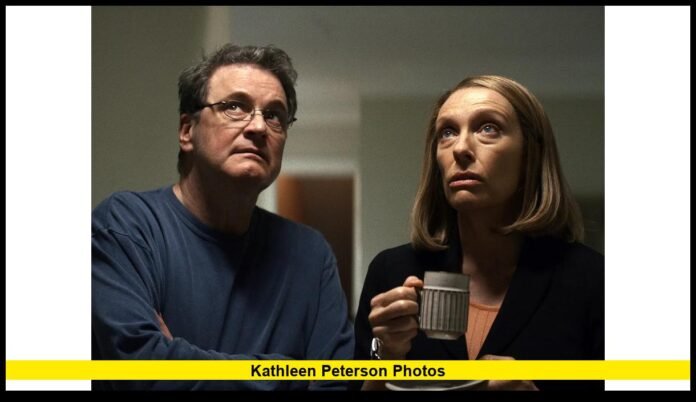
However, select images entered into evidence have been preserved through public trial documentation. These include photographs shown during court proceedings and in documentaries such as Netflix’s The Staircase and HBO’s dramatized adaptation starring Colin Firth and Toni Collette.
Beyond these releases, the full collection has never been made publicly available online or through open databases. Authorities have confirmed that unrestricted distribution of the images remains prohibited under North Carolina law, given their graphic nature and the privacy rights of the Peterson family.
Forensic Insights From the Photos
Over the years, forensic specialists have reexamined the images using modern technology and digital modeling to better understand the case’s physical dynamics.
Notable areas of focus include:
- Blood Pattern Analysis: The spatter seen in the photos indicates multiple impacts and directional flow, but experts disagree on whether this could result from blunt trauma or multiple accidental falls.
- Wound Consistency: The photos show seven lacerations on Kathleen’s scalp. Some experts argue these could result from repeated contact with a hard surface like stairs, while others assert they align more closely with weapon strikes.
- Time Estimation: The visible clotting and drying patterns of the blood have been analyzed to estimate how long Kathleen may have been lying at the bottom of the stairs before emergency responders arrived.
Recent technological advancements, including 3D scene reconstruction, have allowed forensic teams to create detailed digital models using the original photographs. However, even these enhanced analyses have not produced a universally accepted conclusion.
Impact on the Trial and Verdict
The photos’ emotional power played a major role during Michael Peterson’s 2003 trial. Jurors were presented with large-format prints of the images, which prosecutors used to illustrate their theory of a violent attack.
Prosecutors argued that the blood distribution and severity of the wounds depicted in the photos could not have occurred from a simple fall. The defense countered that the extensive bleeding was due to scalp lacerations—injuries that can produce significant blood loss without necessarily being fatal.
Ultimately, the jury found Michael Peterson guilty of murder, and he was sentenced to life in prison. However, after new evidence surfaced questioning the integrity of a prosecution witness, the verdict was vacated in 2011.
In 2017, Peterson entered an Alford plea to voluntary manslaughter—maintaining his innocence but acknowledging that sufficient evidence existed for a conviction. He was released, having already served eight years in prison.
The photographs remained central to every stage of the case, symbolizing both the prosecution’s conviction of guilt and the defense’s insistence on doubt.
Renewed Interest in 2025
The resurgence of The Staircase series on streaming platforms has reignited global interest in the Kathleen Peterson case. Viewers often revisit the photographs featured in the documentaries, sparking new waves of analysis across social media platforms like Reddit, TikTok, and X (formerly Twitter).
Digital forensic experts and amateur sleuths continue to debate what the photos reveal. Some have used modern imaging tools to enhance details, comparing them to reenactments and trial transcripts. Others focus on the emotional impact of seeing such personal tragedy immortalized through evidence.
The renewed discourse reflects how deeply embedded the case has become in American true-crime culture.
Ethical Questions in the Digital Era
In the modern age of viral media and online investigation, the question of how to handle sensitive crime scene images has become even more pressing. The Kathleen Peterson photos highlight this ethical challenge: balancing the public’s right to information with respect for human dignity.
Streaming services, journalists, and academic institutions handling the photos must follow strict editorial standards. Any reproduction or discussion of the images must ensure context, accuracy, and sensitivity.
Experts in digital ethics continue to debate how true-crime storytelling can responsibly present visual evidence without crossing moral lines. The Peterson case serves as a recurring example of how images can both inform and exploit.
Cultural Significance of the Photos
Beyond their forensic value, the Kathleen Peterson photos have become cultural symbols of the true-crime era. They represent how a single set of images can shape narratives, influence public opinion, and blur the lines between fact and interpretation.
The case inspired multiple documentaries, podcasts, and think pieces exploring not just the evidence, but the way media and perception intertwine. Every retelling brings the photos back into focus, ensuring that they remain an indelible part of American legal and media history.
The emotional weight of these images continues to challenge viewers to confront the human cost of sensationalized storytelling.
The Legacy of the Evidence
Decades after Kathleen Peterson’s death, her case endures as one of the most dissected legal stories in modern American history. The photos that documented her final moments continue to influence how both the public and professionals understand the interplay between science, emotion, and justice.
As the digital world continues to archive and analyze the images, they serve as a reminder that evidence is more than just data—it’s a window into lives forever changed by tragedy.
The Kathleen Peterson photos remain at the heart of a case that refuses to fade from public memory — a haunting testament to how a single set of images can shape justice, storytelling, and the search for truth.