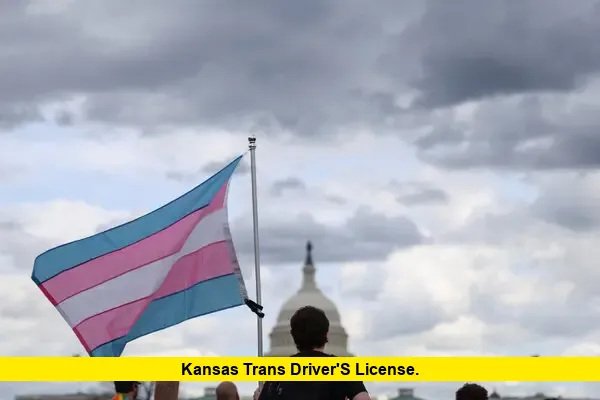

The issue of kansas trans driver’s license policies has become a major legal and administrative focus in the United States, drawing attention to how gender markers appear on state-issued identification. In Kansas, recent government actions, court decisions, and administrative directives have reshaped how transgender residents can update driver’s licenses and identification cards. The topic affects thousands of residents navigating identity documentation, legal compliance, and daily life.
Kansas driver’s licenses serve as a primary form of identification for travel, employment verification, banking, housing, and voting. Changes to gender marker rules therefore carry significant real-world consequences. Over the past year, Kansas officials have implemented policies affecting whether gender markers can be changed and how previously updated licenses are handled.
If this issue impacts you or someone you know, understanding the latest Kansas rules is essential before applying for or renewing identification.
Background: How Gender Marker Changes Worked Before
For years, many states allowed transgender residents to change the gender marker on driver’s licenses after submitting documentation such as:
- Court orders
- Medical certification
- Updated birth certificates
- Passport changes
Kansas historically permitted gender marker updates through administrative processes. Transgender residents could submit documentation and receive a license reflecting their gender identity.
This approach aligned with practices adopted across numerous U.S. states during the 2010s and early 2020s, when identity document updates became more standardized.
Policy Shift in Kansas
Kansas policy changed following actions from state officials interpreting state law governing vital records and identification. The central question involved whether agencies could issue identification reflecting gender identity rather than sex assigned at birth.
Administrative guidance directed the Kansas motor vehicle agency to limit gender marker changes on driver’s licenses. The guidance indicated that identification should reflect sex as recorded in certain state records.
As a result, new requests to change gender markers on Kansas driver’s licenses faced restrictions.
The shift created confusion among residents, advocacy groups, and local offices because procedures that previously existed were no longer applied in the same way.
Legal Disputes and Court Involvement
The policy change quickly led to legal challenges.
Transgender residents and civil rights organizations argued that restricting gender marker changes created barriers to accurate identification and could expose individuals to discrimination or safety risks. They sought court intervention to stop enforcement of restrictions.
Court proceedings addressed several key questions:
- Whether Kansas agencies must allow gender marker updates
- Whether previously updated licenses could remain valid
- How state law should be interpreted regarding sex designation
Judicial rulings and temporary orders influenced how the policy was implemented at different moments, leading to periods where rules shifted again.
These legal developments remain central to understanding the Kansas identification landscape.
Impact on Existing Licenses
One of the most significant concerns involved residents who already changed their gender marker before the policy shift.
State officials examined whether existing licenses could stay unchanged or whether agencies could reverse prior updates. This raised administrative and legal questions about record consistency and individual rights.
The situation created uncertainty for license holders regarding renewals, replacements, and database records.
In practical terms, many residents wanted clarity on whether renewing a license would alter previously updated gender markers.
Administrative Implementation
Motor vehicle offices operate under statewide guidance, but real-world implementation can vary depending on:
- Application type (new license vs renewal)
- Supporting documentation
- Court rulings in effect at the time of application
- Database record requirements
Staff training and internal procedures became important factors in how applications were processed.
Residents often reported needing to check current rules before visiting an office, especially during periods when legal decisions affected policy.
Understanding administrative procedures remains essential for applicants navigating the system.
Broader National Context
Kansas is not alone in revisiting gender marker policies.
Across the United States, states have taken different approaches:
- Some expanded options, including nonbinary “X” markers
- Some simplified self-attestation processes
- Others implemented stricter documentation requirements
- A few states limited gender marker changes
This patchwork creates different experiences depending on where a person lives.
Because driver’s licenses are widely used beyond state borders, changes in one state can affect travel, employment verification, and interactions with federal systems.
Real-Life Effects for Transgender Residents
Identification accuracy affects everyday life in multiple ways.
Residents often rely on matching identification to:
- Pass identity checks
- Avoid being questioned in routine transactions
- Apply for jobs
- Travel domestically
- Interact with law enforcement
When identification does not reflect a person’s gender identity, mismatches can lead to delays, stress, or additional verification steps.
For many individuals, driver’s license policy is not only administrative but deeply practical.
Guidance for Applicants
People seeking a Kansas driver’s license or renewal typically need to prepare standard documentation, including proof of identity, residency, and lawful presence.
Because gender marker rules have changed, applicants are often advised to:
- Review current state guidance before applying
- Bring any relevant legal or identity documentation
- Ask local offices about current procedures
- Monitor legal developments that may affect applications
Preparation can reduce delays or unexpected outcomes during the licensing process.
Ongoing Legal and Policy Developments
The kansas trans driver’s license issue continues to evolve through legal proceedings and administrative updates.
Courts may issue additional rulings affecting:
- Whether gender marker changes must be allowed
- How state records are interpreted
- How agencies handle renewals
- Data consistency across government systems
Policy updates can occur after court decisions, legislative action, or administrative review.
Because identification rules intersect with broader debates over state authority, civil rights, and recordkeeping, changes may continue.
What This Means Going Forward
The Kansas driver’s license policy discussion highlights how identification rules can shift quickly when legal interpretations change.
For residents, the key takeaway is practical awareness. Procedures that existed previously may not apply in the same way today, and application outcomes can depend on current guidance.
For policymakers, the issue reflects broader national debates over documentation standards and state record authority.
For employers, schools, and institutions, understanding identification changes can help avoid confusion when verifying identity.
Why This Issue Draws National Attention
Driver’s license policies often become focal points because they affect everyday access to services.
The Kansas situation has drawn national attention due to:
- Legal disputes involving state officials
- Questions about record accuracy
- Implications for civil rights law
- Differences between state and federal identification standards
As similar debates occur elsewhere, Kansas is frequently cited as part of a wider policy trend.
Key Takeaways
- Kansas adjusted how gender markers are handled on driver’s licenses.
- Legal challenges have influenced implementation.
- Existing license holders have sought clarity on renewals.
- Administrative procedures may change depending on court decisions.
- Applicants should check current guidance before visiting licensing offices.
The conversation around identification policy continues, making awareness essential for residents and institutions alike.
What are your thoughts on Kansas identification rules and their impact on everyday life? Share your perspective or check back for future updates as this story develops.
Stay informed and join the conversation by sharing your experience or questions below.