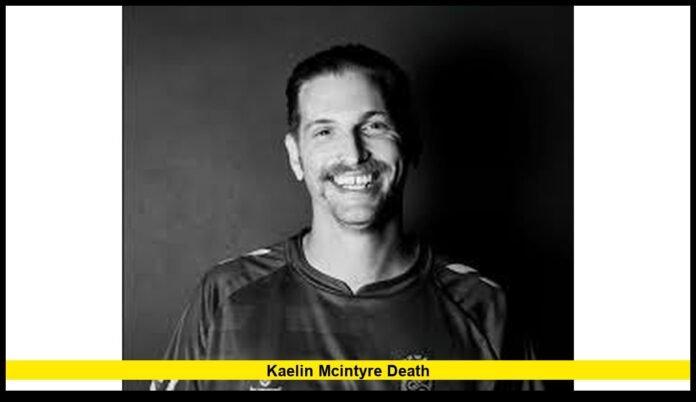

Kaelin McIntyre death has been confirmed, with the former vocalist of Pennsylvania hardcore band CDC remembered by longtime friends, former bandmates, and touring colleagues following the news of his passing on September 10, 2026. Multiple music-industry publications reported his death after CDC member Kurt Fowles shared a tribute to McIntyre. No cause of death has been publicly disclosed in the latest confirmed reports.
McIntyre was known within the hardcore scene for his work with CDC during the band’s early years. After leaving the group in 2006, he continued working in the touring and music industry. His death has prompted an outpouring of grief from people who knew him through years of performances, touring, and life on the road.
Kaelin McIntyre Death Confirmed
Kurt Fowles, a member of CDC and a longtime friend of McIntyre, publicly addressed the loss. His tribute described a friendship that lasted for more than two decades.
Fowles wrote about traveling with McIntyre, sharing stages, experiencing countless nights on the road, and being present for major moments in each other’s lives. His message conveyed the shock surrounding the death and the difficulty of accepting that his longtime friend was suddenly gone.
The circumstances surrounding McIntyre’s death remain undisclosed. As of the latest confirmed reports, there has been no public announcement establishing a cause of death.
That detail is important because several posts and online discussions have circulated since the news broke. However, no verified cause should be attached to his death unless his family or another authoritative source publicly confirms it.
Who Was Gordon “Kaelin” McIntyre?
McIntyre was known professionally and personally as Kaelin. His full name was Gordon “Kaelin” McIntyre.
He became associated with CDC, a Pennsylvania hardcore band, during the group’s early period. His time with the band helped establish his connection to the hardcore community that would remain an important part of his life.
Reports state that McIntyre departed CDC in 2006. After leaving the group, he did not simply disappear from the music world. Instead, he continued working in the touring side of the industry and remained connected to artists and people involved in live music.
That later career became an important part of how friends remembered him after his death.
Rather than being known only as a former vocalist, McIntyre became a familiar figure behind the scenes. Touring requires long hours, constant travel, difficult schedules, and close relationships among the people working together. Tributes following his death emphasized those connections.
McIntyre’s Years With CDC
CDC’s history is closely connected with McIntyre’s name because of his role as a vocalist during the band’s early years.
His period with the Pennsylvania hardcore group ended in 2006, according to reports published after his death. Following his departure, the band continued with changes to its vocal lineup.
Although McIntyre’s time as a vocalist eventually ended, his association with CDC remained part of his identity within the hardcore community.
The significance of that connection became especially clear after his death. Former colleagues did not describe him only in terms of recordings or performances. Their memories focused heavily on the experiences they shared with him away from the stage.
That distinction helps explain why the reaction to his death has been so personal.
For people involved in hardcore music, touring often creates relationships that extend well beyond individual shows. Bands and crews can spend weeks or months traveling together, making friendships that continue long after particular projects end.
McIntyre’s story appears to have followed that path.
Life After Leaving CDC
Following his departure from CDC, McIntyre continued working in music.
Reports describe him as a touring professional who worked with other artists after his time in the band. That work allowed him to remain connected to the live-music world even though he was no longer performing as CDC’s vocalist.
His work also brought him into contact with musicians outside his original circle.
The Acacia Strain guitarist Devin Shidaker was among those who publicly remembered McIntyre following his death. Shidaker specifically referenced McIntyre’s work while touring with the band and thanked him for the role he played on the road.
That tribute provides another indication of how McIntyre remained involved in the touring community after his CDC years.
His career therefore cannot be defined solely by his time as a vocalist. The years that followed his departure from CDC were also part of his identity in the music industry.
Kurt Fowles Remembers His Longtime Friend
One of the most emotional public reactions came from Kurt Fowles.
Fowles described McIntyre as more than a friend and reflected on a relationship that stretched across more than 20 years. He remembered international travel, shared stages, long stretches on the road, and countless personal experiences.
The tribute also made clear how unexpected and difficult the loss was for him.
Fowles said that many parts of his own life were connected to memories involving McIntyre. He recalled the laughter, miles traveled, and experiences they shared before expressing disbelief that his friend was no longer alive.
His message ended with a personal farewell to McIntyre.
The emotional nature of Fowles’ tribute resonated across the hardcore community because it focused on their friendship rather than simply McIntyre’s career history.
It also showed that McIntyre maintained meaningful relationships with people from his earlier years in music.
Devin Shidaker Pays Tribute
Devin Shidaker of The Acacia Strain also shared a tribute following McIntyre’s death.
Shidaker remembered McIntyre for his personality and his work while touring. His message thanked him for being himself, for touring with the band, and for helping create memorable experiences on the road.
The tribute added another perspective to McIntyre’s post-CDC career.
While casual listeners may know him primarily because of CDC, people who worked with him later encountered a different side of his professional life. He had moved from performing in the spotlight to contributing to touring operations and supporting artists on the road.
That role can be demanding and often receives less public attention than performing onstage. Yet the reactions following his death show that the people around him valued his contribution.
What Is Known About the Cause of Death?
The cause of death has not been publicly confirmed.
Reports published on September 10 stated that details surrounding McIntyre’s death had not been released. Subsequent coverage has continued to describe the cause as undisclosed.
There is currently no verified information that establishes what caused his death.
That means claims circulating on social media or in online comment sections should not be treated as established facts unless they receive confirmation from McIntyre’s family, representatives, or another authoritative source.
The lack of a publicly announced cause is not unusual in the immediate aftermath of a death. Families and close friends may choose to keep private circumstances private.
For now, the confirmed information is that McIntyre has died and that members of his music community have publicly mourned him.
Why the News Has Drawn Attention
McIntyre’s death has received attention within the hardcore and heavy-music community because of his long-standing relationships in the scene.
His career involved two distinct but connected roles. He was a vocalist with CDC during the band’s early period, and he later worked behind the scenes as a touring professional.
That combination gave him connections with people across different parts of the music industry.
The reaction has also been shaped by the personal nature of the tributes. Friends have focused on road stories, shared experiences, humor, and years of friendship rather than simply listing career achievements.
For a musician and touring professional, that kind of remembrance can offer a fuller picture of how someone affected the people around them.
McIntyre’s name was familiar to members of the hardcore community, but his influence extended beyond the microphone.
Timeline of McIntyre’s Known Music Career
The publicly confirmed timeline surrounding McIntyre can be summarized simply:
| Period | Confirmed information |
|---|---|
| Early CDC years | McIntyre performed as a vocalist with Pennsylvania hardcore band CDC |
| 2006 | Reports state that he departed CDC |
| Following years | He continued working within the touring and music industry |
| September 10, 2026 | News of his death was publicly reported |
| After his death | Kurt Fowles, Devin Shidaker and others shared tributes |
The available reporting does not provide a complete biography of McIntyre’s life, and many personal details have not been publicly documented.
For that reason, information such as an exact birth date, detailed family history, or a confirmed cause of death should not be added without reliable confirmation.
Tributes Highlight His Personality
The tributes released after McIntyre’s death share a consistent theme: people remembered his personality.
Fowles emphasized the depth of their friendship and the enormous number of experiences they shared.
Shidaker remembered McIntyre’s presence on tour and the humor he brought to those around him.
Those comments suggest that McIntyre’s importance to his peers went beyond his formal job title.
In touring environments, personalities can shape the experience for an entire group. Long trips, changing schedules, unfamiliar cities, and demanding performances can create stressful circumstances. Someone who brings energy and humor into that environment can become an important part of the group’s culture.
The public tributes indicate that McIntyre filled that kind of role for many people.
Fans React to the Loss
Fans also began sharing reactions after news of McIntyre’s death spread online.
Discussions within the Philadelphia music community included messages describing him as a memorable and deeply liked person. Other reactions expressed shock and sadness over the news.
These reactions show that his influence was not limited to musicians who worked directly with him.
Hardcore music has long relied on strong connections between performers, touring crews, local scenes, venues, and fans. People who participate in that community can become recognizable figures even when they are not mainstream celebrities.
McIntyre’s death has therefore been felt most strongly within the community where he spent much of his professional life.
No Further Cause-of-Death Details Confirmed
As of September 14, 2026, the most reliable public reporting continues to leave the cause of McIntyre’s death undisclosed.
There have been no confirmed details that should be presented as an explanation for his passing.
This distinction matters because searches for a recently deceased musician can quickly produce unverified posts. Some websites may repeat claims without identifying where the information originated.
The confirmed record remains narrower: McIntyre died, his death was reported publicly on September 10, and people who knew him have shared tributes.
Until more information becomes available from a reliable source, that is the appropriate factual account.
The Lasting Connection to CDC
Even years after leaving CDC, McIntyre’s name remained connected to the band’s history.
His time with the group represented one chapter of his career, while his later touring work represented another. Together, those experiences gave him a lasting place within the hardcore community.
The reaction from Fowles is especially significant because it demonstrates that the connection did not simply end when McIntyre left the band.
Their friendship continued for decades.
That long relationship is one reason the news has carried such emotional weight for former colleagues. The loss is not being remembered only as the death of a former band member. It is also the loss of a longtime friend and touring companion.
What Happens Next
At this stage, there are no confirmed public details about funeral arrangements, memorial services, or additional official announcements.
That information may become available later if McIntyre’s family or close associates decide to share it.
For now, the focus remains on remembering his contribution to CDC, his work in touring, and the relationships he built throughout the music community.
The absence of a public cause of death also means there is no factual basis for drawing conclusions about what happened.
Future updates should be evaluated carefully, particularly when they originate from social media accounts or unofficial websites.
Kaelin McIntyre’s Legacy
McIntyre’s professional story illustrates how a person’s influence can continue even after leaving the stage.
His work with CDC introduced him to the hardcore community. His later touring career kept him involved with musicians and live performances. The tributes after his death demonstrate that those relationships remained meaningful.
Kurt Fowles’ remembrance centered on decades of friendship. Devin Shidaker’s message focused on McIntyre’s work on the road. Together, the tributes provide a picture of someone whose relationships were as important as his formal career credits.
That is also why his death has generated a strong response despite his work being rooted primarily in the underground music world.
McIntyre was not simply remembered for standing behind a microphone. He was remembered for the people he traveled with, the experiences he shared, and the personality he brought to those relationships.
As the hardcore community continues to process the loss, those memories are likely to remain the central part of how he is remembered.
The latest confirmed information does not provide a cause of death, and no additional explanation should be assumed. What is clear is that Gordon “Kaelin” McIntyre’s death has left friends, former bandmates, touring colleagues, and fans mourning someone who spent much of his life connected to the music community.
Share your memories of Kaelin McIntyre in the comments and stay connected for verified updates as more information becomes available.