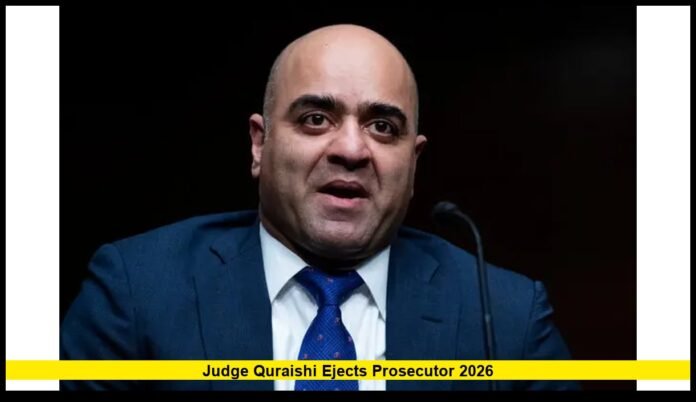

The topic judge quraishi ejects prosecutor is gaining attention in March 2026, but there is no confirmed or documented case showing that U.S. District Judge Zahid Quraishi has removed a prosecutor from a courtroom proceeding.
No Confirmed Courtroom Incident
As of today, March 18, 2026, there are no verified federal court records or publicly documented proceedings indicating that Judge Zahid Quraishi ejected a prosecutor.
A review of available information shows:
- No official court transcripts describing such an event
- No confirmed filings referencing removal of a prosecutor
- No consistent, verified reporting detailing the incident
This means the current online discussion is not supported by confirmed legal developments.
Who Is Judge Zahid Quraishi
Judge Zahid Quraishi serves on the United States District Court for the District of New Jersey. He was confirmed in 2021 and became the first Muslim American federal district court judge in U.S. history.
His legal career includes a range of roles that shaped his experience on the bench:
- Federal magistrate judge prior to elevation
- Assistant U.S. Attorney
- Military service in the U.S. Army Judge Advocate General’s Corps
This background provides him with a broad understanding of courtroom procedures and legal standards.
The Role of a Federal Judge in Courtroom Conduct
Federal judges oversee legal proceedings and ensure that all participants follow the law. Maintaining order in the courtroom is a central responsibility.
Judges are expected to:
- Enforce procedural rules
- Ensure fair treatment of all parties
- Address misconduct when it occurs
They hold authority to take corrective action if attorneys fail to meet professional standards.
Can a Judge Remove a Prosecutor From Court
A federal judge has the legal authority to remove an attorney, including a prosecutor, from a courtroom under certain conditions.
Such action is uncommon and typically follows clear justification.
Situations that may lead to removal include:
- Repeated disruption of proceedings
- Refusal to follow court instructions
- Behavior that undermines the integrity of the trial
Judges often provide warnings before taking such a step.
Standards Prosecutors Must Follow
Prosecutors in federal court must adhere to strict professional and ethical standards. Their role carries added responsibility because they represent the government.
Key expectations include:
- Acting with integrity and fairness
- Following procedural rules
- Respecting the authority of the court
Failure to meet these standards can lead to disciplinary action.
Possible Judicial Responses to Misconduct
Removing an attorney is one of several options available to a judge. Courts typically apply a range of responses depending on the severity of the issue.
Common actions include:
- Verbal warnings during proceedings
- Formal reprimands on the record
- Financial penalties or sanctions
- Contempt of court findings
Removal from the courtroom is usually reserved for serious or repeated violations.
Why This Topic Is Trending Now
The sudden rise in interest around this topic reflects how quickly legal discussions can spread online.
Several factors may explain the trend:
- Misinterpretation of unrelated court cases
- Social media posts lacking context
- Increased public interest in high-profile judges
Even without confirmed facts, such topics can gain traction rapidly.
Understanding Courtroom Authority
Courtroom authority is essential for maintaining order and fairness. Judges must ensure that proceedings remain focused and respectful.
This authority allows judges to:
- Control the pace of the trial
- Address improper conduct immediately
- Protect the rights of all parties involved
These responsibilities apply to both defense attorneys and prosecutors.
What Happens If an Attorney Is Removed
If a judge removes an attorney from a case, the legal process continues with adjustments.
Possible outcomes include:
- Another attorney stepping in to continue the case
- Temporary delays in proceedings
- Additional review of the circumstances
Courts aim to minimize disruption while maintaining fairness.
Importance of Accurate Legal Reporting
Legal matters require careful verification. Court decisions and actions are documented through official records, which provide the most reliable information.
Accurate reporting depends on:
- Court filings and transcripts
- Official judicial statements
- Consistent, verified coverage
Without these sources, claims about courtroom events should be treated cautiously.
Public Interest in Judicial Actions
Stories involving judges and courtroom discipline often attract attention. They highlight the balance between authority and fairness in the legal system.
People are often curious about:
- How judges manage courtroom behavior
- What limits exist on attorney conduct
- How disputes are handled during trials
These questions drive ongoing interest in legal topics.
Current Status of Judge Quraishi’s Court
Judge Zahid Quraishi continues to serve on the federal bench in New Jersey. His work includes overseeing civil and criminal cases within the district.
There are no confirmed reports of unusual disciplinary actions involving him removing a prosecutor.
His role remains consistent with standard judicial duties.
Key Points to Know
- No verified incident confirms that Judge Quraishi ejected a prosecutor
- Federal judges have authority to remove attorneys in rare situations
- The topic is trending without confirmed supporting evidence
- Courtroom discipline follows established legal procedures
These points reflect the most accurate and current information available.
Why Context Matters in Legal Topics
Legal discussions often involve complex procedures and terminology. Without proper context, information can be misunderstood or misrepresented.
Understanding how courts operate helps clarify:
- What actions judges can take
- When those actions are appropriate
- How legal processes are documented
This context is essential for accurate interpretation.
Conclusion
The attention surrounding Judge Quraishi highlights how quickly legal topics can spread online, even without verified events. While judges do have authority to maintain order, there is no confirmed case of a prosecutor being ejected in this instance.
What are your thoughts on how judges should handle courtroom misconduct? Share your perspective and stay informed on verified legal updates.