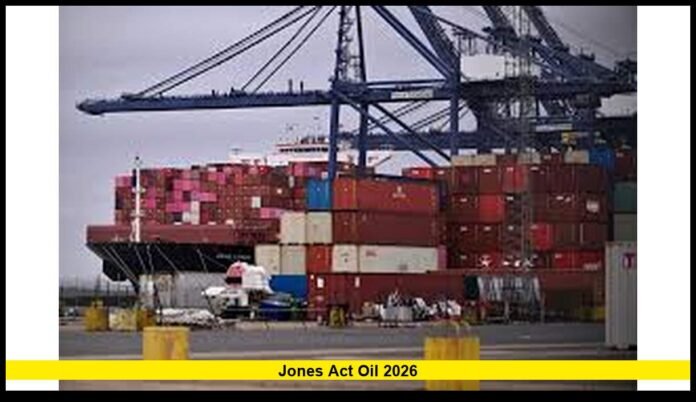

The jones act oil issue remains a key topic in March 2026, with the law still fully enforced and continuing to influence how crude oil and refined fuels move across the United States.
Understanding the Jones Act in Simple Terms
The Jones Act is a federal law passed in 1920 that regulates maritime trade between U.S. ports. It requires that any goods shipped between domestic ports must be transported on vessels that meet strict criteria.
To qualify, ships must be:
- Built in the United States
- Owned by U.S. companies
- Registered under the U.S. flag
- Crewed primarily by American workers
These requirements directly affect oil transportation. Any movement of crude oil or petroleum products between U.S. ports must follow these rules.
Why the Law Matters for Oil Movement
The United States produces large volumes of oil, especially from regions like the Gulf Coast. However, moving that oil to other parts of the country is not always simple.
Shipping oil by sea between U.S. ports can be limited by the number of compliant vessels. This creates a unique challenge in balancing supply and demand across regions.
As a result, energy companies often rely on:
- Pipelines to move crude oil inland
- Rail systems for flexible transport
- Imports from foreign sources when domestic shipping costs are higher
This dynamic keeps the Jones Act central to energy logistics.
Current Status as of March 2026
As of today, March 18, 2026, the Jones Act remains unchanged. No new federal legislation has modified its core requirements for oil transportation.
Key updates include:
- No active nationwide waiver affecting oil shipments
- Existing rules continue to govern domestic maritime transport
- Federal agencies retain authority to issue temporary waivers when needed
This means oil companies must continue operating within the same regulatory framework.
Limited Availability of Jones Act Vessels
One of the most significant challenges tied to the law is the limited number of eligible ships.
Building vessels in the United States is more expensive than constructing them overseas. This has led to a smaller fleet of compliant tankers.
Important factors include:
- High construction costs for U.S. shipyards
- Limited shipbuilding capacity
- Higher operating expenses for U.S.-flagged vessels
Because of these constraints, shipping oil domestically by sea can be more costly than using foreign vessels for international routes.
How This Affects Oil Prices
Transportation costs play a role in determining fuel prices. When it costs more to move oil within the country, those expenses can influence market pricing.
In some cases:
- East Coast regions may import oil instead of receiving domestic shipments
- Price differences can emerge between regions
- Refineries adjust sourcing based on cost efficiency
While the Jones Act does not directly set fuel prices, it shapes the logistics behind supply.
Regional Impact Across the United States
Different parts of the country experience the effects of the Jones Act in distinct ways.
Gulf Coast
- Major hub for oil production and refining
- Less dependent on long-distance shipping
Northeast
- Limited local production
- Higher reliance on imported oil due to shipping costs
West Coast
- Geographic distance from other regions
- Greater dependence on maritime transport and imports
These regional differences highlight how transportation rules can influence supply patterns.
When Waivers Come Into Play
The federal government can temporarily waive Jones Act requirements under certain conditions. These waivers allow foreign vessels to transport goods between U.S. ports.
Waivers are typically issued during:
- Hurricanes that disrupt Gulf Coast production
- Severe winter weather increasing fuel demand
- National emergencies affecting supply chains
These actions aim to stabilize energy supply and prevent shortages.
However, waivers are short-term solutions. Once the emergency ends, standard rules return.
Balancing National Security and Economic Efficiency
Supporters of the Jones Act argue that it strengthens national security. They believe the law ensures the U.S. maintains a reliable maritime industry.
Key arguments in favor include:
- A steady pool of trained American mariners
- Domestic shipbuilding capabilities
- Reduced reliance on foreign shipping during crises
From this perspective, the law protects critical infrastructure, including energy transport.
Critics, on the other hand, focus on economic concerns. They argue that the law increases costs and limits flexibility.
Ongoing Debate in Energy Policy
The jones act oil discussion continues to play a role in policy conversations. Lawmakers, industry leaders, and analysts often debate whether reforms are needed.
Common proposals include:
- Expanding the use of waivers
- Adjusting vessel requirements
- Encouraging growth in domestic shipbuilding
Despite these discussions, no major legislative changes have been enacted as of 2026.
Alternative Transportation Methods
Because of the limitations of maritime shipping, other methods play a major role in moving oil.
Pipelines
- Provide continuous and cost-effective transport
- Connect major production areas to refineries
- Reduce reliance on shipping
Rail
- Offers flexibility in routing
- Useful when pipelines are unavailable
- Typically more expensive than pipelines
These alternatives help balance the limitations created by shipping regulations.
Impact on Energy Independence
The United States has increased its oil production over the past decade. However, transportation remains a key factor in achieving full energy efficiency.
The Jones Act influences how easily domestic oil can reach different regions. In some cases, logistical challenges lead to continued reliance on imports.
This creates a complex relationship between production and distribution.
Industry Perspective
Energy companies must navigate both market conditions and regulatory requirements. The Jones Act is one of several factors shaping their decisions.
Companies often evaluate:
- Cost differences between domestic and imported oil
- Availability of compliant shipping vessels
- Infrastructure options such as pipelines and storage
These decisions directly affect how oil flows across the country.
Key Facts at a Glance
- The Jones Act regulates domestic maritime shipping
- Oil transported between U.S. ports must use compliant vessels
- The law remains unchanged as of March 2026
- Waivers are temporary and used during emergencies
These points define the current landscape of oil transportation.
Why the Issue Remains Relevant
Energy demand remains high across the United States. Efficient transportation is essential for maintaining stable supply.
The Jones Act continues to influence:
- Fuel availability in different regions
- Transportation costs within the energy sector
- Policy discussions about infrastructure and security
As long as these factors remain important, the debate will continue.
Looking Ahead
Future developments could shape how the law affects oil transportation. Changes may come through policy decisions or shifts in the energy market.
For now, the framework remains the same. Oil companies, policymakers, and consumers continue to operate within existing rules.
Conclusion
The Jones Act remains a central part of how oil moves across the United States. Its impact reaches beyond shipping, influencing costs, supply chains, and national policy discussions.
Do you think the Jones Act helps or hinders U.S. energy efficiency? Share your thoughts and stay updated on future developments.