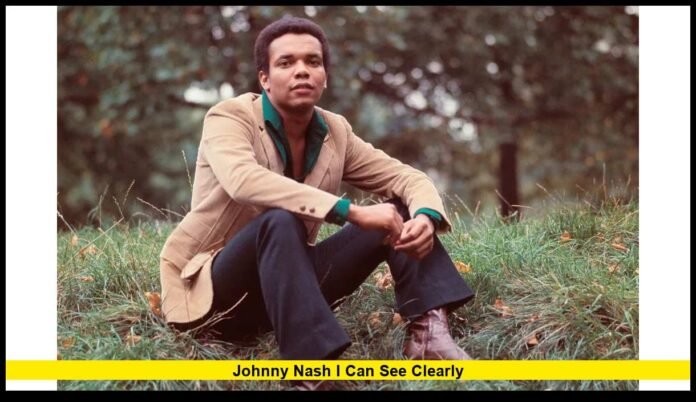

More than fifty years after its debut, Johnny Nash I Can See Clearly remains one of the most uplifting songs ever recorded. The melody, filled with light and warmth, continues to inspire hope across generations. In 2025, its message feels as fresh as the day it was released, echoing through streaming platforms, film soundtracks, and playlists celebrating positivity and resilience.
This song, with its unforgettable rhythm and pure optimism, has transcended decades, genres, and borders — reminding listeners that the sun always shines again after the storm.
The Beginning of a Musical Journey
Johnny Nash, born in Houston, Texas, in 1940, began performing at a young age. By the late 1950s, he had become one of the first African American artists to appear regularly on national television. With a smooth tenor voice that blended soul, pop, and R&B influences, Nash was poised for greatness.
In the 1960s, he traveled to Jamaica, where he discovered reggae and fell in love with its sound. It was a musical turning point. At a time when few American artists were working with Jamaican musicians, Nash embraced the island’s rhythm and began recording in Kingston.
He formed deep friendships with local artists, including Bob Marley, and co-founded JAD Records, a label that helped promote reggae internationally. That collaboration would soon shape one of the most enduring songs of all time.
How a Simple Song Became a Global Anthem
In 1972, Nash wrote and recorded I Can See Clearly Now. The song reflected his personal sense of renewal — a moment of clarity after a difficult period. The music captured the relaxed essence of Jamaica while keeping a universal pop appeal.
When the track was released in October 1972, it struck a chord with listeners immediately. Its combination of smooth vocals, bright guitars, and steady reggae rhythm felt both soothing and energizing. By November, the single had reached No. 1 on the Billboard Hot 100 in the United States, where it stayed for four consecutive weeks.
It also reached the top spot in Canada and the top ten in the United Kingdom. For months, radio stations across the U.S. played it daily. Its blend of joy and simplicity provided the perfect soundtrack for a changing world, one emerging from social unrest and cultural transformation.
The Heart Behind the Music
The song’s lyrics are a direct reflection of Nash’s personal outlook on life. Lines such as “Gone are the dark clouds that had me blind” and “It’s gonna be a bright, bright, sunshiny day” express gratitude and relief.
The message is one of seeing clearly after struggle — a universal experience that continues to resonate. Nash himself described the song as a reflection of finding peace and clarity after hardship. Rather than focusing on sadness, it celebrated healing.
Musically, the song’s arrangement balanced simplicity with beauty. The light percussion, gentle guitar strumming, and subtle horn accents built a soundscape that mirrored the lyrics — soft at first, then full of brightness and motion.
That harmony between music and message is what makes the track timeless. Every note feels like a sunrise.
Cultural Impact and Chart Longevity
I Can See Clearly Now was more than just another hit — it was a turning point in American pop music. It brought reggae-inspired rhythm into the mainstream, paving the way for other artists to explore the genre.
The song’s success also solidified Nash’s place as one of the first Americans to record reggae in Jamaica and achieve worldwide success.
In the years following its release, the song continued to chart around the world. It re-entered music rankings several times through reissues and covers, each generation rediscovering its optimism. Its appeal stretched far beyond its original audience, finding a place in movie soundtracks, commercials, and motivational playlists.
Even now, it remains one of the most played classics on American radio and digital streaming services.
A Signature of Hope Across Media
Throughout the decades, I Can See Clearly Now has appeared in films, television shows, and advertising campaigns — always during moments meant to inspire joy and transformation. Its bright melody and lyrics make it a natural choice for scenes of triumph, change, or new beginnings.
Perhaps the most famous revival came in 1993 when Jamaican singer Jimmy Cliff recorded his own version for Disney’s Cool Runnings. The film, based on Jamaica’s first Olympic bobsled team, used the song during its closing moments, perfectly capturing its message of perseverance and optimism.
Cliff’s version reached the Top 20 on the Billboard Hot 100 and introduced the song to a younger generation. It also helped reconnect the song to its reggae roots, creating a beautiful link between the two artists and the cultures they represented.
In the years since, the song has been featured in countless television programs and ad campaigns promoting positivity and renewal — a true testament to its lasting influence.
Streaming Success in the Modern Age
The digital revolution has given I Can See Clearly Now a second life. On streaming platforms, the song continues to thrive among listeners of all ages.
On Spotify, Nash’s version has amassed more than 400 million streams, while YouTube videos featuring the song have collected hundreds of millions of views. The track regularly appears in playlists under categories such as “Feel Good Classics,” “Morning Motivation,” and “Songs That Make You Smile.”
Younger listeners often discover the song through social media trends. It has been used in thousands of TikTok and Instagram videos celebrating life milestones, recovery stories, and simple moments of happiness. The connection between past and present through digital platforms keeps Nash’s legacy alive for a new generation. Johnny Nash I Can See Clearly
Johnny Nash’s Legacy in 2025
Although Johnny Nash passed away in October 2020 at the age of 80, his influence continues to grow. His work laid the foundation for pop-reggae fusion, a genre that would later influence artists worldwide.
In 2024, music historians and cultural organizations in the United States celebrated the 52nd anniversary of I Can See Clearly Now with tribute performances and digital remasters. The reissued version, featuring enhanced sound quality, climbed into Spotify’s trending charts once again.
In Jamaica, where much of Nash’s career blossomed, music festivals in 2025 continue to honor his contribution to the global spread of reggae. His early collaborations with Bob Marley and The Wailers are recognized as key moments in music history.
His legacy is one of quiet strength and creative vision — proof that kindness, optimism, and artistry can cross all boundaries. Johnny Nash I Can See Clearly
Why the Song Still Matters Today
In 2025, the world feels more connected than ever — yet it also faces challenges that can often seem overwhelming. That’s one reason I Can See Clearly Now continues to resonate so deeply. Its message of clarity after confusion offers comfort and encouragement for anyone navigating uncertain times.
The song’s simplicity is what makes it powerful. There’s no complex story, no dramatic buildup — just the pure expression of relief when the storm passes and the sky clears.
Listeners describe it as a song that instantly changes their mood, one that makes even an ordinary day feel a little brighter. Whether it’s played at a family gathering, during a drive, or through headphones on a quiet morning, it always brings the same feeling: peace.
Influence on Modern Artists
Many contemporary musicians credit Johnny Nash for paving the way for cross-genre experimentation. His ability to merge pop with reggae without losing authenticity inspired later artists such as UB40, Sting, and Jason Mraz.
Nash proved that reggae’s rhythm and message could belong anywhere — not just in Jamaican music circles but in the heart of American pop. His gentle approach to songwriting also influenced generations of lyricists who sought to blend storytelling with simplicity. Johnny Nash I Can See Clearly
In 2025, several younger artists have performed live renditions of I Can See Clearly Now in tribute concerts, proving that its universal message continues to inspire creativity.
A Song That Stands the Test of Time
Half a century later, the world still turns to I Can See Clearly Now for hope. Its melody feels as bright today as it did in 1972, and its lyrics remain a source of strength for millions. Johnny Nash I Can See Clearly
Both Johnny Nash and his music symbolize resilience — the idea that clarity and happiness come from within. The fact that the song still charts, streams, and resonates globally is proof that true art doesn’t fade; it grows.
For Americans and fans around the world, it’s more than just a tune from another era — it’s a promise that life always finds a way to shine again.
Johnny Nash’s timeless voice reminds us that every storm eventually clears. What memories or emotions does this classic bring to you? Share your thoughts below and join the conversation.