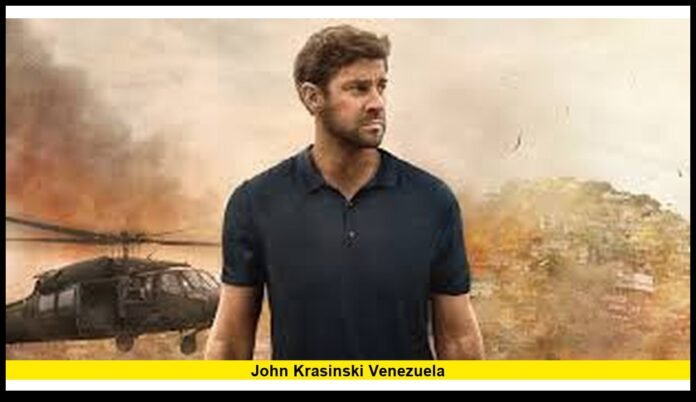

John Krasinski Venezuela became a prominent search topic after the American actor starred in a high-profile television series that placed Venezuela at the center of a dramatic global intelligence storyline, creating a lasting association between the Hollywood star and the South American nation in public discussion, media analysis, and online search behavior.
John Krasinski is widely recognized for his evolution from comedic television roles to dramatic performances, directing, and producing. However, his most visible connection to Venezuela did not come from political involvement, travel, or activism. Instead, it emerged through entertainment, storytelling, and the reach of a globally streamed series that used Venezuela as a critical narrative setting. That creative choice sparked widespread discussion in the United States and abroad, giving the phrase “John Krasinski Venezuela” long-term relevance that continues today.
The Origin of the John Krasinski Venezuela Connection
The association between John Krasinski and Venezuela originated with the second season of the political action thriller series Tom Clancy’s Jack Ryan. In this season, Krasinski portrays Jack Ryan, a CIA analyst whose work shifts from desk analysis to direct involvement in complex international crises. The season’s storyline centers heavily on Venezuela, making the country a key driver of the plot rather than a peripheral backdrop.
This narrative choice marked a significant departure from the series’ earlier focus on other global regions. By placing Venezuela at the heart of the story, the show introduced millions of U.S. viewers to a fictionalized version of the country shaped by political tension, secrecy, and high-stakes intelligence operations. Because Krasinski was the lead actor and public face of the series, his name became inseparable from the storyline’s setting in the minds of audiences.
The result was a surge in public interest that extended well beyond the show’s release window.
How Venezuela Was Portrayed in the Series
In the series, Venezuela is depicted as a nation undergoing severe political strain, internal instability, and international scrutiny. The fictional government shown on screen faces allegations of corruption, misuse of authority, and covert military ambitions. These elements form the foundation of the season’s suspense and action, drawing Jack Ryan into an investigation that gradually escalates from financial irregularities to threats with global implications.
The storyline presents Venezuela as strategically significant due to its resources, political position, and vulnerability to international manipulation. This portrayal serves the narrative needs of a political thriller, heightening urgency and danger while giving the protagonist clear motivations. While fictional, the depiction borrows recognizable elements from real-world geopolitical tensions, which increased its impact on viewers.
For many American audiences, this dramatized narrative became one of their most vivid exposures to Venezuela as a topic.
Audience Reception in the United States
Within the United States, the season featuring Venezuela attracted significant attention and viewership. John Krasinski’s performance was widely discussed, with many viewers noting his continued transformation into a convincing action-drama lead. His portrayal of Jack Ryan emphasized restraint, analytical thinking, and moral conflict, distinguishing the character from more traditional action heroes.
The Venezuela-centered storyline sparked discussion across social media, entertainment commentary, and online forums. Some viewers praised the series for its intensity and relevance, while others questioned how fictional storytelling influences perceptions of real nations. These conversations contributed to the sustained visibility of the phrase “John Krasinski Venezuela” in search trends.
Regardless of viewpoint, the season succeeded in keeping audiences engaged and talking long after its release.
International Reaction and Political Sensitivity
Outside the United States, reactions to the Venezuela-focused season were more complex. Officials within Venezuela publicly criticized the series at the time of its release, arguing that it portrayed the country unfairly and reinforced negative stereotypes. These responses reflected broader concerns about how Western entertainment depicts nations experiencing political or economic challenges.
The criticism itself became part of the global conversation, further amplifying attention around the show and its star. Although John Krasinski was not responsible for writing or political framing, his position as lead actor placed him at the center of the controversy by association.
This moment highlighted how fictional narratives can intersect with real-world sensitivities, even when no political intent exists.
John Krasinski’s Public Statements
During interviews conducted around the release of the season, John Krasinski addressed questions regarding the show’s geopolitical themes. He consistently emphasized that the series is a work of fiction designed for entertainment. He explained that the focus was on storytelling, character development, and suspense rather than political messaging.
Krasinski avoided taking political positions related to Venezuela and did not present himself as an authority on the country’s real-world situation. His comments underscored the distinction between portraying a fictional narrative and endorsing any real political viewpoint.
This clarity helped reinforce that his connection to Venezuela was professional and narrative-based, not ideological.
Filming Reality Versus On-Screen Setting
Despite Venezuela’s central role in the storyline, the production did not film within the country. Instead, other locations were used to represent Venezuelan environments. This approach is standard in international television production, especially when logistical or security concerns are present.
John Krasinski did not travel to Venezuela for the series, and there is no verified record of him visiting the country in connection with the show. The environments seen on screen were constructed through location selection, set design, and visual effects.
Understanding this production reality is important in separating fiction from real-world engagement.
Why the Topic Remains Relevant Years Later
Even years after the season aired, interest in the John Krasinski Venezuela connection persists. The topic resurfaces during discussions about media representation, political thrillers, and the cultural influence of streaming platforms. It also appears when Krasinski’s career milestones prompt renewed attention to his past work.
The longevity of this interest reflects the scale and reach of the series rather than ongoing developments. No new projects or activities have expanded Krasinski’s involvement with Venezuela since that time.
Still, the original impact continues to echo in public conversation.
John Krasinski’s Career Evolution After the Series
Following Jack Ryan, John Krasinski continued to broaden his professional portfolio. He returned to directing, took on diverse acting roles, and remained active as a producer. His projects span genres ranging from drama to family-friendly entertainment, showcasing his versatility.
Notably, none of his confirmed recent work involves Venezuela as a subject or setting. His career trajectory demonstrates movement away from geopolitically focused narratives toward a wider range of creative endeavors.
Despite this shift, the visibility of Jack Ryan ensures that the Venezuela connection remains part of his public legacy.
Entertainment, Perception, and Cultural Impact
The John Krasinski Venezuela association illustrates how entertainment can shape perception on a large scale. A fictional storyline, delivered through a popular streaming platform and anchored by a recognizable actor, can influence how audiences think about real places.
For many viewers, the series became a reference point for understanding Venezuela, even if that understanding was filtered through dramatization. This underscores the importance of media literacy and awareness when consuming fictional content rooted in real-world settings.
Krasinski’s role highlights the unintended cultural reach of performance.
Separating Fact From Fiction
It is essential to distinguish between confirmed facts and assumptions. John Krasinski has not engaged in political advocacy, humanitarian missions, or diplomatic activity related to Venezuela. His connection to the country exists solely through a scripted television role.
No verified updates indicate new involvement, travel, or commentary linking him to Venezuela in recent years. Any claims beyond this context should be approached with caution.
Accuracy ensures responsible discussion and prevents misinformation.
Current Status as of Today
As of today, John Krasinski has no active or confirmed projects connected to Venezuela. His professional focus remains on film, television, and production work unrelated to the country.
The association persists primarily as a historical outcome of a successful television series. While the phrase “John Krasinski Venezuela” continues to appear in search queries, it reflects past storytelling rather than present-day activity.
This clarity helps readers understand the full context.
Why This Topic Continues to Matter
The enduring interest in John Krasinski Venezuela speaks to the power of storytelling in shaping global awareness. It demonstrates how a single season of television can create long-lasting associations that outlive the original release.
For U.S. audiences, the topic remains a point of reflection on how entertainment portrays international issues and how those portrayals resonate over time.
The story of John Krasinski Venezuela shows how fiction can leave a lasting cultural footprint—share your perspective and join the conversation below.