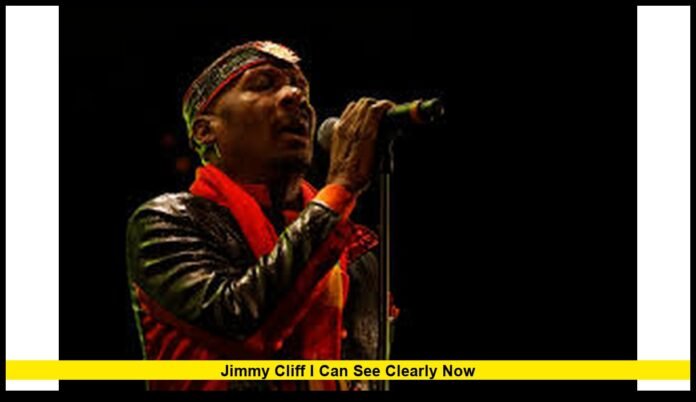

From the moment the opening chords of I Can See Clearly Now filled the speakers, the spirit of freedom and resilience found a voice—and one that echoed through the career of Jimmy Cliff. The Jamaican legend — whose life spanned from July 30, 1944 to November 24, 2025 — was a cultural powerhouse who transformed reggae from local rhythm into a global movement. His version of I Can See Clearly Now became a defining moment in his trajectory and continues to resonate long after his passing.
Bold career roots and a musical breakthrough
Born James Chambers in St. James Parish, Jamaica, he grew up amid economic hardship. As a teenager, he moved to Kingston, determined to carve out a space in the music scene. His early days saw him recording ska and rocksteady tracks, but the shift toward reggae allowed his voice to rise in clarity and message.
By the late 1960s and early 1970s, his recordings began to attract international attention. The 1972 film The Harder They Come, in which he starred, placed Jamaican culture, music and social commentary on a global stage. That film helped set the stage for audiences worldwide to hear his distinctive tenor and to feel the pulse of his rhythmic storytelling.
But it was the 1993 cameo of I Can See Clearly Now on the soundtrack of the Hollywood film Cool Runnings that brought a fresh surge of attention. The track bridged audiences: those already familiar with his earlier work and those discovering him for the first time through that upbeat, hopeful anthem of vision regained.
Transformative moments and key milestones
Throughout his more than six decades in the industry, Jimmy Cliff experienced and influenced major shifts:
- 1960s: Emerging as a young Jamaican singer, recording, writing and performing in Kingston’s vibrant studios.
- 1970s: Achieving global visibility through film and hits like “Many Rivers to Cross” and “You Can Get It If You Really Want”.
- 1993: With I Can See Clearly Now, soaring again in the U.S. and internationally, reaching new listeners beyond reggae’s usual audience.
- 2010: Being inducted into the Rock & Roll Hall of Fame, marking his lasting influence.
- 2022: Releasing one of his final albums, continuing to advocate for music with message.
- 2025: Passing away at age 81, following a seizure and pneumonia, leaving behind a formidable legacy.
That timeline shows an artist who never stopped evolving, never settled for being pigeonholed, yet always remained rooted in his Jamaican heritage.
Why I Can See Clearly Now became more than a hit
When one hears the phrase I Can See Clearly Now, the association with that uplifting, reggae-inflected cover by Jimmy Cliff is immediate. It’s not simply that the song charted—it’s how it captured a feeling of clarity after struggle, and how Cliff’s voice conveyed honest emotional strength. For U.S. audiences, the film tie-in helped embed the song in pop-culture memory: it wasn’t just a song—it was a moment.
What made it connect:
- A melody that felt familiar but re-arranged in reggae rhythm, accessible to broad listeners.
- Lyrics full of renewal and hope, resonating across cultures.
- Cliff’s performance: warm, spirited, authentic.
- A film placement that granted exposure beyond reggae’s typical channels.
All of this meant the song became, for many in the U.S., the way they first heard Jimmy Cliff. And following that introduction, many discovered his back-catalog and the deeper roots of his musical journey.
Impact on American listeners and diaspora culture
For American listeners, the reach of Jimmy Cliff was significant:
- His music found its way into college radio, film soundtracks, streaming playlists and sampling by newer artists.
- Jamaican-American and Caribbean-diaspora communities heard in his music both cultural pride and a global voice.
- Younger generations, even if unaware of the deeper reggae history, connected with I Can See Clearly Now as a positive anthem at weddings, events, graduations.
- Reggae festivals and tribute nights across U.S. cities regularly highlighted his work, ensuring the younger audience saw him as not only historic, but relevant.
His impact also extended beyond pleasure: in interviews and biographies he emphasized musical freedom, social justice, and uplift. His music said, implicitly and explicitly, that clarity and change were possible even from humble beginnings.
A closer look at his enduring legacy
What does Jimmy Cliff leave behind?
- Genre fusion: He bridged ska, rocksteady, reggae, soul, pop. His versions of pop-oriented songs layered reggae rhythm without compromising lyrical depth.
- Global citizenship: Beyond Jamaica, his music and film roles carried Caribbean culture to Europe, Africa and the Americas.
- Longevity: Few artists record actively for more than 50 years and still matter across five decades.
- Inspirational narrative: The story of a boy from rural Jamaica rising to international fame aligns with the optimism of I Can See Clearly Now.
- Film & visual culture: He understood the power of film and media to amplify music—his role in The Harder They Come remains iconic.
- Cross-generational reach: Baby-boomers, Gen X, millennials, Gen Z all can encounter his music via different touchpoints.
In the U.S., this legacy means that every time his familiar voice echoes on a soundtrack, streaming service, tribute concert or playlist, it reinforces that reggae’s history is not just Jamaican history—but global history. And his version of I Can See Clearly Now stands as a key portal.
Honoring the man behind the music
Beyond the records and concerts, Jimmy Cliff carried a persona of approachability and resilience. He often said that his fans were his strength. His wife, Latifa Chambers, credited fans around the world for supporting him throughout his career. His journey from street-singing in Kingston to global stages instills a sense of authenticity: he didn’t just sing about redemption—he lived it.
For U.S. music culture, his passing marks not only the loss of a voice but the closing of a chapter of reggae’s global expansion. Still, it also prompts renewed listening, deeper catalog exploration, and live-event tributes across America.
What U.S. fans can do now
If you’re in the U.S. and want to engage with Jimmy Cliff’s work:
- Re-listen to his version of I Can See Clearly Now and compare it with earlier versions to appreciate its distinct character.
- Dive into his catalogue: songs like “Many Rivers to Cross,” “You Can Get It If You Really Want,” and “Wonderful World, Beautiful People” show his full range.
- Explore the film The Harder They Come to see his acting and cultural role.
- Share his music with younger listeners—its themes of hope, clarity and change resonate widely.
- Support reggae-themed events, playlists or tribute nights in your city—his legacy lives in live performance as much as it does in streaming.
A closing note on his legacy and the anthem
When a single song becomes shorthand for an artist’s legacy, it carries both weight and responsibility. Jimmy Cliff’s version of I Can See Clearly Now is that song for millions of listeners. But the full story stretches deeper: dozens of albums, decades of collaborations, cultural milestones, and a voice that never flinched from message or melody.
For U.S. fans and new listeners alike, his work offers both a starting point and an invitation—to look beyond the hit, to appreciate the journey, to feel the rhythm, and to connect with music that believed – genuinely believed – that clarity, joy, and renewal were possible.
Let’s keep the conversation going: tell us which song of his moved you most, or how his music has appeared in your life.