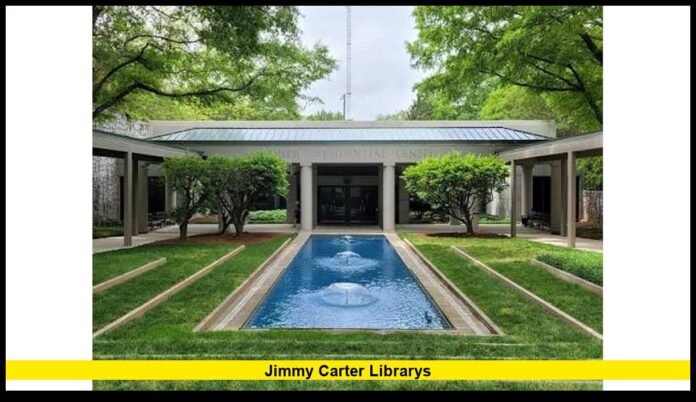

The jimmy carter library in Atlanta, Georgia, preserves the history of the 39th president of the United States through historical exhibits, presidential documents, photographs, and archival collections. The institution offers visitors a closer look at Jimmy Carter’s journey from a small Georgia farming community to the White House, his diplomatic efforts during a turbulent period in American history, and his decades of humanitarian work after leaving office. For students, researchers, and history enthusiasts, it provides an opportunity to understand the events that shaped Carter’s presidency and the principles that influenced his public service.
Jimmy Carter served as president from 1977 to 1981 and remained active in humanitarian initiatives for decades afterward. He died on December 29, 2024, at the age of 100, leaving behind a public record that continues to generate interest among historians and visitors. His presidential museum helps preserve that record while presenting the achievements, controversies, and challenges of his administration in historical context.
Key Points Summary
╔════════════════════════════════════════════════════════════════════╗
║ – The Jimmy Carter Presidential Library and Museum is located in Atlanta, Georgia, and preserves records from Carter’s presidency. ║
║ – The museum explores Carter’s early life, political career, White House years, and humanitarian activities. ║
║ – Major historical subjects include the Camp David Accords, the Panama Canal treaties, and the Iran hostage crisis. ║
║ – The presidential archives provide important primary-source material for researchers studying American government and foreign policy. ║
║ – Jimmy and Rosalynn Carter established The Carter Center in 1982 to advance peace, health, and human rights. ║
║ – Visitors should confirm current admission prices, opening hours, research requirements, and special programs before planning a trip. ║
╚════════════════════════════════════════════════════════════════════╝
What Is the Jimmy Carter Presidential Library and Museum?
The Jimmy Carter Presidential Library and Museum is part of the United States presidential library system administered by the National Archives and Records Administration. Its purpose extends beyond displaying historical artifacts. It preserves government records and other materials associated with Carter’s administration while helping the public understand the political, economic, and international circumstances of his presidency.
Presidential libraries play a distinctive role in American historical research. They collect and preserve records that document how presidents and their administrations conducted government business. These materials can help researchers examine policy discussions, diplomatic communications, executive decisions, and relationships between the White House and other institutions.
The museum presents selected elements of that history in a format accessible to general audiences. Visitors can explore Carter’s background, his election in 1976, major decisions made during his presidency, and the public service that followed his departure from Washington.
The institution is particularly valuable because Carter’s career covered several different periods of American life. His experiences included the political consequences of Watergate, Cold War diplomacy, economic uncertainty during the 1970s, and the growth of international humanitarian organizations during the decades that followed.
By bringing these subjects together, the museum helps visitors understand Carter as both a president and a public figure whose influence continued after his administration ended.
Where Is the Museum Located?
The presidential library and museum stands at 441 John Lewis Freedom Parkway NE in Atlanta, Georgia. Located a short distance from downtown Atlanta, the facility occupies landscaped grounds associated with the Carter Presidential Center campus.
The campus also houses The Carter Center, the nonprofit organization founded by Jimmy and Rosalynn Carter in 1982. Although the two institutions are located in the same broader complex, they serve different purposes. The presidential library focuses on historical records and museum exhibits, while The Carter Center conducts programs involving conflict resolution, public health, election observation, and human rights.
Visitors should distinguish between the two when planning a visit because their programs, facilities, and access arrangements may differ.
Atlanta’s connection to Carter makes the location especially meaningful. Georgia was central to his personal development, political career, and public identity. The museum preserves that connection while placing his experiences within the wider history of the United States.
Opening Hours, Admission, and Visitor Information
Visitors planning a trip should check the museum’s current schedule and admission requirements before traveling. Opening hours, ticket prices, holiday arrangements, and access policies can change.
Previously published visitor information has listed general museum hours as Monday through Saturday, from 9:30 a.m. to 4:30 p.m. Admission information has listed adult tickets at $12, with discounted admission of $10 for eligible seniors, students with identification, and military visitors. Children ages 16 and younger have been listed for free admission.
These figures are useful as general planning references, but visitors should confirm that they remain in effect before making arrangements.
The research library operates differently from the public museum. Researchers typically need to arrange appointments and follow established procedures to consult archival collections. Access to individual records may also depend on preservation requirements, privacy considerations, and applicable restrictions.
For visitors primarily interested in the exhibits, advance preparation can help make the experience more enjoyable. Those conducting academic research should identify relevant collections and contact the institution before arriving.
Jimmy Carter’s Early Life and Rise to the Presidency
Jimmy Carter was born on October 1, 1924, in Plains, Georgia. He grew up in a rural community and later attended the U.S. Naval Academy, graduating in 1946. He served as a naval officer before returning to Georgia following his father’s death to help manage the family’s farming and business interests.
His early experiences shaped his understanding of agriculture, small communities, public institutions, and economic opportunity. Carter eventually entered state politics, serving in the Georgia Senate before becoming governor in 1971.
As governor, he presented himself as a reform-minded leader and addressed issues involving government organization, civil rights, and state administration. His statewide experience provided the foundation for a presidential campaign that emphasized integrity and a different approach to Washington politics.
Carter won the Democratic presidential nomination in 1976 and defeated incumbent President Gerald Ford in the general election. His victory came after the Watergate scandal had damaged public confidence in federal leadership.
The museum helps place Carter’s election within this political environment, illustrating why a relatively little-known governor could become a national political figure and how public concerns about government accountability influenced the election.
Inside the White House: The Presidency From 1977 to 1981
Carter’s presidency unfolded during a period of significant domestic and international uncertainty. Inflation, high interest rates, energy shortages, and questions about America’s global position presented persistent challenges.
His administration pursued energy conservation and environmental initiatives while seeking to reorganize parts of the federal government. Carter supported the creation of the Department of Energy and the Department of Education, reflecting his administration’s efforts to give particular policy areas a more defined place within the federal structure.
Economic conditions proved difficult. Rising prices and energy costs affected American households, while debates over government spending, regulation, and economic management influenced public opinion.
The presidential museum allows visitors to examine these developments alongside the administration’s policy responses. Understanding the period requires looking at both the objectives Carter pursued and the practical obstacles his administration encountered.
His presidency also illustrates how domestic pressures and international developments can overlap. Energy policy, for example, was connected to global oil markets and geopolitical tensions, making it difficult to separate economic decisions from foreign affairs.
The Camp David Accords and Carter’s Diplomatic Legacy
One of the most consequential achievements of Carter’s presidency was his role in the Camp David Accords in September 1978.
Carter hosted Egyptian President Anwar Sadat and Israeli Prime Minister Menachem Begin at Camp David, the presidential retreat in Maryland. The negotiations required sustained discussions between leaders whose countries had experienced repeated conflict.
The resulting agreements established a framework for an Egypt-Israel peace treaty, which was signed in March 1979. The treaty created a formal peace between the two countries and became a major milestone in Middle Eastern diplomacy.
Carter’s involvement reflected his belief that direct negotiation could help resolve conflicts that had resisted earlier diplomatic efforts. The process also demonstrated the importance of personal engagement, mediation, and sustained negotiation in international relations.
The agreement did not resolve every dispute in the region, and the broader Israeli-Palestinian conflict continued. Nevertheless, the Camp David negotiations remain central to assessments of Carter’s foreign policy and his commitment to diplomatic solutions.
Visitors interested in international history can use the museum’s presidential context to explore how negotiations developed, what the administration sought to achieve, and why the resulting agreement mattered to the United States and the Middle East.
The Panama Canal Treaties and Relations With Latin America
Carter’s administration also played a major role in changing the relationship between the United States and Panama.
The Panama Canal treaties, signed in 1977 and ratified by the U.S. Senate in 1978, established a framework for transferring control of the canal to Panama at the end of 1999.
The agreements generated significant debate in the United States. Supporters viewed them as an opportunity to improve relations with Latin American countries and address longstanding disputes over sovereignty. Critics raised concerns about strategic interests and the future of American influence over the canal.
The transfer ultimately took place on December 31, 1999.
The treaties remain an important subject in Carter’s presidential history because they demonstrate how foreign policy decisions can involve competing strategic, diplomatic, and domestic political considerations.
The Iran Hostage Crisis and Its Impact
The Iran hostage crisis was one of the most difficult episodes of Carter’s presidency.
In November 1979, Iranian revolutionaries seized the U.S. Embassy in Tehran and held 52 American diplomats and citizens hostage. The crisis continued for 444 days and became a defining issue in American foreign policy and domestic politics.
The administration pursued diplomatic efforts to secure the hostages’ release. A failed rescue mission in April 1980 added to the crisis, while the continuing standoff contributed to growing political pressure during Carter’s reelection campaign.
The hostages were released on January 20, 1981, the day Ronald Reagan took office.
The crisis continues to feature prominently in historical discussions of Carter’s presidency. It provides an example of the difficulties American leaders face when diplomatic negotiations, national security, public opinion, and international developments intersect.
The museum’s broader historical framework helps visitors understand the crisis as part of the political environment of the late 1970s rather than as an isolated event.
What Can Researchers Discover in the Presidential Archives?
Beyond its public exhibits, the jimmy carter library serves as an important research institution for people studying American politics, government administration, and international relations.
The archival collections preserve records associated with Carter’s presidency and other aspects of his public life. Depending on the collection and access conditions, researchers may consult correspondence, memoranda, photographs, audiovisual materials, and documents related to policy development.
These resources can help historians investigate questions that cannot always be answered through public speeches or published accounts. Researchers may examine how officials discussed proposed policies, how diplomatic negotiations progressed, and how the administration responded to unexpected developments.
The collections are also useful for students studying the presidency as an institution. They offer opportunities to explore the relationship between political promises, administrative decisions, and the realities of governing.
Access to specific documents is subject to applicable rules and restrictions. Researchers should review the library’s procedures and arrange appointments when required.
Jimmy Carter’s Humanitarian Work After the White House
Carter’s public service did not end when he left the presidency in January 1981. In many respects, his post-presidential activities became one of the most distinctive aspects of his legacy.
In 1982, Jimmy and Rosalynn Carter established The Carter Center in Atlanta. The organization developed programs intended to advance peace, strengthen democracy, improve public health, and protect human rights.
Its work has included election observation, conflict mediation, and efforts to combat neglected tropical diseases. The center became particularly associated with the campaign against Guinea worm disease, a painful parasitic infection that once affected millions of people in several countries.
Carter also worked with Habitat for Humanity, helping construct and promote affordable housing for families in need. His participation brought national attention to volunteer construction projects and community-based housing initiatives.
In 2002, Carter received the Nobel Peace Prize in recognition of his decades of work promoting peaceful solutions to international conflicts, democracy, human rights, and economic and social development.
These activities demonstrate why his historical significance extends beyond his four years as president. His later career established a model of continued public engagement through humanitarian organizations and international cooperation.
Rosalynn Carter’s Role in Their Shared Legacy
Rosalynn Carter was an influential partner in the couple’s political and humanitarian work.
As first lady, she advocated for mental health awareness and took part in discussions about public policy. After leaving the White House, she continued working on mental health initiatives, caregiving, and community support.
She was also deeply involved in The Carter Center, contributing to the organization’s work over several decades. Her advocacy helped bring greater attention to the experiences of caregivers and people affected by mental health challenges.
Rosalynn Carter died on November 19, 2023, at age 96. Her contributions remain an essential part of the Carter family’s story.
Understanding her role provides a fuller picture of the public service associated with the presidential library and the humanitarian programs developed after the couple left Washington.
Why the Museum Matters to American History
Presidential libraries preserve evidence that allows future generations to study how government decisions were made. They also help the public examine the historical circumstances surrounding a president’s achievements, setbacks, and political controversies.
Carter’s administration offers valuable material for understanding Cold War diplomacy, energy policy, economic difficulties, and the relationship between presidential leadership and public confidence.
His later humanitarian work adds another dimension to that history. It demonstrates how former presidents can continue contributing to international affairs through institutions outside the federal government.
The museum is relevant to more than political historians. Students, educators, journalists, and families can use its exhibits to explore American government and the people who shaped it.
For visitors interested in Georgia history, the institution also connects Carter’s national career with his roots in Plains and his years in state politics.
Frequently Asked Questions
Where is the Jimmy Carter Presidential Library and Museum?
It is located at 441 John Lewis Freedom Parkway NE, Atlanta, Georgia 30307-1498.
What can visitors see inside the museum?
Exhibits explore Carter’s early life, presidential campaign, administration, diplomatic initiatives, and humanitarian activities. The institution also preserves archival material for historical research.
Is the museum open to the public?
Yes, the museum generally welcomes public visitors during its scheduled operating hours. Temporary closures, holidays, and changes to visitor policies may affect access.
Does admission include access to the research archives?
Museum admission and archival research access are separate matters. Researchers should arrange appointments and follow the library’s procedures for consulting records.
What is Jimmy Carter best known for as president?
Carter is widely associated with the Camp David Accords, the Panama Canal treaties, energy policy initiatives, and his administration’s response to the Iran hostage crisis.
Why did Jimmy Carter receive the Nobel Peace Prize?
He received the 2002 Nobel Peace Prize for decades of work promoting peaceful conflict resolution, democracy, human rights, and international development.
Final Thoughts
The Jimmy Carter Presidential Library and Museum preserves an important chapter in American political history while documenting the broader humanitarian legacy of a president who remained active in public service long after leaving office. Its exhibits help explain the challenges of Carter’s administration, while its archival collections provide valuable resources for people seeking a deeper understanding of presidential decision-making.
Whether exploring the Camp David Accords, examining the Iran hostage crisis, or learning about The Carter Center’s international initiatives, visitors can discover how Carter’s experiences connected American domestic politics with global affairs.
Have you visited the museum, or what part of Jimmy Carter’s life and legacy would you most like to explore? Share your thoughts in the comments and follow along for more stories about American history and presidential landmarks.