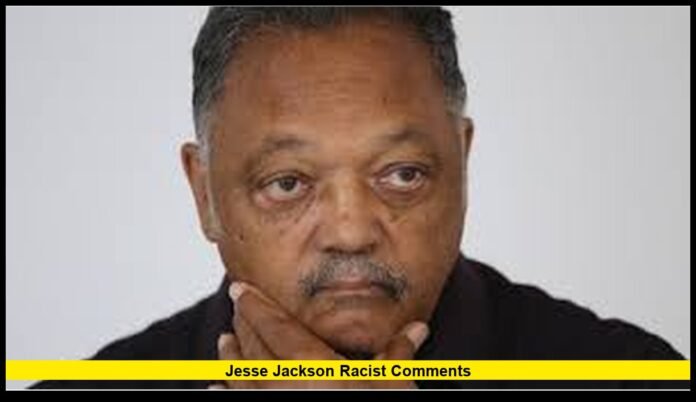

Jesse Jackson racist comments became a renewed topic of discussion in February 2026 after the civil rights leader’s death prompted Americans to revisit key moments from his decades in public life. While Jackson earned national recognition for his leadership in the fight for racial equality, certain controversial remarks from the 1980s remain part of the public record and continue to generate debate.
Reverend Jesse Louis Jackson died on February 17, 2026, at the age of 84. Tributes from political leaders, civil rights activists, and public figures highlighted his role in shaping modern American politics. At the same time, renewed scrutiny of past controversies led many to search for clarity about remarks that critics labeled racially insensitive.
Understanding this issue requires separating documented historical events from rumor or exaggeration. The most significant controversy dates back more than four decades and unfolded during Jackson’s first presidential campaign.
The 1984 Campaign and the “Hymietown” Controversy
During his 1984 campaign for the Democratic presidential nomination, Jesse Jackson sought to build a multiracial coalition. He aimed to expand voter participation among African Americans, working-class Americans, and young voters. His candidacy marked a milestone in U.S. political history, as he became one of the first Black candidates to mount a serious bid for the presidency within a major party.
However, the campaign faced a major setback when a private remark became public. In a conversation with a reporter, Jackson referred to New York City using a derogatory slur aimed at Jewish people. The term quickly sparked outrage once it surfaced publicly.
Jewish organizations and community leaders condemned the comment. Political allies expressed concern. Media coverage intensified, and the controversy threatened to derail his campaign.
Jackson publicly addressed the situation. He acknowledged the harm caused and expressed regret for the remark. Despite the apology, the incident left a lasting mark on his political career and remains the most widely cited example associated with Jesse Jackson racist comments.
The episode underscored the power of language in American politics. It also highlighted the fragile alliances that candidates must maintain when building broad coalitions.
Reactions From the Jewish Community
The backlash in 1984 was swift. Jewish leaders voiced disappointment and anger over the use of a slur targeting their community. Many emphasized that Jackson had previously worked with Jewish activists during the Civil Rights Movement and that the remark contradicted his history of coalition-building.
Interfaith dialogues followed the controversy. Meetings between Jackson and Jewish leaders took place in an effort to repair strained relationships. Some bridges were rebuilt over time, while others remained cautious.
The incident did not end Jackson’s campaign, but it influenced public perception. Critics pointed to the remark as evidence of poor judgment. Supporters argued that his apology and outreach efforts demonstrated accountability.
Political Rhetoric and Racial Tensions in the 1980s
The broader political climate of the 1980s shaped the reaction to Jackson’s words. The country faced economic uncertainty, urban decline in some cities, and heightened debates about race, poverty, and opportunity. Political speech during that era often carried sharp edges.
Jackson’s speeches frequently addressed systemic racism, corporate inequality, and disparities in education and employment. His supporters praised his ability to speak bluntly about injustice. Opponents sometimes described his rhetoric as confrontational.
While the “hymietown” remark stands out as the most serious controversy, critics occasionally scrutinized other comments that touched on ethnic or political dynamics. Those discussions often centered on tone rather than documented slurs.
Importantly, no verified reports show that Jackson made new racist remarks in the years leading up to his death. The public debate in 2026 reflects historical events rather than recent incidents.
A Career Defined by Civil Rights Advocacy
To fully assess the discussion around Jesse Jackson racist comments, it is necessary to examine his broader career. Jackson rose to prominence as a young minister working alongside Dr. Martin Luther King Jr. during the Civil Rights Movement. He participated in campaigns focused on desegregation, economic opportunity, and voting rights.
After King’s assassination in 1968, Jackson continued activism through Operation PUSH, later known as the Rainbow/PUSH Coalition. The organization aimed to promote economic inclusion and expand opportunities for marginalized communities.
In the political arena, Jackson’s 1984 and 1988 presidential campaigns broke barriers. His 1988 campaign proved especially historic. He won several Democratic primaries and caucuses, demonstrating significant support across diverse regions of the country.
That campaign helped reshape the Democratic Party’s approach to coalition politics. It also laid groundwork for increased minority representation in national campaigns.
The Complexity of Public Legacy
Public figures with long careers rarely escape controversy. Jackson spent more than five decades in national conversations about race and justice. Over that time, he engaged in heated debates, sharp critiques, and passionate speeches.
When discussions about Jesse Jackson racist comments surface today, they often focus on a single documented incident from 1984. That moment remains part of the historical record. It also exists within a much larger body of work centered on civil rights.
Many Americans evaluating his life see both progress and imperfection. They recognize his contributions to voter mobilization and economic advocacy. They also acknowledge that words can cause harm, even when spoken in private settings.
Balancing these realities shapes how history remembers leaders.
How 2026 Renewed the Conversation
Jackson’s death in February 2026 sparked widespread reflection. Obituaries and televised tributes highlighted his achievements, including:
- Expanding political engagement among African American voters
- Advocating for corporate diversity initiatives
- Negotiating on behalf of workers and minority-owned businesses
- Influencing future generations of political leaders
As public interest grew, online searches increased for information about controversies from his past. Social media discussions revisited both accomplishments and criticisms.
The renewed attention did not stem from new allegations. Instead, it reflected a broader reexamination of his life.
Why Accurate Context Matters
In an era of rapid information sharing, context often gets lost. Headlines and search terms can create impressions that lack nuance. The documented controversy involving Jackson centers on a specific slur used during the 1984 campaign. That remark drew justified criticism and led to public regret from Jackson himself.
It does not represent a pattern of repeated incidents in recent years. There is no verified evidence of new racist remarks in the period before his death.
For readers seeking clarity, distinguishing between historical fact and speculation is essential. Public memory can sometimes magnify isolated events beyond their original scope.
Political Impact of the Controversy
The 1984 incident influenced Jackson’s presidential bid but did not end it. He continued campaigning and secured millions of votes. In 1988, he returned with stronger organizational support and broader appeal.
Although he never secured the Democratic nomination, his campaigns changed expectations about who could compete on a national stage. They also pressured the party to address issues affecting minority communities more directly.
Political analysts often cite Jackson’s runs as precursors to later historic campaigns. His presence in presidential debates shifted the tone of national discussions about race and economic justice.
The controversy remains part of that narrative, illustrating how campaigns can be shaped by moments of misjudgment.
Evaluating Leaders in Full
Americans continue to debate how best to evaluate leaders with long and complicated histories. Some argue that significant achievements outweigh isolated errors. Others insist that offensive language should carry lasting consequences.
Jackson’s life offers a case study in that tension. He stood at the center of major civil rights battles. He also faced criticism for a comment that offended a major community.
Acknowledging both sides allows for a more honest assessment of history. It avoids oversimplifying a figure whose career spanned eras of dramatic social change.
A Lasting Influence on American Politics
Jesse Jackson leaves behind a legacy that reshaped political participation. His work encouraged millions to believe their voices mattered in national elections. His advocacy pushed corporations and institutions to examine hiring practices and community investment.
The discussion about Jesse Jackson racist comments forms one chapter in that broader story. It reminds the public that leadership often unfolds in imperfect ways.
As the nation reflects on his life in 2026, conversations about accountability, forgiveness, and historical impact continue to unfold. Those discussions reflect not only on Jackson but also on the evolving standards by which Americans judge public figures.
How should history weigh moments of controversy against decades of advocacy? Join the discussion and share your perspective.