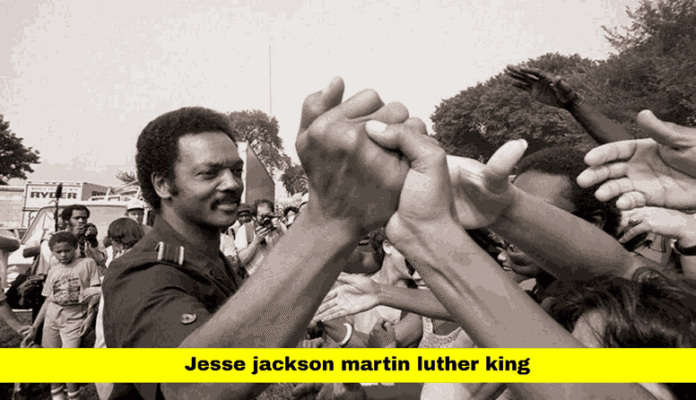

The historic connection between jesse jackson martin luther king remains one of the most powerful and consequential relationships in modern American history. Their partnership helped define the direction of the Civil Rights Movement in the 1960s and continues to influence national conversations about equality, voting rights, economic justice, and nonviolent protest. As of 2026, renewed public attention on civil rights milestones, recent commemorations of Dr. King’s legacy, and Rev. Jesse Jackson’s ongoing public presence have brought their shared history back into focus for a new generation.
This in-depth report explores their alliance, verified historical milestones, Jackson’s role in King’s final campaign, the events surrounding April 4, 1968, and how their shared vision continues to shape American political and social life today.
Early Lives Before Their Historic Partnership
Dr. Martin Luther King Jr. was born on January 15, 1929, in Atlanta, Georgia. A Baptist minister, theologian, and civil rights leader, he emerged as a national figure during the Montgomery Bus Boycott of 1955–1956. His leadership of the Southern Christian Leadership Conference (SCLC) positioned him at the forefront of nonviolent protest against racial segregation.
Jesse Jackson was born on October 8, 1941, in Greenville, South Carolina. As a young activist and seminary student, Jackson became involved in the Civil Rights Movement during the early 1960s. His organizational skills and commitment to grassroots mobilization quickly drew attention.
By the mid-1960s, their paths converged through the SCLC, creating a working relationship that would become historic.
How Jesse Jackson Joined Martin Luther King Jr.’s Inner Circle
Jackson officially joined the Southern Christian Leadership Conference in 1965. He worked in Chicago during King’s campaign to combat housing discrimination in northern cities.
King recognized Jackson’s ability to connect with younger activists and urban communities. Jackson’s energy, strategic thinking, and communication skills made him an asset during organizing drives.
During this period, King expanded the Civil Rights Movement beyond Southern desegregation battles to address economic inequality nationwide. Jackson aligned strongly with this shift, particularly in campaigns centered on jobs and economic justice.
The Chicago Freedom Movement
In 1966, King launched the Chicago Freedom Movement to confront housing discrimination and systemic inequality in northern cities. Jackson played a visible role in mobilizing community support.
Unlike earlier Southern campaigns, Chicago exposed the depth of racial discrimination outside the South. Protesters faced hostility, and marches often turned tense. King later described the resistance in Chicago as some of the most intense he had experienced.
Jackson’s involvement strengthened his standing within the movement. He emerged as one of King’s trusted lieutenants during urban organizing efforts.
Operation Breadbasket and Economic Justice
One of Jackson’s most significant roles came through Operation Breadbasket, an SCLC initiative focused on economic empowerment.
Operation Breadbasket encouraged corporations to hire Black employees and support minority-owned businesses. Jackson eventually became the program’s director in Chicago.
The initiative secured job commitments from major companies and demonstrated the power of organized economic pressure.
King strongly supported this strategy. He believed civil rights must include economic opportunity, not just legal equality. Jackson’s leadership in this effort aligned directly with King’s evolving mission.
The Poor People’s Campaign and a Shift in Focus
In 1968, King began organizing the Poor People’s Campaign. The effort aimed to unite Americans across racial lines around economic justice.
King argued that poverty represented a moral crisis. He planned a massive demonstration in Washington, D.C., to demand federal action.
Jackson supported this expansion of the movement’s focus. He helped coordinate outreach to urban communities and young activists.
The campaign marked a turning point. It moved beyond desegregation into broader economic demands, including jobs, fair wages, and housing reform.
Memphis and the Sanitation Workers’ Strike
In early 1968, King traveled to Memphis, Tennessee, to support striking sanitation workers. The workers protested unsafe conditions and low pay.
Jackson joined King in Memphis as part of the SCLC leadership team.
On April 3, 1968, King delivered his “I’ve Been to the Mountaintop” speech at Mason Temple. In that speech, he emphasized unity, economic justice, and perseverance.
The following evening, April 4, 1968, King was assassinated at the Lorraine Motel.
Jackson was present in Memphis at the time of the assassination. The tragedy shocked the nation and altered the trajectory of the Civil Rights Movement.
After King’s Assassination: Jackson’s Rise to National Prominence
Following King’s death, leadership within the movement shifted. The Southern Christian Leadership Conference continued its work, and the Poor People’s Campaign proceeded.
Jackson later founded Operation PUSH (People United to Save Humanity) in 1971, building on the economic justice principles he had championed under King.
He later established the Rainbow Coalition, promoting multiracial political engagement.
Jackson’s presidential campaigns in 1984 and 1988 expanded voter participation and brought civil rights priorities into national political debates.
Throughout these decades, Jackson frequently referenced King’s vision as a guiding force.
Commemorations and Public Recognition in 2026
In January 2026, Americans marked Martin Luther King Jr. Day on January 19. Across the country, events honored King’s legacy, including community service projects, educational forums, and memorial ceremonies.
Jesse Jackson, now 84 years old, remains a recognized civil rights figure. In recent years, he has reduced public appearances due to health challenges, including a Parkinson’s disease diagnosis announced in 2017. However, he continues to receive recognition for his role in the movement.
Civil rights institutions, universities, and faith organizations regularly reflect on the partnership between jesse jackson martin luther king during MLK Day observances.
Impact on Voting Rights and Political Mobilization
King’s advocacy laid the groundwork for the Voting Rights Act of 1965. Jackson later continued efforts to expand voter participation.
His Rainbow Coalition strategy encouraged broad alliances among minority communities, labor groups, and young voters.
Political scientists widely recognize Jackson’s presidential campaigns as milestones in expanding African American political influence.
Their combined legacy continues to shape voter engagement strategies across the United States.
Economic Equality: A Shared Vision
King’s final years increasingly focused on economic inequality. Jackson extended that mission into the 1970s and beyond.
Operation Breadbasket evolved into broader economic justice initiatives.
Jackson frequently emphasized fair employment, minority business ownership, and equitable access to education.
This economic focus remains central in civil rights discussions today.
Cultural Influence and National Memory
The partnership between King and Jackson occupies a permanent place in American history.
Museums, documentaries, and educational curricula examine their relationship.
The National Civil Rights Museum in Memphis continues to educate visitors about the events of April 1968.
Academic scholars analyze their alliance as a case study in leadership development within social movements.
Public Debate and Historical Reflection
Historians continue to examine the dynamics within the Civil Rights Movement, including differing strategies and generational perspectives.
Jackson’s role in Memphis has been the subject of discussion for decades. He has consistently stated his account of the events surrounding King’s assassination.
Despite debates over internal movement dynamics, the shared commitment to nonviolence and economic justice remains undisputed.
Why Their Alliance Still Matters Today
In 2026, conversations about racial equity, voting access, and economic inequality remain active.
Public officials and activists frequently reference King’s speeches in legislative debates.
Jackson’s decades-long advocacy reinforces the durability of the movement’s principles.
Their partnership symbolizes continuity between 1960s civil rights activism and modern reform efforts.
Education and Youth Engagement
Schools across the country teach about King’s leadership and Jackson’s subsequent activism.
MLK Day service initiatives often highlight economic justice themes.
Young organizers study the strategies used by SCLC during the 1960s.
This educational focus ensures the story remains relevant for future generations.
Legacy in Faith and Community Leadership
Both men were Baptist ministers. Faith shaped their rhetoric and organizing philosophy.
Church networks played a crucial role in mobilizing supporters.
Faith-based activism continues to influence social justice initiatives nationwide.
Continuing National Recognition
King received the Nobel Peace Prize in 1964.
In 1983, President Ronald Reagan signed legislation establishing Martin Luther King Jr. Day as a federal holiday.
The Martin Luther King Jr. Memorial in Washington, D.C., stands as a permanent tribute.
Jackson has received numerous honors recognizing his civil rights leadership.
Conclusion: A Defining Chapter in American History
The story of jesse jackson martin luther king reflects courage, strategy, faith, and resilience. Their partnership shaped policy, inspired millions, and transformed American democracy.
As the nation reflects on civil rights milestones in 2026, their alliance continues to stand as a reminder that leadership, unity, and moral conviction can change history.
Share your thoughts on their enduring legacy and stay connected for more in-depth historical coverage and national updates.