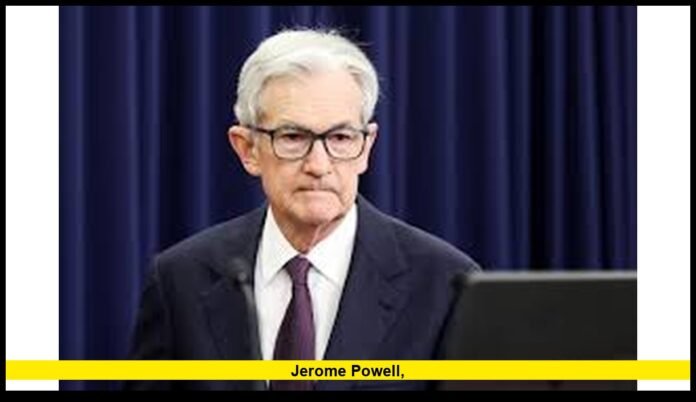

Federal prosecutors have opened a criminal investigation into Jerome Powell, the Chair of the U.S. Federal Reserve, after the Department of Justice issued subpoenas to the central bank and threatened criminal indictment over Powell’s congressional testimony related to the Federal Reserve’s expensive renovation projects. The development marks an extraordinary escalation in tensions between the White House and the Federal Reserve just months before Powell’s term as chair is set to expire. This article examines Powell’s leadership, policy decisions, the evolving legal situation, market reactions, and broader implications for U.S. monetary policy and economic stability.
Understanding the Current Situation Involving Jerome Powell
In early January 2026, Jerome Powell publicly acknowledged that the U.S. Department of Justice had subpoenaed the Federal Reserve and threatened a criminal indictment connected to his testimony before Congress about the renovation of Federal Reserve office buildings in Washington, D.C. Powell characterized the subpoenas and potential indictment as misguided pressure aimed at influencing monetary policy, particularly decisions on interest rates.
The subpoenas stem from Powell’s testimony before the Senate Banking Committee in mid-2025 regarding cost estimates and features of a major renovation project, which saw its projected budget rise to approximately $2.5 billion. The legal action and Powell’s response have ignited debate about the independence of the Federal Reserve and the relationship between monetary policy and political institutions.
Jerome Powell’s Leadership at the Federal Reserve
Jerome Powell has served as Chair of the Federal Reserve since 2018, guiding the central bank through turbulent economic periods including inflationary pressures, interest rate shifts, and shifts in labor market dynamics. Appointed originally by one president and reappointed by another, Powell’s tenure has spanned changing political landscapes and divergent economic priorities.
Under Powell’s leadership, the Federal Reserve has sought to achieve its dual mandate of maximum employment and price stability. In response to persistent inflation above the Fed’s long-term target, the Federal Open Market Committee (FOMC) implemented multiple interest rate adjustments, including several rate cuts in late 2025 and a cautious stance on future easing going into 2026. Powell and his colleagues have emphasized that rate decisions are based on incoming economic data and projections for inflation and growth.
Economic Context: Inflation and Interest Rates
Throughout 2025, the Federal Reserve navigated an economy marked by high but moderating inflation, slowing job growth, and mixed signals from key economic indicators. In December 2025, the Fed reduced its benchmark policy rate by a quarter percentage point, bringing the federal funds target range down to 3.50 percent to 3.75 percent. At the press conference following that decision, Powell stressed that the central bank was “well positioned to wait and see” how future data unfolds before undertaking further changes.
The committee’s economic projections at that time showed expectations of modest inflation cooling and moderate growth in 2026. Governor Stephen Miran, among others, publicly supported more substantial rate cuts during this period, arguing for a larger reduction to support the labor market and address persistent price pressures. These differing viewpoints underscore ongoing policy debates within the Federal Reserve itself.
At the same time, futures markets and economic forecasters projected that the Federal Reserve might implement two rate cuts during 2026, reflecting broader expectations of moderating inflation and slowing labor market dynamics.
The Legal Escalation and Powell’s Response
The legal escalation involving Jerome Powell has been characterized by the issuance of subpoenas and threats of criminal indictment tied to Powell’s testimony about the Federal Reserve’s renovation project. Powell responded with a public statement defending his testimony and asserting that the action was politically motivated. He argued that the threat of criminal charges was less about the renovation itself and more about pressuring the Federal Reserve to lower interest rates based on political preference rather than economic evidence.
Powell’s assertions about political pressure reverberated across Washington, sparking intense discussions about the nature of Federal Reserve independence. He underscored that setting interest rates should remain free from political influence and based on economic data, which forms the cornerstone of the Fed’s credibility with markets and the public.
Political Dynamics Impacting the Federal Reserve
The relationship between the Federal Reserve and the executive branch has grown increasingly strained in recent years, particularly under President Donald Trump’s second term. Trump has been vocal in his criticisms of the Federal Reserve’s resistance to more aggressive interest rate cuts and has repeatedly called for lower borrowing costs to stimulate economic growth.
Beyond public criticism, the administration has also taken concrete actions aimed at influencing the central bank’s leadership and structure. Trump reportedly plans to announce a successor to Powell before Powell’s term ends in May 2026. The administration has also pursued efforts to remove other Federal Reserve officials, triggering legal challenges — notably in the case involving the attempted dismissal of Fed Governor Lisa Cook.
These tensions extend to legal efforts such as the subpoenas tied to Powell’s testimony, as well as broader pushes to assert executive influence over monetary policy decisions. Critics argue that such moves risk eroding the autonomy of the Federal Reserve, which has historically been insulated from day-to-day political pressures in order to make long-term decisions that support economic stability.
Market Reactions to the Escalation
The news surrounding the subpoenas and potential indictment of Jerome Powell has had measurable impacts on financial markets. The U.S. dollar weakened against major currencies following the disclosure of legal threats, reflecting investor concerns about uncertainty and potential shifts in monetary policy direction. Meanwhile, safe-haven assets such as gold saw price increases as traders sought protective positions amid heightened geopolitical and policy uncertainty.
Bond markets also reacted, with yields on U.S. Treasury securities fluctuating amid mixed expectations for future Federal Reserve policy. Investors are closely watching job market data, inflation reports, and upcoming Federal Open Market Committee statements for clues about the pace and extent of future rate adjustments under Powell and his potential successor.
Implications for Federal Reserve Independence
At the heart of the controversy involving Jerome Powell is the principle of Federal Reserve independence — the idea that monetary policy decisions should be free from direct political intervention. This concept is designed to allow central bank policymakers to make difficult decisions, such as tightening monetary policy to curb inflation even when such actions may be unpopular.
Powell’s tenure has illustrated the challenges of maintaining this independence in a politically charged environment. His defense of the central bank’s decision-making process — especially under legal and political pressure — highlights the delicate balance the Fed must strike between accountability to Congress and insulated judgment to fulfill its mandate.
Legal experts note that while investigations and subpoenas are tools available within the justice system, applying them in ways that intersect with monetary policy decisions raises questions about precedent and institutional boundaries. The outcome of the current investigation into Powell’s testimony could have lasting implications for how future Fed chairs approach testimony, transparency, and communication with elected officials.
Internal Federal Reserve Dynamics
Within the Federal Reserve, policymakers hold a range of views on economic conditions and the appropriate path for monetary policy. Some members have pushed for deeper cuts to interest rates to support labor market conditions, while others have urged caution in the face of persistent inflation that remains above target.
These internal debates are reflected in the Federal Open Market Committee’s “dot plot” projections, which capture individual policymakers’ expectations for future interest rate levels. Such divergence underscores the complexity of forecasting economic conditions and balancing multiple objectives in an uncertain environment.
Moreover, Powell’s leadership has been defined by an emphasis on data-driven decision-making, even as members debate the extent and timing of rate adjustments. The presence of differing viewpoints within the committee reinforces the independent and deliberative nature of the Federal Reserve’s policymaking process.
Economic Outlook for 2026
Looking ahead, the economic outlook for the U.S. in 2026 will hinge on several key factors:
- Inflation Trends: While inflation has moderated from its peaks, it remains above the Federal Reserve’s long-term target of 2 percent. Continued monitoring of inflation data will shape rate decisions.
- Labor Market Dynamics: Jobs reports and labor force participation will influence assessments of wage pressures, hiring momentum, and unemployment.
- Economic Growth: Gross domestic product growth projections have fluctuated as fiscal policies and external pressures affect consumer spending and business investment.
- Fiscal Policy Impacts: Changes in government spending, tax law, and regulatory policy can also affect economic growth and monetary policy responses.
Forecasts by the Congressional Budget Office and other economic analysts suggest that interest rates may trend lower by the end of 2026 compared with late 2025, with moderate GDP growth rates expected. Despite prospective rate cuts, mortgage costs and longer-term yields could rise, complicating borrowing conditions for households and businesses.
Public and Institutional Reactions
Reaction to the legal escalation involving Jerome Powell has been varied. Some lawmakers have expressed support for accountability and oversight of the Federal Reserve. Others have warned that using legal action in the context of monetary policy debates could undermine confidence in the central bank’s neutrality.
Financial institutions, business groups, and economic commentators have also weighed in, emphasizing that stable monetary policy requires insulated decision-making that prioritizes economic conditions over political goals.
Throughout this period, Powell has reiterated his commitment to fulfilling the Federal Reserve’s mandate, even as he faces pressure from both political leaders and market forces. He has stated his intention to complete his term and to defend the central bank’s independence throughout the process.
Jerome Powell’s Legacy
Jerome Powell’s legacy as Chair of the Federal Reserve will be shaped by how he navigated unprecedented challenges in the early 2020s, including inflation spikes, post-pandemic adjustments, and evolving expectations for monetary policy. His leadership style, emphasis on data, and responses to political pressures will be part of the historical record for future policymakers studying this era.
Powell’s efforts to maintain a balance between transparency and independence, especially in a polarized environment, underscore the complexity of leading the nation’s central bank amid competing economic and political objectives.
Conclusion
As the investigation into Jerome Powell unfolds and the Federal Reserve’s policy trajectory for 2026 becomes clearer, U.S. markets and policymakers will closely watch the interplay between legal, economic, and institutional forces. The Federal Reserve’s ability to remain credible and effective in pursuing its dual mandate depends on clear leadership and steadfast reliance on economic indicators.
The monetary policy landscape for 2026 is defined by cautious optimism, ongoing debates over rate adjustments, and heightened awareness of the role that political dynamics can play in shaping economic outcomes. Jerome Powell’s stewardship — and how the current legal developments resolve — will be central to how the Federal Reserve navigates these testy waters.