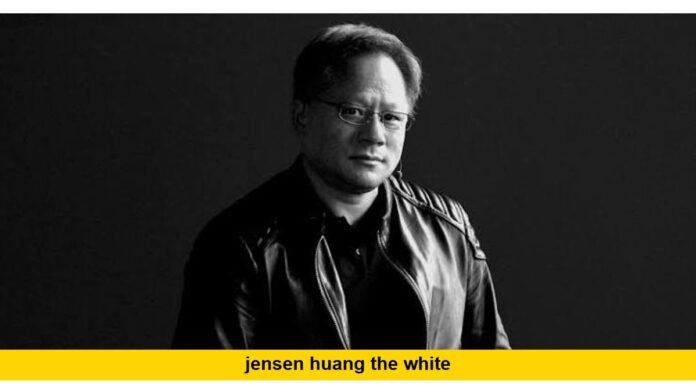

The latest developments surrounding jensen huang the white have attracted widespread attention after Nvidia’s board unexpectedly reinstated Jensen Huang as president and chief executive officer on November 23, 2026. The decision reversed the company’s earlier leadership transition and brought Huang back to the position he held before resigning amid a controversy involving personal relationships and allegations connected to a possible foreign intelligence effort.
The reinstatement came after President Donald Trump publicly encouraged Nvidia to bring Huang back, describing him as an important figure for both the company and the United States. Nvidia’s board said it had reconsidered the situation after meetings with Huang and input from senior U.S. government officials.
The decision represents a major turning point for Nvidia, one of the world’s most influential artificial intelligence and semiconductor companies. It also raises continuing questions about corporate governance, national security, export controls, political influence, and the future of America’s AI industry.
Jensen Huang Returns to Nvidia’s Leadership
Nvidia confirmed on November 23 that Jensen Huang had been reinstated as president, CEO, and a member of the company’s board of directors, effective immediately. The decision was approved unanimously by the board.
Huang’s return followed an extraordinary period of uncertainty. He resigned from the company on November 12, prompting Nvidia to appoint Chief Financial Officer Colette Kress as interim CEO while beginning the search for a permanent replacement.
The board initially appeared unwilling to reverse the leadership transition. However, developments over the following days changed the situation. Huang held discussions with board members, government officials weighed in on the national security questions, and President Trump publicly supported the possibility of Huang returning.
The board ultimately concluded that Huang remained the right person to lead Nvidia. Chairman Harvey C. Jones said the directors had confidence in Huang and believed his reinstatement was in the best interests of shareholders, employees, partners, and customers.
Huang expressed gratitude for the board’s decision and said he was returning with renewed commitment and humility. He also thanked Nvidia’s executive team, employees, shareholders, business partners, and family members for their support during the leadership disruption.
Why Jensen Huang Resigned
Huang’s resignation followed reports involving personal relationships that became connected to allegations of possible foreign intelligence activity.
The controversy included reports about an alleged relationship with a Chinese businesswoman who was reportedly suspected by U.S. intelligence officials of having connections to Chinese intelligence. Other reports also raised questions about relationships involving people connected to Nvidia.
The allegations created concerns beyond Huang’s private life because Nvidia operates in a strategically important industry. The company’s advanced chips and AI computing systems are important to businesses, governments, research organizations, and technology developers around the world.
The controversy raised questions about whether personal relationships could create security vulnerabilities, whether corporate information could be exposed, and whether Nvidia’s leadership had adequate safeguards.
Huang acknowledged making mistakes in his personal life and expressed regret. He agreed to cooperate with the company’s investigation and accepted responsibility for the situation.
However, allegations involving foreign intelligence connections should not be treated as proven criminal conduct. Publicly available information has not established that Huang knowingly participated in espionage or that Nvidia’s confidential technology was compromised.
Trump’s Support for Jensen Huang
President Donald Trump played a visible role in the public discussion about Huang’s future.
Trump repeatedly spoke positively about the Nvidia executive and expressed his preference for Huang to return to the company. Before the reinstatement announcement, Trump publicly encouraged Nvidia’s board to reconsider its position.
His support reflected the importance of Nvidia to the United States’ technology industry. Nvidia is a major supplier of advanced computing technology used in artificial intelligence development, data centers, robotics, scientific research, and other emerging industries.
Trump’s comments also highlighted the relationship between technology companies and the federal government. Semiconductor technology has become a national priority, with policymakers focusing on American competitiveness, advanced manufacturing, AI infrastructure, and strategic competition with China.
After Nvidia announced Huang’s return, Trump welcomed the board’s decision and said the government had no reason to believe the reinstatement posed a national security risk.
The president’s support did not formally determine Nvidia’s corporate leadership. The board remained responsible for the decision, but Trump’s public position became an important part of the wider debate surrounding the company’s leadership transition.
What Nvidia’s Board Said About Reinstatement
Nvidia’s board said it reached its decision after a series of discussions and meetings with Huang.
According to the company, the directors were satisfied with Huang’s candor and ability to lead. The board also said it had received input from senior levels of the U.S. government during the decision-making process.
The company stated that this input helped it conclude that Huang’s return did not pose a national security risk.
The board’s statement emphasized the importance of Huang’s leadership to Nvidia’s future. The company has grown into a major force in AI computing, and its products are used by organizations building AI infrastructure on a global scale.
The board also thanked Colette Kress for serving as interim CEO while continuing her responsibilities as chief financial officer. Harvey C. Jones will remain chairman of Nvidia’s board.
The reinstatement does not mean that every issue connected to the controversy has been resolved. Nvidia confirmed that its independent investigation will continue until completion.
Colette Kress and Nvidia’s Interim Leadership
Colette Kress became Nvidia’s interim CEO after Huang resigned on November 12.
Kress has served as Nvidia’s chief financial officer since 2013 and has played a significant role in the company’s financial management and business development. Her experience includes overseeing financial operations, investor relations, corporate planning, and the company’s financial position during a period of substantial growth.
During Huang’s absence, Kress was expected to maintain operational stability and ensure that Nvidia continued executing its business plans.
The company had previously stated that its product roadmap, customer commitments, and operations would continue without interruption under Kress and the existing executive team.
Following Huang’s reinstatement, Kress is expected to return to her CFO position. Her short period as interim CEO demonstrated Nvidia’s ability to rely on its established executive team during a sudden leadership transition.
The Independent Investigation Continues
Although Huang is back as CEO, Nvidia’s investigation into the controversy remains ongoing.
The board established an independent committee composed entirely of independent directors. The committee retained independent legal counsel to examine reports that Huang may have been targeted by a foreign intelligence effort.
Nvidia said the investigation would proceed to its conclusion and that Huang supports the process and is committed to cooperating.
The company has also created a separate National Security and Export Control Committee composed of independent directors. This committee is expected to oversee matters involving trade compliance, national security risks, and related corporate policies.
Nvidia is also beginning a search for a chief compliance officer. The new position is intended to oversee compliance across the company and report to the board’s Nominating and Corporate Governance Committee.
These measures may become important in strengthening the company’s internal oversight and addressing concerns involving sensitive technology, international business relationships, and export regulations.
National Security and the Semiconductor Industry
Nvidia’s leadership controversy has highlighted the importance of national security considerations in the semiconductor industry.
Advanced AI chips can support a wide range of applications, including commercial AI systems, scientific computing, robotics, cybersecurity, defense-related research, and other advanced technologies.
Because of these capabilities, the United States maintains restrictions on certain semiconductor exports. Companies operating in the industry must navigate complex rules concerning product specifications, destinations, customers, and licensing requirements.
Nvidia’s international business, particularly its exposure to China, has become a significant issue in discussions about export controls and technology competition.
The company must balance commercial opportunities with legal requirements and national security policies. Any investigation involving possible foreign intelligence connections can therefore attract attention from regulators, lawmakers, investors, and government officials.
The reinstatement of Huang does not eliminate these responsibilities. Nvidia will still need to demonstrate that it maintains appropriate controls, compliance procedures, and security safeguards.
Congressional Questions and Government Inquiries
Huang’s return may not be the final development in the controversy.
Reports indicate that he has agreed to answer questions from U.S. lawmakers about the situation. A closed-door interview with House committee chairs is scheduled for December 1, while Nvidia’s general counsel is expected to participate in a separate interview the following day.
Huang has also agreed to testify before a Senate Banking, Housing and Urban Affairs Committee hearing, although a date has not yet been confirmed.
Congressional interest may focus on the reported foreign intelligence concerns, Nvidia’s corporate oversight, export-control compliance, and the company’s relationship with international partners.
These inquiries are separate from Nvidia’s internal investigation. The company has also indicated that it will continue cooperating with ongoing government investigations and inquiries.
The situation may therefore continue to evolve as lawmakers, investigators, and Nvidia’s independent committee examine different aspects of the controversy.
Nvidia’s Stock and the Market Reaction
Huang’s resignation created uncertainty for Nvidia because investors closely associate the company’s growth and strategic direction with his leadership.
Nvidia has become one of the most influential companies in the AI economy. Its graphics processing units, networking systems, software platforms, and computing infrastructure support AI development across major technology companies and research organizations.
When Huang resigned, investors were concerned about whether Nvidia could maintain its strategic momentum without its longtime CEO. The leadership uncertainty also contributed to pressure on Nvidia shares during a period when the broader technology market was already experiencing volatility.
The reinstatement announcement triggered a strong market reaction. Nvidia shares surged, helping lift other AI-related companies and contributing to a broader recovery in U.S. stocks.
The reaction illustrated how closely investors monitor Nvidia’s leadership. Huang is viewed by many market participants as a central figure in the company’s product strategy, customer relationships, and AI industry position.
Nevertheless, a positive market reaction does not guarantee future performance. Nvidia continues to face competition, regulatory challenges, export restrictions, manufacturing constraints, and questions about the long-term sustainability of AI investment.
Why Huang’s Return Matters to the Artificial Intelligence Industry
Nvidia’s influence extends well beyond the semiconductor market.
The company provides technology used to train and operate AI models, build data centers, develop autonomous systems, support scientific research, and create new computing applications.
Huang has been one of the industry’s most visible executives, regularly presenting Nvidia’s technology roadmap and discussing the future of accelerated computing.
His return may provide stability for customers and partners that rely on Nvidia’s long-term plans. Companies building AI infrastructure often make substantial investments based on product availability, computing capacity, software support, and future technology development.
Leadership continuity can therefore be important for organizations planning large-scale AI deployments.
The controversy also demonstrates how personal issues involving executives at major technology companies can become corporate matters when they intersect with security, governance, or regulatory concerns.
What Happens Next?
Several developments may determine the next chapter of Nvidia’s leadership story.
The independent investigation is expected to continue, and its findings may provide further information about the circumstances surrounding the controversy. Congressional inquiries may also generate additional questions or public statements.
Nvidia’s new national security and export-control oversight structure will be another area to watch. The company may introduce additional policies, controls, or procedures as it responds to concerns about compliance and security.
The chief compliance officer search could also become an important part of Nvidia’s efforts to strengthen corporate oversight.
Meanwhile, Huang will return to leading Nvidia’s product strategy, AI computing operations, partnerships, and long-term business plans. Investors and customers will likely pay close attention to how quickly the company restores stability and continues its technology roadmap.
Final Thoughts
Jensen Huang’s reinstatement as Nvidia CEO marks a dramatic reversal in a leadership controversy that developed rapidly over the past several weeks. The board’s unanimous decision came after meetings with Huang, input from senior U.S. government officials, and public support from President Donald Trump.
Huang’s return restores Nvidia’s longtime co-founder to the top executive position and removes an immediate source of uncertainty for the company. However, the independent investigation, national security concerns, export-control questions, and congressional inquiries remain ongoing.
The story is important not only because of Nvidia’s market influence but also because it reflects the increasingly close relationship between technology leadership, corporate governance, and national security.
As the AI industry continues to expand, Nvidia’s next decisions may influence investor confidence, technology partnerships, and the broader conversation about how the United States manages its most strategically important technology companies.
Share your thoughts in the comments and stay updated for the latest verified developments involving Jensen Huang, Nvidia, and the AI industry.