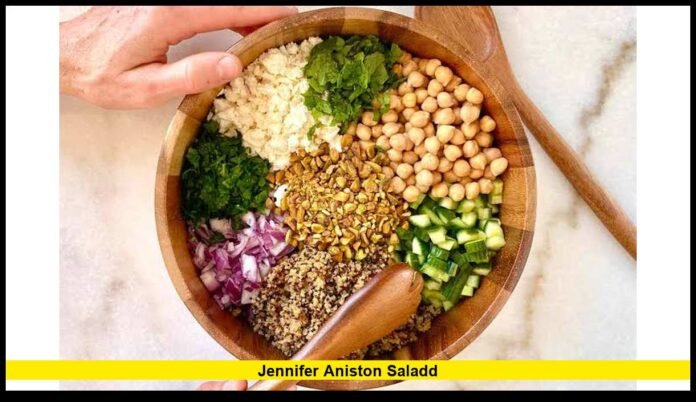

The jennifer aniston salad continues to attract attention from home cooks and Friends fans, thanks to its combination of quinoa, chickpeas, cucumber, fresh herbs, pistachios and feta. The recipe has become a lasting social-media food favorite, but its connection to Jennifer Aniston is more complicated than the viral story originally suggested.
The salad’s popularity began with a simple ingredient list associated with Aniston and later exploded across TikTok and other social platforms. Since then, food creators have developed countless versions, changing the grain, dressing, vegetables, nuts and protein while keeping the basic Mediterranean-inspired character intact.
In 2026, the recipe remains relevant because it is easy to prepare, works well for packed lunches and can be adapted to different eating preferences. Newer versions have also focused on higher protein, additional vegetables, alternative grains and meal-prep convenience.
Why Jennifer Aniston’s Salad Became a Viral Sensation
Celebrity food trends are nothing new, but this particular recipe had several ingredients that made it especially appealing online.
It was connected to one of television’s most recognizable actresses, it looked colorful in photographs and it required relatively simple ingredients. The combination also offered a contrast of textures: soft grains and chickpeas, crisp cucumber, creamy feta, fresh herbs and crunchy pistachios.
Social media transformed that ingredient combination into a recognizable recipe.
Food bloggers began testing their own versions, short-form videos demonstrated the preparation process, and the salad quickly became associated with the idea of a convenient celebrity-inspired lunch.
Its popularity has lasted considerably longer than many short-lived food trends because the underlying recipe is practical rather than merely decorative.
The Important Truth About the Friends Story
One of the biggest misconceptions surrounding the salad is its connection to Friends.
For years, social media users repeated a story claiming that Jennifer Aniston, Courteney Cox and Lisa Kudrow ate essentially the same grain salad every day while filming the sitcom.
That isn’t accurate.
Aniston later clarified that the viral salad was not the lunch she ate every day on the Friends set. Her actual routine during filming was associated with a modified Cobb-style salad.
That distinction matters because the viral recipe is genuinely connected to something Aniston publicly shared, but it should not be described as the exact meal she consumed throughout the production of Friends.
The misconception appears to have developed when two separate food stories became combined online.
Where the Recipe Really Came From
The salad’s connection to Aniston comes from an ingredient list she shared publicly during a Living Proof social-media takeover.
Rather than publishing a highly detailed recipe with precise measurements, Aniston described what she considered her ideal salad. The ingredients included bulgur, cucumber, parsley, mint, red onion, garbanzo beans, feta and pistachios.
That simple description provided the foundation for the recipe that later became famous online.
As food creators began recreating it, quinoa became a particularly common substitute for bulgur. Lemon and olive oil dressings were also added or refined, and some versions incorporated dried fruit for sweetness.
As a result, there isn’t one universally accepted recipe with a single set of measurements.
Instead, today’s versions represent interpretations of the salad Aniston once described.
What Goes Into the Classic Version?
The most recognizable modern preparation generally includes several key components.
Quinoa or Bulgur
The grain provides the foundation of the salad.
Bulgur is closer to the ingredient associated with Aniston’s original description. It has a chewy texture and works naturally with fresh herbs and lemon.
Quinoa has become one of the most popular alternatives. It is light, fluffy and convenient for meal preparation.
Other modern cooks use brown rice, farro, couscous or a combination of grains.
Chickpeas
Chickpeas, also called garbanzo beans, add substance and make the salad more filling.
Canned chickpeas are convenient, although dried chickpeas can also be cooked from scratch.
Rinsing and draining canned chickpeas before adding them helps remove excess liquid and allows the dressing to coat the ingredients more effectively.
Cucumber
Cucumber gives the salad its characteristic freshness and crunch.
Persian or English cucumbers are particularly convenient because they tend to have thinner skins and can be less watery than some larger varieties.
Cutting cucumber into relatively small pieces helps distribute it throughout the salad instead of leaving large chunks concentrated in certain portions.
Fresh Herbs
Parsley and mint are among the defining flavors.
Parsley contributes a fresh, slightly peppery note, while mint adds a cooling quality.
Using fresh herbs rather than dried versions can make a significant difference in the finished salad.
Pistachios
Pistachios provide crunch and a rich, nutty flavor.
They can be roughly chopped rather than finely ground so that each serving retains some texture.
Almonds or walnuts can be substituted, while sunflower or pumpkin seeds can be used when a nut-free option is preferred.
Feta Cheese
Feta supplies saltiness and creaminess.
It also provides a contrast to the fresh cucumber and herbs and complements the lemon-based dressing.
For a dairy-free version, the feta can be omitted or replaced with a suitable plant-based alternative.
A Simple Way to Prepare the Salad
Start by cooking the chosen grain according to its package instructions.
If using quinoa, rinsing it before cooking can help improve its flavor. Once cooked, allow it to cool before combining it with the remaining ingredients.
While the grain cools, prepare the cucumber, red onion, parsley and mint.
Drain and rinse the chickpeas, then chop the pistachios and crumble the feta.
For the dressing, combine fresh lemon juice with extra-virgin olive oil, salt and black pepper. Some modern preparations also use Dijon mustard and a small amount of honey to create a more pronounced sweet-and-tangy flavor.
Once everything is prepared, combine the ingredients in a large bowl and toss gently.
The key is to avoid mixing hot grains with the fresh vegetables and herbs. Allowing the grain to cool first helps preserve the salad’s texture.
A Modern 2026 Take on the Recipe
The recipe has continued evolving well beyond its original ingredient list.
A recent approach uses a mixture of grains, such as quinoa, pearl barley and amaranth, along with chickpeas, feta, cucumber, red onion, carrots, parsley and roasted nuts. This style demonstrates how the basic formula can be adapted without losing its identity.
Other contemporary versions use quinoa as the sole grain and add dried cranberries for a sweet contrast.
Some cooks prefer almonds instead of pistachios, while others add chicken, salmon or tofu to increase the protein content.
These variations demonstrate why the salad has remained popular: it is less of a rigid recipe and more of a flexible template.
Why It Works for Meal Prep
One of the strongest reasons for the recipe’s continued popularity is convenience.
Unlike salads made almost entirely from delicate leafy greens, a grain-and-chickpea preparation can remain satisfying after refrigeration.
A large batch can be prepared in advance and divided into individual containers for lunches.
For the best texture, however, some components are better added later.
Pistachios and other nuts can soften when exposed to moisture, so adding them immediately before eating preserves their crunch.
Similarly, keeping the dressing separate can prevent the vegetables and grains from becoming overly wet.
If preparing several portions at once, storing the dressing separately is especially useful.
Is It a Healthy Salad?
The nutritional value depends on the exact recipe and serving size, but the basic combination offers a broad range of nutrients.
Chickpeas provide plant-based protein and fiber. Quinoa can contribute protein and complex carbohydrates, while cucumber and herbs add vegetables and fresh flavor.
Pistachios contribute unsaturated fats and additional nutrients, while feta adds protein and calcium but also increases the sodium content.
One recent quinoa-based recipe calculates approximately 18 grams of protein and 11 grams of fiber per serving, although nutritional numbers differ substantially between versions because ingredients and quantities vary.
That makes it more useful to view the salad as a balanced meal concept rather than relying on a single nutritional number.
How to Make It More Filling
For people who want a more substantial lunch or dinner, additional protein can be incorporated without changing the basic character of the dish.
Grilled chicken is an easy option.
Baked salmon adds a richer flavor and pairs particularly well with lemon.
Tofu works for a plant-based variation, while lentils can provide another vegetarian protein source.
The amount of grain can also be adjusted according to whether the salad is being served as a side dish or a complete meal.
Ways to Change the Flavor
There are several simple ways to customize the recipe.
For a sweeter version, add dried cranberries or golden raisins.
For extra acidity, increase the lemon juice.
For a stronger Mediterranean character, add additional herbs or a small amount of oregano.
For more crunch, use toasted almonds, pumpkin seeds or sunflower seeds.
For heat, finely chopped jalapeño or red pepper flakes can be added to the dressing.
Avocado can provide additional creaminess, although it is best added shortly before serving because it can discolor over time.
What About the Original Bulgur Version?
Bulgur deserves special attention because it is often replaced by quinoa in modern recipes.
Bulgur is made from cracked wheat and cooks relatively quickly. Its firm, chewy texture works particularly well with chopped vegetables and herbs.
If recreating the salad based more closely on the ingredient combination associated with Aniston’s original description, bulgur is a natural choice.
Quinoa, however, offers its own advantages and has become a standard option in contemporary versions.
The choice ultimately comes down to texture, dietary needs and personal preference.
Can You Make It Without Dairy?
Yes.
The feta is an important flavor component, but it isn’t essential to the structure of the salad.
A dairy-free version can simply leave out the cheese or use a plant-based feta substitute.
Adding avocado, extra nuts or seeds can help provide some of the richness lost when feta is removed.
Can You Make It Gluten-Free?
Yes, but the grain needs to be chosen carefully.
Traditional bulgur is made from wheat and therefore isn’t appropriate for a gluten-free diet.
Quinoa is naturally gluten-free, making it a straightforward alternative. Rice is another option.
Anyone following a strict gluten-free diet should also check packaged ingredients and preparation surfaces for possible cross-contact.
The Salad’s Biggest Misconception Explained
The easiest way to understand the story is to separate the celebrity connection from the Friends connection.
Jennifer Aniston did publicly describe a salad containing ingredients that became the foundation for today’s viral recipe.
But she did not say that this was the salad she ate every day on the set of Friends.
Her comments later clarified that the on-set meal was closer to a chopped Cobb salad.
That means the viral recipe isn’t a fake invention with no connection to Aniston. At the same time, calling it her daily Friends lunch gives readers an inaccurate picture of its history.
Why the Recipe Is Still Trending in 2026
Food trends frequently disappear after a few weeks, but this one has proved unusually durable.
The reason may be that it satisfies several modern cooking priorities at once.
It is relatively simple, customizable, colorful, suitable for meal preparation and easy to scale for multiple servings.
It can also accommodate different dietary preferences.
A vegetarian can keep the basic recipe.
A vegan cook can replace the feta.
Someone seeking additional protein can add chicken, fish or tofu.
A gluten-free cook can use quinoa.
Someone looking for more fiber can increase the chickpeas and vegetables.
Recent recipe developments in 2026 show that creators are still finding new ways to reinterpret the combination, including versions with multiple grains, additional vegetables and alternative nuts.
Jennifer Aniston Salad vs. Jennifer Aniston’s Actual Friends Lunch
The difference between the two meals can be summarized simply.
The viral recipe is built around grains, chickpeas, cucumber, herbs, pistachios and feta.
The lunch associated with Aniston’s Friends filming routine was described as a modified Cobb-style salad and included ingredients such as lettuce and chicken.
That distinction has become one of the most important pieces of information for anyone writing about or preparing the recipe today.
Frequently Asked Questions
What is Jennifer Aniston’s famous salad made of?
The modern version is generally made with quinoa or bulgur, chickpeas, cucumber, red onion, parsley, mint, pistachios and feta, along with a lemon-and-olive-oil dressing.
Did Jennifer Aniston eat the viral salad every day?
No. Aniston clarified that the viral grain salad wasn’t her daily lunch while filming Friends. Her on-set meal was associated with a modified Cobb-style salad.
Is quinoa or bulgur better?
Bulgur is closer to the grain originally associated with Aniston’s salad description, while quinoa is a popular modern alternative. Both work well.
Can chicken be added?
Yes. Grilled or roasted chicken can turn the salad into an even more substantial meal.
How long can it be refrigerated?
A properly refrigerated preparation is generally best enjoyed within several days. Keeping dressing and crunchy toppings separate can help maintain quality.
Can I freeze it?
Freezing is generally not ideal because fresh cucumber and herbs can lose their texture after thawing. The salad is better prepared fresh or refrigerated for short-term meal prep.
Is it actually Jennifer Aniston’s personal recipe?
The ingredients are associated with a salad Aniston publicly described, but today’s precise recipes are largely adaptations created by food writers and home cooks.
Final Takeaway
The lasting appeal of this recipe isn’t simply its celebrity association. It is a genuinely practical combination of grains, legumes, fresh vegetables, herbs, cheese and nuts that can be adjusted to suit different tastes.
The story behind it is also a useful reminder that viral food history can become distorted as information moves from one social platform to another. Jennifer Aniston’s connection to the salad is real, but the familiar claim that she ate that exact dish every day during Friends is not.
In 2026, the recipe continues to evolve through new ingredients and preparation styles. Whether you choose quinoa or bulgur, pistachios or almonds, feta or a dairy-free substitute, the basic formula remains easy to customize for a quick lunch or make-ahead meal.
Have you tried the viral salad yet? Share your favorite ingredients and keep checking back for more updates on the recipes everyone is talking about.