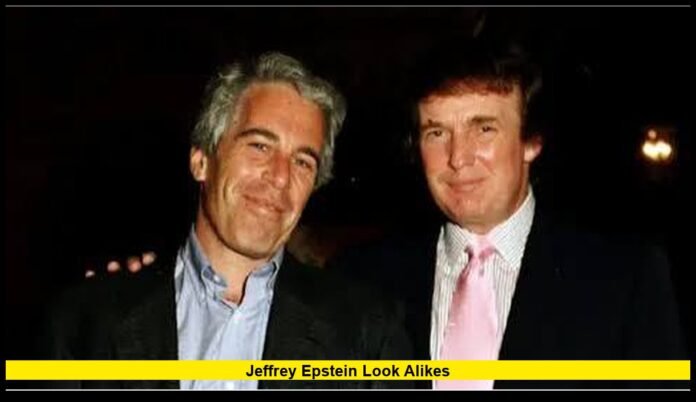

The jeffrey epstein look alike story has captured widespread attention after a Florida man’s appearance in a convertible sparked online speculation about the late financier. Known on social media as Palm Beach Pete, the man became an unexpected viral sensation in March 2026 after footage of him driving on Interstate 95 in South Florida circulated online. His striking resemblance to Epstein prompted thousands of reactions, renewed conspiracy theories, and questions about the difference between viral claims and verified facts.
The man has since spoken publicly to reject suggestions that he is Epstein. Despite the online frenzy, there is no credible evidence that the viral video depicts the deceased financier or changes the established facts surrounding his death.
How the Florida Video Sparked a Social Media Frenzy
The episode began when someone recorded a man driving a convertible on Interstate 95. The driver appeared to resemble Epstein closely enough that the person filming reacted with surprise and suggested that the financier might still be alive.
The footage quickly gained traction across social media platforms. Users shared clips, posted screenshots, and compared the driver’s facial features with photographs of Epstein.
The video’s rapid spread demonstrated how an ordinary moment can become a major online talking point when it involves a recognizable and controversial public figure.
For many viewers, the resemblance was the main attraction. Others used the footage to revive longstanding questions about Epstein’s death in federal custody in 2019.
However, the video itself offered no evidence supporting those theories. It showed a man whose appearance reminded viewers of Epstein, not proof that the two individuals were the same person.
Who Is Palm Beach Pete?
Palm Beach Pete is the nickname adopted by the Florida man who became the focus of the viral discussion. His unexpected online popularity followed the circulation of the highway footage in March 2026.
Pete subsequently addressed the attention in a public appearance and explained that he had been going about his normal routine when the video spread online.
He said the attention caught him by surprise. The footage had circulated widely before he fully understood how much interest it was generating.
His response helped clarify the central issue: he was not claiming to be Epstein, and he rejected the suggestion that he was the deceased financier.
The incident also placed an ordinary individual in an unusual position. Suddenly, strangers were discussing his appearance, speculating about his identity, and connecting him to one of the most controversial criminal cases in recent American history.
The viral nickname helped fuel the story, but it did not establish any connection between Pete and Epstein beyond their perceived physical resemblance.
What Did the Look-Alike Say About the Comparisons?
Pete publicly pushed back against the claims, making clear that he was not Epstein.
He also expressed discomfort with being associated with a person whose criminal history involved sexual abuse and trafficking allegations.
The reaction highlighted the personal consequences of viral speculation. Although online comparisons may seem humorous to some users, the individual at the center of the discussion must deal with the attention in real life.
A resemblance can be subjective, and photographs taken from different angles or under different lighting conditions can influence how similar two people appear.
More importantly, a person’s appearance cannot establish their identity, background, or involvement in criminal conduct.
Pete’s public response therefore remains an important part of the story. The speculation surrounding the video spread quickly, but the man himself rejected the central claim that he was Epstein.
What Happened to Jeffrey Epstein?
Jeffrey Epstein died on August 10, 2019, while being held at a federal detention facility in New York. At the time, he was awaiting trial on federal sex-trafficking charges.
The New York City medical examiner ruled his death a suicide by hanging. Subsequent investigations examined the circumstances of his detention and identified significant failures in the jail’s supervision and monitoring procedures.
Those failures became a major source of public concern. The case also attracted continued scrutiny because of Epstein’s relationships with wealthy, influential, and politically connected individuals.
However, documented problems with detention procedures do not prove that Epstein survived his death.
As of the latest available information, no credible evidence establishes that he is alive. The Florida video has not provided a basis for overturning the established record of his death.
It is essential to distinguish legitimate questions about institutional failures from unsupported claims that the financier secretly escaped accountability.
Why Epstein Sightings Continue to Trend Online
Interest in alleged Epstein sightings reflects several overlapping factors.
First, the case remains a subject of intense public attention because of the crimes, the victims’ experiences, and continuing questions about accountability.
Second, social media rewards content that generates strong reactions. A surprising resemblance can quickly attract comments, reposts, and millions of views, particularly when the person involved is associated with a major public controversy.
Third, conspiracy theories can gain momentum when people interpret ambiguous images as confirmation of beliefs they already hold.
The Florida video brought these factors together. The driver’s appearance made the footage immediately recognizable to many viewers, while Epstein’s death provided a controversial context that encouraged speculation.
Yet popularity is not the same as accuracy. Repeatedly sharing a claim does not make it more credible, and widespread attention cannot substitute for independent verification.
A Separate Wave of AI-Generated Epstein Images
The Florida incident unfolded during a broader period of online misinformation involving alleged sightings of Epstein.
In February 2026, an image circulated on social media claiming to show the financier alive on a street in Tel Aviv, Israel. The image was determined to be AI-generated rather than an authentic photograph.
The original version contained an identifiable AI watermark, while details in the street signage also raised questions about its authenticity.
Other images presented as recent sightings were traced to older photographs that had been digitally altered to make Epstein appear older, including versions with gray hair and a beard.
These incidents illustrate the difficulty of assessing viral content in an era when AI tools can produce realistic-looking scenes and manipulate existing photographs.
A convincing image may still be fabricated. Similarly, an authentic video may show a real person whose identity has been incorrectly assumed by viewers.
Both situations require careful examination before claims are treated as factual.
How to Separate Verified Information From Online Rumors
Readers encountering a new alleged sighting should consider the evidence behind the claim rather than relying solely on social media reactions.
Several checks can help establish whether an image or video deserves further attention:
- Look for the original footage: An original recording can provide context that cropped clips and screenshots omit.
- Check the timing and location: Claims about recent sightings should be supported by verifiable details.
- Examine images carefully: AI-generated content, digital alterations, and misleading edits can make false claims appear convincing.
- Seek independent confirmation: Multiple credible reports or reliable identification can provide stronger evidence than anonymous posts.
- Avoid assumptions based on appearance: Facial resemblance alone does not prove that two people are the same individual.
These steps are particularly important when a claim could damage an unrelated person’s reputation or encourage harassment.
What the Viral Story Means Going Forward
Palm Beach Pete’s sudden internet fame illustrates how quickly an individual’s life can change when a video becomes associated with a major news story.
The episode also demonstrates why responsible reporting matters. The resemblance may explain why the footage attracted attention, but it does not justify presenting an unsupported theory as fact.
The public’s interest in Epstein’s crimes, associates, and death remains understandable. That interest should be directed toward verifiable information, documented findings, and legitimate questions about accountability rather than unsubstantiated claims about strangers.
For now, the Florida driver’s viral moment remains a story about an unexpected resemblance and the power of social media to amplify speculation.
Frequently Asked Questions
Is Palm Beach Pete Jeffrey Epstein?
No. Palm Beach Pete has publicly denied being Epstein, and there is no credible evidence that the two men are the same person.
When did the Florida video go viral?
The video attracted widespread attention in March 2026 after the man was filmed driving a convertible on Interstate 95 in South Florida.
Is there proof that Jeffrey Epstein survived his death?
No credible evidence establishes that Epstein survived. His death in federal custody in August 2019 was officially ruled a suicide.
Was the viral photograph from Tel Aviv real?
No. A widely circulated image claiming to show Epstein alive in Tel Aviv in February 2026 was AI-generated.
Why did the look-alike story attract so much attention?
The combination of a striking resemblance, Epstein’s controversial history, and the speed of social media distribution helped the footage become a viral topic.
Conclusion
The viral Florida video brought Palm Beach Pete into the spotlight because viewers believed he resembled Jeffrey Epstein. His public denial, combined with the absence of credible evidence supporting claims that Epstein survived, provides important context for understanding the story.
As AI-generated images and viral speculation continue to circulate online, readers should prioritize verifiable evidence over assumptions. A familiar face can spark a headline, but only reliable evidence can establish identity and confirm what actually happened.