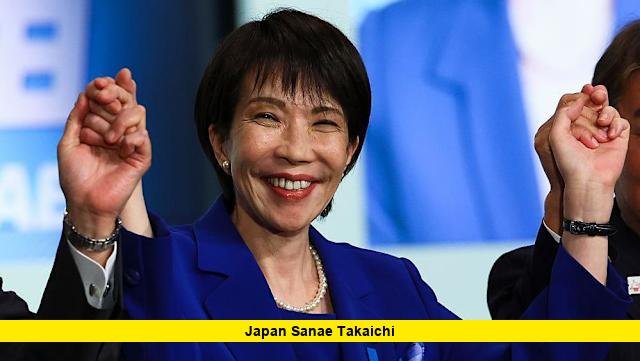

Japan Sanae Takaichi has officially made history as Japan’s first female prime minister, marking a transformative moment for the nation’s politics and global standing. Her election on October 21, 2025, represents a breakthrough in a country where political leadership has long been dominated by men.
Within the first 20 words, Japan Sanae Takaichi has become the defining figure in modern Japanese politics—bringing both continuity and change to the world’s third-largest economy.
A Historic Shift in Japanese Leadership
At 64 years old, Sanae Takaichi steps into office as Japan’s 104th prime minister, breaking a century-long glass ceiling in Japanese governance. She succeeded outgoing prime minister Shigeru Ishiba, who resigned following his party’s poor electoral performance earlier this year.
Takaichi secured her leadership after winning a tight parliamentary vote in Japan’s 465-seat Lower House. Her victory was supported by members of the ruling Liberal Democratic Party (LDP) and its temporary coalition allies.
This election is more than symbolic—it reshapes Japan’s image on the global stage. For U.S. readers, this leadership shift comes at a crucial time, as Tokyo strengthens its partnership with Washington amid rising regional tensions in East Asia.
Who Is Sanae Takaichi?
Born in Nara Prefecture in 1961, Sanae Takaichi has long been known as one of Japan’s most conservative and resilient politicians. A former broadcaster turned lawmaker, she entered politics in 1993 and steadily built her reputation through various cabinet roles.
She served as:
- Minister of Internal Affairs and Communications under Shinzo Abe
- Minister for Economic Security, overseeing AI and semiconductor strategy
- LDP Policy Chief, shaping party direction and fiscal planning
Her political mentor was the late Shinzo Abe, Japan’s longest-serving prime minister. Much like Abe, Takaichi emphasizes national pride, defense modernization, and economic revitalization—while holding socially conservative views.
Key Policy Directions Under Japan Sanae Takaichi
Takaichi’s leadership comes with a well-defined policy vision focused on defense, economy, and stability.
1. National Security and Defense Reform
One of her most ambitious goals is revising Article 9 of Japan’s constitution—the clause that renounces war. Takaichi believes Japan must take a more active role in regional security, especially amid rising tensions in the Indo-Pacific.
- She supports increasing Japan’s defense spending beyond 2% of GDP.
- Strengthening alliances with the U.S., Australia, and South Korea remains a top priority.
- Her administration aims to develop AI-driven defense systems and cybersecurity infrastructure.
This stance is likely to deepen U.S.–Japan defense cooperation, aligning with Washington’s goal of maintaining a free and open Indo-Pacific.
2. Economic Growth and Fiscal Stimulus
Economically, Takaichi identifies as a “fiscal dove.” She supports government stimulus to lift Japan out of slow growth and counter inflationary pressure.
Her fiscal plan includes:
- Temporary income tax cuts for households
- Cash payouts to lower-income citizens
- Major investment in AI, semiconductors, and green energy
- Incentives for women and younger entrepreneurs to enter the workforce
These moves are expected to stimulate domestic demand and attract renewed foreign investment, particularly from the U.S. technology and manufacturing sectors.
3. Social Policy and Cultural Conservatism
Despite her groundbreaking position as Japan’s first female prime minister, Takaichi holds firm conservative views. She has expressed opposition to same-sex marriage and maintains strict immigration policies. She also supports traditional family structures and cultural preservation.
Her critics argue that while her rise is historic, it may not lead to progressive gender reforms. Yet, many supporters believe her leadership could inspire more women to pursue political careers.
Coalition Politics and Challenges Ahead
Takaichi’s government faces a delicate balance. The LDP recently lost its long-term ally Komeito and has since formed a new coalition with the Japan Innovation Party. While this partnership gives her enough votes to govern, the alliance remains fragile.
Her biggest challenges include:
- Passing a constitutional amendment without a supermajority
- Managing rising living costs and currency fluctuations
- Repairing strained relations with China and South Korea
- Addressing Japan’s declining birth rate and aging population
Economically, Japan continues to face low consumer confidence and a weak yen. Takaichi’s plan to combine monetary easing with targeted spending will be a critical test of her leadership.
Impact on U.S.–Japan Relations
For U.S. audiences, the Japan Sanae Takaichi era is especially significant. The U.S. and Japan share deep ties in trade, technology, and defense, and Takaichi has pledged to strengthen those bonds even further.
Key implications include:
- Stronger Defense Cooperation: Her push for military modernization aligns with U.S. strategic objectives in the region.
- Economic Partnerships: Japan’s new investment in semiconductors and AI opens doors for U.S. firms.
- Regional Balance: Her firm stance toward China and North Korea complements Washington’s broader Asia policy.
- Cultural Exchange: Takaichi’s leadership may renew interest in women’s roles in politics and leadership across Asia.
This shift signifies that the U.S. will likely see Japan as an even more assertive, proactive partner in the coming decade.
Timeline of Key Events in the Japan Sanae Takaichi Era
| Date | Event |
|---|---|
| September 18, 2025 | Takaichi announces her candidacy for LDP leadership, emphasizing tax cuts and defense reform. |
| October 4, 2025 | Wins the LDP leadership runoff against Shinjiro Koizumi. |
| October 20, 2025 | Forms coalition with the Japan Innovation Party to secure parliamentary majority. |
| October 21, 2025 | Officially elected as Japan’s first female prime minister by the Lower House. |
The Road Ahead for Japan Sanae Takaichi
Sanae Takaichi steps into office at a time of economic uncertainty and geopolitical tension. Her leadership will be defined by how effectively she balances Japan’s traditional values with the demands of modern governance.
She faces a unique challenge: leading a nation that values stability while pushing for reform in security and innovation. Her ability to navigate these contradictions will determine her legacy.
For many observers in the U.S., Japan Sanae Takaichi represents a blend of history and strategy—a leader whose policies could reshape Asia’s power balance while deepening ties across the Pacific.
Japan Sanae Takaichi’s leadership marks a defining moment in the nation’s political history and a turning point for global diplomacy. Her next steps will be closely watched by both Japanese citizens and U.S. policymakers eager to see how her historic tenure reshapes Japan’s future.
What are your thoughts on Japan’s first female prime minister and her impact on global politics? Share your views below and stay tuned for more updates.