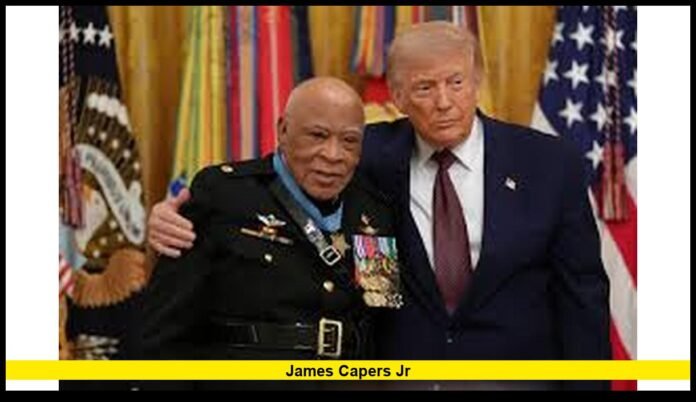

James Capers Jr has officially received the Medal of Honor, marking one of the most significant military recognition stories in the United States in recent years. The decorated Marine veteran, whose battlefield leadership during the Vietnam War inspired generations of service members, is now being honored with the nation’s highest military award for valor. The recognition closes a chapter that began nearly six decades ago and fulfills a goal that many veterans, military leaders, and supporters pursued for years.
The announcement has generated widespread attention throughout the military community and beyond. For many Americans, the award shines a spotlight on a remarkable Marine whose courage under fire, commitment to his fellow service members, and leadership in combat became legendary long before he received the Medal of Honor.
His story represents perseverance, sacrifice, and dedication to duty. It also reflects the Marine Corps tradition of placing mission accomplishment and the welfare of fellow Marines above personal safety.
A Historic Figure in Marine Corps History
Major James Capers Jr occupies a unique place in the history of the United States Marine Corps. Throughout his military career, he established himself as a respected combat leader and a trailblazer who broke barriers while serving at the highest levels of reconnaissance operations.
Born in South Carolina, Capers entered military service during a period of significant change in America. Despite social and institutional challenges facing African Americans at the time, he earned the respect of fellow Marines through discipline, professionalism, and exceptional performance.
His leadership qualities quickly became evident.
As his military career progressed, Capers took on increasingly demanding assignments. Those responsibilities eventually placed him among the Marine Corps’ most elite reconnaissance forces.
His achievements helped open doors for future generations of Marines while demonstrating that excellence and courage know no racial boundaries.
Today, his legacy extends far beyond the battlefield.
Early Military Career and Rise Through the Ranks
Before becoming a nationally recognized war hero, Capers built a reputation through hard work and determination.
The Marine Corps demands extraordinary physical and mental toughness from its members. Reconnaissance units require even higher standards. Marines assigned to these units often operate in small teams deep behind enemy lines, gathering intelligence and conducting missions under extremely dangerous conditions.
Capers excelled in that environment.
His ability to lead under pressure and make critical decisions during challenging situations distinguished him from many of his peers. Those qualities helped him rise through the ranks and earn leadership opportunities that carried significant responsibility.
Fellow Marines consistently praised his professionalism and commitment to mission success.
His growing reputation eventually positioned him for combat leadership during one of America’s most difficult military conflicts.
The Vietnam War and a Defining Mission
The event that ultimately led to Capers receiving the Medal of Honor occurred during the Vietnam War in 1967.
At the time, he commanded a reconnaissance patrol operating in hostile territory near Phu Loc. The mission required exceptional skill and careful planning.
Reconnaissance operations differed significantly from traditional combat missions.
Small teams often traveled through enemy-controlled areas with limited support. They depended on stealth, training, and teamwork to complete objectives and return safely.
During this particular operation, Capers and his Marines encountered overwhelming enemy resistance.
The situation quickly transformed into a life-or-death battle.
Enemy forces launched a fierce attack against the small reconnaissance team. The Marines suddenly found themselves outnumbered and under intense fire.
What happened next would become one of the most celebrated examples of battlefield leadership in Marine Corps history.
Leadership Under Relentless Enemy Fire
Combat often reveals the true character of military leaders.
For James Capers Jr, the battle near Phu Loc demonstrated extraordinary courage under the most dangerous circumstances imaginable.
As enemy fire intensified, members of his team suffered serious injuries. The situation became increasingly desperate.
Capers himself sustained severe wounds during the engagement.
Despite his injuries, he continued directing the defense.
Instead of focusing on his own condition, he concentrated on protecting the Marines under his command.
He coordinated responses to enemy attacks, organized defensive positions, and maintained control of the situation even as conditions deteriorated around him.
His actions helped prevent the team from being overwhelmed.
Many military observers later pointed to this period of the battle as a defining example of leadership under fire.
Serious Injuries Could Not Stop Him
The severity of Capers’ wounds makes his actions even more remarkable.
During the firefight, he suffered multiple injuries that would have incapacitated many people.
Yet he continued fighting.
Even while wounded, he remained focused on keeping his team alive.
The combination of physical pain, enemy pressure, and battlefield confusion would have challenged any leader.
Capers continued issuing orders and coordinating efforts to protect his Marines.
His determination became a source of strength for those around him.
Military history contains many examples of bravery, but few involve the level of sustained leadership demonstrated by Capers during this engagement.
His actions showed an unwavering commitment to duty despite extraordinary personal risk.
Protecting Fellow Marines Above Himself
One of the most powerful aspects of Capers’ story involves his concern for wounded teammates.
Military service emphasizes teamwork and selflessness. Marines depend on one another during combat situations where every decision can determine survival.
Capers embodied those values.
As evacuation efforts began, the priority became getting wounded Marines to safety.
Accounts of the battle describe how he repeatedly placed the welfare of others ahead of his own.
Even after suffering severe injuries, he focused on ensuring his teammates had opportunities to survive.
Those actions left a lasting impression on fellow Marines who witnessed the battle.
Many veterans later cited his self-sacrifice as one of the strongest arguments for awarding the Medal of Honor.
The courage he displayed extended beyond personal bravery.
It reflected a willingness to risk everything for the men serving beside him.
Why His Story Continued to Resonate for Decades
Although the battle occurred in 1967, discussions about Capers’ heroism never disappeared.
Veterans who served with him continued sharing stories about the mission.
Military historians studied the engagement and highlighted its significance.
Former commanders reviewed records and supported efforts to secure additional recognition.
As new generations learned about his actions, support for honoring him at the highest level continued growing.
Many believed that the extraordinary circumstances of the battle justified the Medal of Honor.
Their efforts kept the issue alive long after the Vietnam War ended.
The persistence of that support demonstrates the impact Capers had on those who knew him and those who studied his military record.
Recognition Beyond the Battlefield
While combat achievements often receive the most attention, Capers influenced the Marine Corps in many other ways.
He served as a role model for younger Marines.
His career demonstrated that leadership stems from character, competence, and dedication.
Throughout the years, Marines looked to his example when discussing courage and professionalism.
His achievements also carried broader significance.
As an African American officer serving in elite reconnaissance units, Capers helped expand opportunities within the military.
His success challenged assumptions and helped pave the way for future leaders.
Many service members view his accomplishments as an important part of the Marine Corps’ continuing evolution.
Growing National Support for Medal of Honor Recognition
Support for recognizing Capers at the highest level eventually extended far beyond military circles.
Veterans organizations advocated on his behalf.
Community leaders highlighted his service.
Lawmakers examined the circumstances surrounding the battle and supported renewed consideration of his record.
As public awareness increased, more Americans learned about his remarkable story.
The growing attention reflected a belief that extraordinary heroism deserves appropriate recognition regardless of how much time has passed.
Momentum continued building year after year.
The effort became one of the most prominent military recognition campaigns in modern American history.
Medal of Honor: The Nation’s Highest Military Award
The Medal of Honor represents the highest military decoration awarded by the United States.
Recipients must demonstrate conspicuous gallantry and intrepidity at the risk of life above and beyond the call of duty.
Only a small number of service members have earned the distinction.
The award recognizes actions that stand apart even among extraordinary acts of courage.
Receiving the Medal of Honor places Capers among an elite group of American heroes whose service reflects the highest ideals of military duty.
For supporters, the award confirms what many believed for decades.
His actions met the highest standard of valor recognized by the United States.
The White House Ceremony and National Recognition
The ceremony honoring Capers marked a historic occasion.
Military leaders, veterans, family members, and supporters celebrated the achievement.
The event served as a reminder of the sacrifices made by Americans who served during the Vietnam War.
For many veterans, the recognition carried deep emotional significance.
Some had spent years advocating for the award.
Others viewed the decision as an important acknowledgment of courage that should never be forgotten.
The ceremony also introduced Capers’ story to a broader audience.
Americans who were unfamiliar with his military service gained a greater appreciation for his contributions.
Lasting Impact on the Marine Corps
The influence of James Capers Jr continues throughout the Marine Corps today.
His leadership principles remain relevant for modern service members.
Young Marines studying military history often encounter his story as an example of determination and courage.
The values he demonstrated during combat remain central to Marine Corps culture.
Honor, courage, and commitment are more than words.
They represent standards that Marines strive to uphold every day.
Capers’ actions provide a real-world example of those ideals in practice.
His legacy continues shaping future generations of military leaders.
Why This Recognition Matters Today
The Medal of Honor awarded to Capers carries importance beyond one individual.
It reinforces the nation’s commitment to recognizing extraordinary service.
It reminds Americans that acts of heroism can inspire future generations long after the events themselves.
The recognition also highlights the importance of preserving military history.
Stories like Capers’ help Americans understand the sacrifices made by those who served in uniform.
They provide valuable lessons about leadership, resilience, and selflessness.
In a rapidly changing world, those lessons remain relevant.
The values demonstrated during the Vietnam War continue inspiring people today.
A Legacy That Will Endure
Few military careers leave a lasting mark on American history.
James Capers Jr achieved that distinction through courage, leadership, and unwavering dedication to fellow Marines.
His actions during one of the Vietnam War’s most dangerous battles established a legacy that endured for decades.
The Medal of Honor now formally recognizes what many Marines believed all along.
His service represented the highest traditions of the United States military.
Future generations will study his story not simply because of the award itself, but because of the character and sacrifice that earned it.
The recognition ensures that his contributions will remain an enduring part of Marine Corps history and the broader story of American military service.
The story of James Capers Jr continues to inspire Americans across generations, and his Medal of Honor recognition stands as a powerful tribute to courage, leadership, and sacrifice in service to the nation.