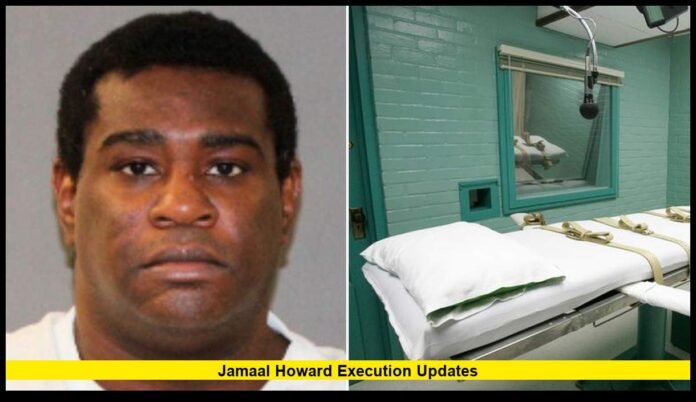

The latest jamaal howard execution update confirms that Texas carried out the 46-year-old death row inmate’s sentence after courts rejected his final attempts to stop the lethal injection. Howard was pronounced dead at 8:03 p.m. at the Huntsville Unit after receiving pentobarbital, ending more than two decades of litigation following the 2000 killing of convenience-store clerk Vickie Swartout in Silsbee, Texas.
Howard’s execution took place after a series of urgent legal challenges reached state and federal courts. His attorneys argued that he should not be executed because of questions surrounding intellectual disability and his ability to understand the constitutional implications of his sentence.
They also challenged the planned use of pentobarbital after a highly unusual failed execution in Tennessee.
Those arguments ultimately failed to secure a stay. The execution proceeded as scheduled, making Howard the first person executed in the United States after Tennessee death-row prisoner Christa Pike survived an attempted lethal injection.
Texas Carries Out Howard’s Death Sentence
Howard was executed at the Huntsville prison complex after the final legal barriers were removed.
The execution followed his 2001 conviction for capital murder in the death of Swartout, who was shot during a robbery at a Chevron station in Silsbee.
Howard was 20 years old when Swartout was killed.
More than 26 years after the crime, the case reached its final stage as lawyers made emergency efforts to prevent Texas from carrying out the sentence.
Howard received a lethal dose of pentobarbital. He was pronounced dead at 8:03 p.m.
His execution was closely watched because it came only days after Pike survived an attempted execution in Tennessee despite receiving two doses of pentobarbital.
Final Appeals Failed to Stop the Execution
Howard’s final legal campaign moved rapidly during the days before his scheduled execution.
The Fifth Circuit rejected his request to pursue another federal habeas challenge and separately denied a stay.
The appeals court concluded that Howard’s proposed second habeas petition faced significant procedural obstacles.
One issue involved the federal one-year statute of limitations for habeas petitions. The court determined that Howard could not overcome that limitation through equitable tolling.
The court also found that his renewed intellectual-disability argument had already been presented in earlier litigation.
As a result, the Fifth Circuit concluded that Howard had not demonstrated the legal basis necessary for another federal review.
The court also refused to stay the execution.
Supreme Court Rejects Emergency Requests
After the Fifth Circuit ruling, Howard’s attorneys continued their effort in the U.S. Supreme Court.
The emergency litigation included challenges related to the Fifth Circuit’s handling of his proposed successive habeas petition as well as a separate request involving the Texas Court of Criminal Appeals.
The Supreme Court ultimately rejected the emergency applications.
The decisions cleared the way for Texas to proceed.
The final rulings came only hours before the execution, leaving little room for additional judicial intervention.
With those requests denied, Howard’s attorneys could not obtain the stay needed to prevent Texas from carrying out the sentence.
Intellectual Disability Was a Major Issue
A central part of Howard’s final legal effort involved intellectual disability.
The Supreme Court ruled in 2002 that the Constitution prohibits the execution of people who are intellectually disabled.
Howard had previously raised an intellectual-disability claim during his federal habeas proceedings.
An assessment conducted in 2017 concluded that he did not have an intellectual disability under the standards being applied at that time. Howard subsequently abandoned that claim.
The issue later returned after changes in the legal and medical landscape surrounding intellectual-disability determinations.
Howard’s attorneys argued that newer clinical standards should allow the claim to be reconsidered.
They maintained that the earlier assessment did not resolve the constitutional question under the standards that should now apply.
The Fifth Circuit disagreed with the attempt to reopen the matter.
The court emphasized the procedural history of the case and concluded that Howard’s renewed claim could not overcome the restrictions governing successive federal habeas petitions.
That ruling became one of the most important developments in the final days before his execution.
Howard’s Earlier Federal Case
Howard’s legal battle had been ongoing for years before the final 2026 litigation.
After his conviction and sentence, he pursued direct appeals and state habeas proceedings.
His first federal habeas petition was filed in 2012.
During those proceedings, his legal team raised an intellectual-disability argument. Testing conducted several years later concluded that he was not intellectually disabled.
Following the Supreme Court’s decision in Moore v. Texas, which rejected the use of outdated medical standards in intellectual-disability cases, Howard abandoned the claim.
A federal district court rejected his remaining claims in 2019.
The Fifth Circuit later denied a certificate of appealability in 2020.
The Supreme Court denied his petition for review on January 11, 2021.
For several years, the federal litigation therefore remained closed.
The legal situation changed in 2026 when Texas scheduled Howard’s execution.
Texas Set the Execution Date
Texas scheduled Howard’s execution for October 7, 2026.
The state set the date on March 26.
As the execution approached, Howard’s attorneys revived arguments concerning his mental condition and intellectual functioning.
The renewed litigation reached the Texas Court of Criminal Appeals before moving through the federal courts.
The timing was critical.
Death-row appeals often involve multiple levels of review, but Howard’s renewed claims arrived only days before the scheduled execution.
That left the courts with a narrow window to determine whether his claims satisfied the requirements for additional review.
The Fifth Circuit ultimately ruled against him.
Concerns About Pentobarbital
The execution also attracted attention because of the drug Texas planned to use.
Texas used pentobarbital for Howard’s execution.
The same drug had been involved in Tennessee’s failed attempt to execute Christa Pike on September 30.
Pike survived after authorities administered two doses during the attempted execution. Her survival generated questions about what went wrong during the procedure and whether the drug or the administration process played a role.
Howard’s attorneys argued that the Tennessee incident raised serious concerns about the reliability and safety of the drug Texas intended to administer.
They also questioned the condition and quality of Texas’ execution drugs.
The Texas Court of Criminal Appeals rejected the request to halt Howard’s execution over those concerns.
The court did not provide a detailed explanation for its decision.
That ruling removed another potential barrier to the execution.
Why the Christa Pike Case Mattered
The Pike case dramatically changed the circumstances surrounding Howard’s scheduled execution.
Before Pike’s failed execution, Howard’s case was primarily focused on his constitutional and procedural challenges.
After the Tennessee incident, the planned use of pentobarbital became another major issue.
Pike was supposed to be executed in Tennessee on September 30.
Instead, the execution failed, and she survived.
The incident prompted intense scrutiny of Tennessee’s lethal-injection procedures and created additional attention around subsequent executions involving pentobarbital.
Howard’s lawyers argued that Texas should not proceed while questions remained unanswered about the reliability of the drug and the circumstances surrounding Pike’s failed execution.
Texas courts rejected that argument.
Howard was therefore executed using pentobarbital, making his case the first U.S. execution following the Tennessee incident.
The 2000 Murder of Vickie Swartout
The case against Howard originated with a robbery at a Chevron station in Silsbee.
On May 12, 2000, Swartout was working at the convenience store when Howard entered during the robbery.
Authorities said Howard shot Swartout during the crime.
Swartout was 42 years old.
Evidence presented during the prosecution included surveillance footage from the business.
The robbery produced a relatively small amount of money and cigarettes, but the killing resulted in a capital murder prosecution.
Howard was convicted the following year and sentenced to death.
The conviction and death sentence remained in place through years of state and federal appeals.
What Happened During Howard’s Final Hours
Howard was transferred from death row to the Huntsville Unit ahead of the execution.
During the trip, he reportedly spoke with correctional officers and remained engaged with them.
The final hours followed the established Texas execution process.
Once the courts had rejected the remaining appeals, there was no legal stay preventing the state from proceeding.
Howard was taken into the execution chamber.
Before the injection, he was given an opportunity to make a final statement.
He expressed remorse for Swartout’s death and apologized to members of her family who were present as witnesses.
Howard also expressed love toward his own family.
He was subsequently administered pentobarbital.
He was pronounced dead at 8:03 p.m.
A Long Legal Journey Comes to an End
Howard’s execution ended a legal process that began shortly after the 2000 murder.
The case passed through state courts, federal courts and the Supreme Court.
Over the years, attorneys challenged aspects of Howard’s conviction and sentence, including issues involving his mental condition.
The final proceedings were especially focused on whether his intellectual-disability claim could be reopened.
The courts concluded that procedural rules prevented that renewed federal challenge from moving forward.
The result was that the original death sentence remained enforceable.
By the time Howard reached the execution chamber, every major request for a stay had been rejected.
Key Developments in the Case
Several events shaped the final outcome:
- May 12, 2000: Vickie Swartout was killed during a robbery in Silsbee, Texas.
- 2001: Howard was convicted of capital murder and sentenced to death.
- 2012: Howard filed his first federal habeas petition.
- 2017: Testing concluded that Howard did not have an intellectual disability.
- 2019: A federal district court denied his remaining habeas claims.
- 2020: The Fifth Circuit denied a certificate of appealability.
- January 11, 2021: The Supreme Court denied Howard’s petition for review.
- March 26, 2026: Texas scheduled Howard’s execution for October 7.
- September 28, 2026: Howard renewed his intellectual-disability challenge in state court.
- October 5, 2026: The Fifth Circuit rejected authorization for another federal habeas petition and denied a stay.
- October 7, 2026: The Supreme Court rejected Howard’s emergency requests.
- October 7, 2026: Texas carried out Howard’s execution at the Huntsville Unit.
What the Latest Jamaal Howard Execution Update Means
The latest jamaal howard execution update leaves no pending execution date or immediate legal proceeding capable of stopping the sentence. Texas carried out the execution after the final state and federal challenges failed.
The case also placed renewed attention on two separate questions surrounding capital punishment.
The first involved the procedural limits governing repeated habeas petitions and when a death-row prisoner can reopen an issue previously raised in court.
The second involved the reliability of lethal injection following the failed Tennessee execution of Christa Pike.
Howard’s attorneys attempted to connect both issues to a request for a stay, but the courts declined to intervene.
His death marked the end of a case that had remained active in the legal system for more than two decades.
The execution also became the first U.S. use of lethal injection after the Tennessee incident involving Pike, giving Howard’s case significance beyond the individual litigation.
For Swartout’s family, the execution concluded a lengthy capital case stemming from her killing in 2000. For Howard’s family, it marked the final outcome of years of appeals and efforts to challenge the death sentence.
Jamaal Howard’s execution has now brought his decades-long death penalty case to an end, following the rejection of his final appeals and Texas’ decision to carry out the sentence.