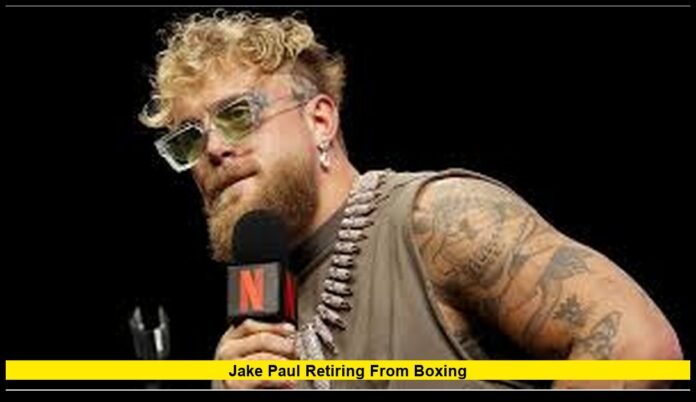

Jake Paul retiring from boxing is a topic dominating search trends in the United States following his most challenging professional fight to date. The discussion intensified after his December 2025 loss and subsequent medical recovery, leading many fans to question whether the YouTuber-turned-boxer has reached the end of his time in the ring.
As of today, there is no confirmed retirement from Jake Paul. What exists instead is a combination of verified injury updates, mandatory medical recovery, and deliberate career evaluation. Understanding the full picture requires separating confirmed facts from public reaction, while staying focused on what has actually occurred.
A Career Moment That Changed the Conversation
Jake Paul entered December 2025 as one of boxing’s most polarizing figures. His rise brought crossover appeal, record-setting pay-per-view numbers, and intense scrutiny from traditional boxing circles.
That conversation shifted dramatically after his heavyweight bout against Anthony Joshua. The result marked a defining moment, not because it ended his career, but because it forced a reassessment of direction.
A knockout loss at the elite level carries weight in any fighter’s career. For Paul, the magnitude was amplified by the audience watching and the expectations surrounding the event.
The Fight That Triggered Retirement Talk
The December fight was one of the most anticipated boxing events of the year. Jake Paul faced a former heavyweight champion with decades of experience and elite power.
From the opening rounds, the physical difference was evident. Paul remained competitive early but absorbed significant punishment as the fight progressed. The contest ended in a knockout loss during the sixth round.
This was the first time Paul had been stopped by strikes in his professional career. The outcome immediately fueled discussion around long-term safety, competitive ceilings, and future intentions.
Confirmed Injury and Medical Treatment
Following the bout, medical evaluations revealed a fractured jaw that required surgical intervention. The injury was not superficial and demanded immediate attention.
Doctors performed surgery that included stabilization of the jaw using medical hardware. Recovery protocols included:
- Restricted jaw movement
- A liquid-only diet for an initial recovery phase
- No contact training during healing
- Ongoing medical monitoring
This recovery period is medically mandated. In boxing, injuries of this nature require extended rest regardless of career plans.
Why Recovery Was Misread as Retirement
The confusion surrounding jake paul retiring from boxing grew because injury-related pauses are often misunderstood outside the sport.
Key factors contributing to the misunderstanding include:
- Silence during immediate post-surgery recovery
- Emotional tone in post-fight comments
- Viral clips lacking full context
- Rapid spread of assumptions on social platforms
None of these elements amounted to a declaration of retirement.
Jake Paul’s Own Words About His Future
Jake Paul addressed the situation directly after surgery. His messaging focused on health, accountability, and learning from defeat.
He confirmed several points clearly:
- He intends to recover fully before making decisions
- He plans to continue boxing once cleared
- He recognizes the need for strategic changes
He did not announce an end to his boxing career. His language consistently reflected continuation rather than closure.
Mandatory Medical Suspension Explained
After the fight, Paul received a standard medical suspension. These suspensions are issued automatically following knockouts and significant injuries.
The purpose is protection, not punishment. Fighters cannot compete, spar, or train at full capacity until doctors approve a return.
This process is routine in professional boxing and should not be interpreted as retirement.
How His Career Has Evolved to This Point
Jake Paul’s boxing career began with skepticism but developed into a legitimate professional run. Over time, he progressed from novelty bouts to sanctioned contests with increasing difficulty.
His record includes:
- Multiple professional victories
- Pay-per-view headlining events
- Victories over former combat sports champions
- National attention across mainstream media
Each step upward brought greater risk. The December loss represents the highest-risk bout of his career so far.
The Impact of Fighting at Heavyweight
One of the clearest lessons from the fight involved weight class. Competing at heavyweight placed Paul against naturally larger, more powerful athletes.
Heavyweight boxing amplifies damage and reduces margin for error. The physical demands are substantially higher than in cruiserweight divisions.
Paul has acknowledged that returning closer to his natural weight is a priority if he continues competing.
Why Retirement Has Not Been Confirmed
Several indicators show that Jake Paul has not retired:
- No official announcement ending competition
- No closure of boxing licenses
- No farewell messaging to fans
- Continued involvement in boxing promotions
In boxing, retirement announcements are typically unmistakable. None of those markers are present here.
The Business Side of Boxing Still Ties Him In
Beyond competition, Paul remains deeply involved in boxing business operations. His promotional work, brand partnerships, and event development continue to function.
These ongoing commitments suggest preparation for future activity, not disengagement from the sport.
Public Reaction Across the United States
Reactions to the fight and its aftermath varied widely:
- Supporters praised his willingness to face elite competition
- Critics questioned the decision to move up in weight
- Neutral observers focused on health and recovery
Despite differences in opinion, the majority response acknowledged that injury recovery should come first.
Social Media’s Role in Shaping the Narrative
Social platforms played a major role in amplifying the retirement narrative. Short clips, incomplete quotes, and speculative captions gained traction quickly.
The phrase jake paul retiring from boxing spread faster than verified updates, highlighting the speed at which misinformation can circulate.
How Fighters Typically Respond After Major Losses
Historically, boxers who suffer knockout losses often take extended time away. This allows:
- Physical healing
- Mental recalibration
- Technical adjustments
- Strategic reassessment
Many fighters return stronger after such periods. A pause does not equal an ending.
What Comes Next During Recovery
Jake Paul’s immediate focus remains on rehabilitation. That includes:
- Following medical timelines
- Avoiding premature training
- Gradual reintroduction to conditioning
- Waiting for clearance before sparring
These steps are essential regardless of future plans.
Potential Directions Once Cleared
While no fight dates are confirmed, realistic directions include:
- Competing at cruiserweight
- Facing opponents closer to his experience level
- Emphasizing technical development
- Balancing competition with promotion work
None of these require retirement.
Why This Moment Matters for His Career
This chapter represents a true turning point in Jake Paul’s professional boxing journey. The December 2025 fight exposed limitations that were not as evident in his earlier bouts, particularly in terms of size, power absorption, and pacing against elite heavyweight competition. At the same time, it also proved his heart and resilience, as he continued through multiple difficult rounds and showed a willingness to face a top-level opponent rather than avoid challenge.
Paul’s performance against a former heavyweight champion under intense global scrutiny revealed both areas for growth and aspects of his competitive mindset that can be refined. Physically, the bout highlighted the importance of competing at a weight class that aligns more closely with his natural size and athletic profile. Mentally, it underscored his determination to face adversity head-on and to absorb the lessons learned rather than retreat. This combination of humility and confidence will shape his training approach, opponent selection, and long-term strategy going forward.
In practical terms, the experience is likely to influence how Paul and his team plan his return. Expect adjustments in conditioning emphasis, defensive technique, and fight pacing designed to build a more complete and resilient fighter. This adaptability sets the stage for a new phase of growth in his career rather than an end to it. That is why this moment matters: it is not simply a reaction to a single fight, but a catalyst for evolution in how he approaches boxing as a serious, professional athlete.
The Difference Between Evaluation and Exit
Evaluation is common after setbacks. Exit requires finality.
Jake Paul is currently evaluating, not exiting.
He has remained engaged, communicative, and active in the sport’s ecosystem during recovery.
The Long-Term View of Influencer Boxing
Jake Paul’s career has influenced an entire segment of modern boxing. His next steps will impact how crossover fighters are perceived.
Whether he returns immediately or takes extended time, his involvement remains relevant.
Why Accuracy Matters in Coverage
Mislabeling recovery as retirement misleads audiences. Accurate reporting respects both the athlete and readers.
As of today, the confirmed reality remains unchanged.
Final Perspective on Jake Paul Retiring From Boxing
The idea of jake paul retiring from boxing continues to circulate widely, but the most current confirmed updates make it clear that this narrative does not reflect reality. Jake Paul has not retired from professional boxing. He is currently in a structured recovery phase after sustaining a serious jaw injury in his December 2025 fight, an injury that required surgery and an extended healing period. Medical guidance has placed him on temporary restrictions, including limited physical activity and a gradual return to training once fully cleared, which explains his current absence from competition.
During this recovery window, Paul has remained publicly engaged and forward-looking rather than withdrawn. He has acknowledged the difficulty of the loss, taken responsibility for the outcome, and emphasized the importance of learning from the experience. At the same time, he has reiterated his intention to continue boxing, noting that his next chapter will involve smarter planning, improved conditioning, and a return to a weight class better aligned with his natural frame. These steps reflect preparation and recalibration, not a departure from the sport.
This phase represents a pivotal moment in Jake Paul’s boxing journey. The injury and loss have forced reflection, but they have not closed the door on his career. Instead, they have reshaped his path forward. As of now, he remains an active professional boxer in recovery, with future plans centered on returning healthy, competitive, and more strategically positioned than before. This moment is significant, but it is not final.
Do you believe Jake Paul’s future lies in a return to the ring or a new direction within boxing? Share your thoughts and keep following for updates as his recovery continues.