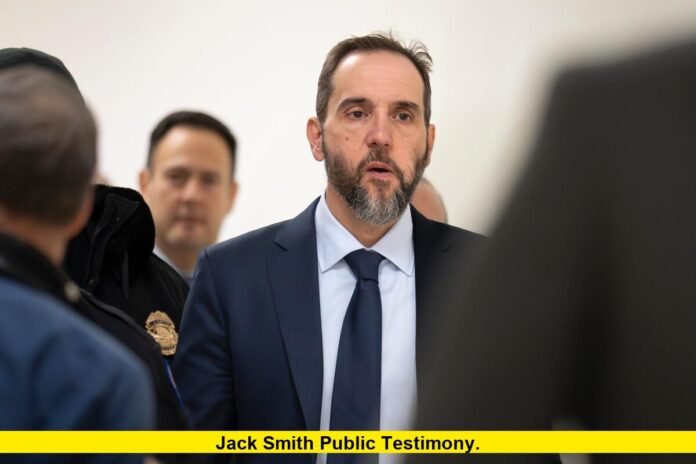

On January 22, 2026, jack smith public testimony grabbed national attention as the former special counsel appeared before the House Judiciary Committee in an unprecedented live session. For the first time, Smith publicly defended his leadership of two major federal investigations into Donald Trump, offering detailed justifications for his decisions and confronting aggressive questions from lawmakers. The event unfolded amid fierce political divisions and intense media coverage, making it a defining moment in the intersection of law and politics in the United States.
The hearing offered an unfiltered view of how those investigations were conducted, how Smith interpreted the evidence his teams gathered, and why he believes his decisions were legally sound. With the nation watching closely, this public testimony has quickly become a focal point for debates over prosecutorial independence, congressional oversight, and accountability at the highest levels of government.
A High-Stakes Moment on Capitol Hill
Smith’s session began at 10:00 a.m. Eastern Time in the House Judiciary Committee’s hearing room in Washington, D.C. This marked the first opportunity for the public and media to see Smith defend his investigative work in open session. Prior to this, he had testified behind closed doors for more than eight hours in December 2025, answering questions from committee members in private.
The public hearing provided a broader stage and sharper spotlight, injecting fresh urgency into conversations about the conduct of federal investigations into a former president. Members of Congress from both parties were present, and tensions were evident from the opening statements.
Smith’s Core Message: Legal Duty Over Politics
Smith used his time on the witness stand to make clear that his actions as special counsel were guided by evidence and legal obligation, not political agenda. He stressed that every decision his office made was anchored in established prosecutorial standards. Smith asserted that if faced with the same facts again, he would pursue the same course regardless of the individual’s political identity.
He defended the integrity of his team and the professionalism of his staff, emphasizing they followed legal protocols and acted independently throughout the investigations. Smith also pushed back against claims that his work was designed to influence public opinion or political outcomes.
Major Points of Inquiry From Lawmakers
Republican members of the committee quickly shifted to criticism, focusing on areas they believe raise constitutional or ethical concerns. Questions from Republican lawmakers centered on:
- Whether parts of the investigations overreached legal boundaries, especially actions involving the review of phone records linked to Republican senators during the post-election period.
- Allegations that certain investigative tactics went beyond typical prosecutorial conduct.
- Claims that the overall effort was part of a broader campaign against Trump and his allies.
Republicans repeatedly pressed Smith to explain his choices and to justify why he pursued the specific charges that he did, arguing that his actions had lasting impacts on public perception of federal law enforcement. Despite these challenges, Smith stood firm, reiterating that his investigations followed lawful procedures and adhered to legal standards at all times.
Democrats Highlight National Security and Rule of Law
Democratic members of the panel offered strong support for Smith’s testimony, emphasizing the seriousness of the underlying conduct that prompted the investigations. They focused on the broader context of actions that sought to disrupt the peaceful transfer of power after the 2020 election and concerns about mishandled classified materials.
Supporters on the committee framed Smith’s work as an essential check on conduct that could undermine democratic processes. They echoed Smith’s assertions that federal law applies equally to all individuals, including high-ranking political figures, and that accountability is critical for upholding the rule of law.
The January 6 Allegations at the Heart of the Hearing
At the center of much of the questioning was the investigation into the events around January 6, 2021. Smith reiterated that his team uncovered significant evidence suggesting concerted efforts to overturn the legitimate outcome of the 2020 election. He maintained that the weight of that evidence met the standard required to bring criminal charges and that failing to act would have been a dereliction of duty.
Republican lawmakers challenged elements of this narrative, insisting that the inquiry mischaracterized political actions and intentions. They argued that some interpretations of the evidence were overly broad. Smith countered these points by walking through procedural decisions and reaffirming the evidentiary basis for his prosecutorial strategy.
Classified Documents Investigation and Limits on Disclosure
The hearing also touched on Smith’s handling of the classified documents case, though much of the discussion was constrained by court orders sealing key portions of that investigation. Smith could not publicly disclose many details related to that part of his work, but he affirmed that it was pursued with strict adherence to legal standards and in line with obligations to protect sensitive information.
He reminded the committee that both major cases under his purview were ultimately dropped after Trump’s successful 2024 election campaign due to longstanding Justice Department policy that generally prohibits charging a sitting president. Despite the dismissals, Smith emphasized that the legal merits of the evidence remained unchanged.
Partisan Reactions and Immediate Aftermath
The hearing drew immediate reactions across political lines. Supporters of Smith’s testimony praised his transparency and his willingness to face tough questions in a public forum. They saw the session as a crucial opportunity for the American public to hear directly from a former prosecutor about high-profile legal decisions.
Critics, especially among Republican leaders, continued to characterize the investigations as flawed or politically motivated. They vowed to pursue further oversight and have called for deeper scrutiny of federal prosecutorial practices when they involve major political actors.
The contrasting responses highlight how deeply divided opinions are on issues of federal law enforcement and its intersection with national politics.
Broader Significance for U.S. Governance
Beyond its immediate political impact, Smith’s testimony carries broader implications for how federal investigations into elected officials are perceived and managed. Legal analysts suggest that this hearing could influence discussions about the independence of special counsels and how Congress exercises oversight over justice system officials.
The session also underscores ongoing debates about transparency in government. Advocates for open proceedings argue that public hearings build trust and understanding among citizens, while opponents caution that such forums can be exploited for political theater rather than genuine inquiry.
What Comes Next in the Congressional Review
Although Smith’s public testimony was a major moment, it may not be the final chapter in Congress’s examination of his work. Lawmakers on both sides have signaled that they may pursue additional hearings, requests for documents, or legislative proposals aimed at refining or restricting prosecutorial authority.
Committee members have not ruled out further questioning, especially if new information emerges or if the sealed portions of Smith’s investigations are later unsealed. These follow-up actions could extend the political and legal reverberations of the hearing well into the year.
How the Public Is Responding
Public reaction to the hearing has been intense and varied. Supporters of the investigations see Smith’s testimony as a vindication of the justice system’s impartiality, while detractors view it as confirmation of deep political divisions within American government institutions.
Social media buzz and commentary from political leaders reflect a nation sharply split on how federal investigations should be conducted when they involve powerful political figures. With many Americans following the developments closely, the outcomes of this congressional hearing may shape public trust in both the justice system and legislative oversight for years to come.
Insights From Legal Experts
Legal commentators observing the proceedings note that Smith’s testimony offered rare insight into a special counsel’s reasoning under pressure. Few former special counsels have faced such extended public scrutiny in a live congressional venue.
Experts highlight that Smith’s emphasis on evidence and strict procedural adherence could become a reference point in future debates about the role of independent prosecutors. Similarly, the contentious exchanges with lawmakers may influence how future congressional committees prepare for and conduct oversight of complex legal matters.
Enduring Questions After the Hearing
Even after hours of questioning and detailed exchanges, many questions remain unresolved. How far Congress will go in redefining limits on federal investigations is still unclear. What impact this hearing will have on public perception of the justice system is equally uncertain.
What is certain is that this public testimony has become a pivotal event in shaping how Americans view accountability, law enforcement, and political influence.