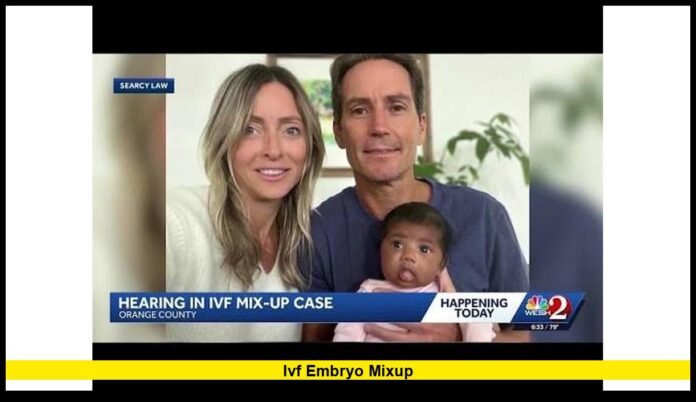

The ivf embryo mixup case involving two Florida families remains one of the most significant fertility-related legal stories in the United States. Recent developments brought a major turning point after the families involved reached a custody agreement concerning a child born following a fertility clinic error. The case has sparked nationwide discussion about reproductive medicine, patient protections, embryo tracking systems, and the emotional consequences that can arise when mistakes occur during in vitro fertilization treatment.
As the legal proceedings continue, the situation has become a powerful example of how a single error inside a fertility clinic can affect multiple families for years. While a custody arrangement has now been established, many questions surrounding accountability and embryo handling procedures remain unresolved.
Understanding the Florida Fertility Clinic Case
The case centers on Florida residents Tiffany Score and Steven Mills, who pursued in vitro fertilization after facing challenges in their journey to parenthood.
The couple created embryos using their own genetic material and trusted a fertility clinic to manage the storage and transfer process. IVF treatment involves several highly controlled laboratory steps designed to ensure that each embryo remains accurately identified throughout treatment.
Everything appeared to progress normally when one embryo was transferred and a pregnancy followed.
Months later, after the child was born, the family began noticing physical characteristics that raised questions. Those concerns eventually led to genetic testing.
The results changed everything.
Testing revealed that the child was not genetically related to either parent.
The discovery confirmed that an embryo belonging to another couple had been transferred during treatment.
What should have been a routine fertility success story quickly transformed into a complex legal, medical, and emotional challenge involving multiple families.
A Discovery That Changed Several Lives
Few medical mistakes have consequences as far-reaching as an embryo transfer error.
Unlike many healthcare errors that affect a single patient, an embryo mixup can impact parents, children, biological relatives, and future family planning decisions.
When Score and Mills learned the truth, they faced an unimaginable situation. They had carried the pregnancy, welcomed the child into their home, and formed a deep parental bond. At the same time, DNA testing established that another couple shared the child’s biological connection.
The revelation created difficult questions that had no easy answers.
Who should be considered the child’s legal parents?
How should courts balance genetics with the reality of caregiving?
What rights should biological parents have when their embryo was mistakenly transferred to another family?
These questions became central to the legal battle that followed.
How IVF Procedures Are Supposed to Work
To understand the significance of the case, it helps to examine how IVF treatment normally operates.
In vitro fertilization involves combining eggs and sperm in a laboratory environment. Once fertilization occurs, embryos develop under carefully monitored conditions before being transferred to a patient’s uterus or stored for future use.
The process generally includes:
- Ovarian stimulation
- Egg retrieval
- Fertilization
- Embryo culture
- Embryo grading
- Embryo storage
- Embryo transfer
Each step requires extensive documentation and verification.
Most fertility clinics utilize multiple identification checkpoints to reduce the risk of errors. Laboratory staff typically verify patient information repeatedly throughout treatment.
Modern fertility centers often employ digital witnessing systems, barcode scanning technology, electronic tracking platforms, and dual verification procedures.
Despite these safeguards, rare mistakes can still occur.
The Florida case has renewed public attention on how fertility clinics monitor embryos and maintain accuracy throughout treatment.
Search for the Biological Parents
After the genetic testing results became known, efforts began to identify the child’s biological parents.
The process involved extensive review of medical records, laboratory documentation, and genetic information.
Because fertility clinics handle reproductive materials for many patients, determining the origin of an embryo can require a significant investigation.
Eventually, the biological parents were identified.
The discovery created another emotional chapter in the story.
The biological parents learned that their genetic child had been born and was being raised by another family. At the same time, the birth parents faced the possibility of a legal dispute involving the daughter they had cared for since birth.
The circumstances placed both families in an extraordinarily difficult position.
Why the Case Captured National Interest
The story quickly attracted national attention because it touched on several important issues at once.
First, it involved fertility treatment, an area of healthcare used by thousands of American families each year.
Second, it raised questions about trust in reproductive medicine.
Patients place immense confidence in fertility clinics when they undergo treatment. They expect embryos to be accurately identified, stored, and transferred.
Third, the case highlighted the growing legal complexities surrounding assisted reproduction.
Traditional family law often focuses on biological relationships, adoption, or marriage. Cases involving embryo mixups create unique circumstances that challenge existing legal frameworks.
As details emerged, many families undergoing fertility treatment closely followed developments.
June 2026 Custody Agreement Marks Major Turning Point
A significant breakthrough occurred in June 2026 when the families reached a custody agreement.
The arrangement provided a path forward without requiring a lengthy courtroom battle.
Under the agreement, Tiffany Score and Steven Mills will continue serving as the child’s custodial parents.
The resolution allows the child to remain in the home where she has been raised since birth.
The agreement also acknowledges the biological connection shared by the child’s genetic parents.
Although many details remain confidential, the arrangement is widely viewed as an effort to prioritize the child’s stability and long-term well-being.
Family law professionals frequently emphasize that continuity and stability are important considerations in cases involving young children.
The agreement reflects those priorities while recognizing the extraordinary circumstances involved.
The Emotional Impact on the Birth Parents
For the parents who carried and delivered the child, the discovery created intense emotional stress.
They entered fertility treatment hoping to build a family using their own embryos.
Instead, they learned that a clinic error had fundamentally altered their reproductive journey.
The situation forced them to navigate uncertainty while continuing to care for their daughter.
Every legal filing carried the possibility of major consequences.
At the same time, they remained committed to protecting the child they had loved since birth.
The experience demonstrates how fertility clinic errors can extend far beyond medical complications.
The emotional impact often lasts long after the initial mistake is discovered.
The Biological Parents Faced Their Own Heartbreak
The biological parents experienced a different but equally profound challenge.
Learning that a genetic child exists can be life-changing under any circumstances.
Learning that the child was born because of a fertility clinic error creates an entirely different reality.
They faced difficult decisions regarding custody, parental rights, and future involvement.
The case illustrates how embryo mixups can create pain for everyone involved.
There are rarely simple solutions because each family develops legitimate emotional connections to the child.
As a result, courts and attorneys often confront questions that have no clear precedent.
Read More – Is Huntington’s Disease Hereditary? Understanding the Genetic Link
Questions About the Remaining Embryos
Even with the custody issue addressed, other concerns remain.
One of the most significant involves the status of additional embryos created by Score and Mills.
The couple originally had multiple embryos associated with their fertility treatment.
Questions surrounding embryo identification and storage have continued to be examined through legal proceedings.
For families undergoing IVF, embryos often represent years of planning, financial investment, medical treatment, and emotional commitment.
Any uncertainty regarding embryo identity naturally raises serious concerns.
The ongoing litigation seeks to clarify how the error occurred and whether additional problems may have affected embryo records.
Fertility Clinic Under Legal Scrutiny
The fertility clinic involved in the case has faced extensive legal scrutiny.
The lawsuits focus on the procedures used to identify, store, and transfer embryos.
The central issue is straightforward.
Patients expect fertility clinics to maintain accurate records and ensure that each embryo is transferred to the correct recipient.
When that process breaks down, the consequences can affect multiple families simultaneously.
Legal claims continue to examine whether existing safeguards were followed and whether stronger procedures could have prevented the error.
The outcome may influence future standards across the fertility industry.
Closure of the Fertility Center of Orlando
Another major development occurred when the Fertility Center of Orlando announced plans to cease operations.
The closure generated significant attention because it happened while legal disputes involving embryo handling remained active.
Patients with stored reproductive materials needed information regarding transfers and future storage arrangements.
Many former patients sought reassurance that their embryos and records remained secure.
The closure also intensified public discussion about oversight within the fertility sector.
Industry observers noted that confidence is essential in reproductive medicine.
Patients often spend years preparing for treatment and invest substantial financial resources in the process.
Trust plays a critical role in every stage of care.
Are IVF Embryo Mixups Common?
Cases involving embryo mixups receive extensive media attention because of their unusual nature.
However, fertility experts generally consider such incidents rare compared with the overall number of IVF procedures performed each year.
Hundreds of thousands of assisted reproductive technology cycles occur annually across the United States.
Most are completed without major laboratory errors.
Still, even a small number of mistakes can have enormous consequences.
That reality explains why fertility clinics invest heavily in tracking systems and quality-control procedures.
The Florida case demonstrates that rare events can still create lasting effects for families and healthcare providers.
Growing Calls for Stronger Patient Protections
The case has prompted renewed discussions about fertility clinic regulation and oversight.
Advocates have highlighted several areas where improvements may strengthen patient confidence.
These include:
Enhanced Verification Systems
Advanced tracking technologies can create additional safeguards during embryo handling.
Independent Audits
Regular reviews may help identify procedural weaknesses before problems occur.
Improved Documentation
Detailed records can improve accountability and reduce confusion during investigations.
Staff Training
Continuous education helps laboratory personnel maintain high standards of accuracy.
Transparency
Clear communication with patients remains essential whenever concerns arise.
Supporters believe stronger protections could help reduce the likelihood of future errors.
Legal Implications Beyond Florida
The significance of this case extends beyond a single state.
Courts across the country continue to confront evolving questions involving reproductive technology.
As IVF becomes more common, legal systems must address situations that previous generations rarely encountered.
Issues involving embryo ownership, parental rights, custody disputes, and clinic liability are becoming increasingly important.
The Florida case may influence future legal discussions regarding how courts approach similar disputes.
Attorneys, healthcare providers, and policymakers are watching closely.
Trust Remains Central to Fertility Treatment
For many families, IVF represents hope after years of infertility, pregnancy loss, or other reproductive challenges.
Patients trust fertility clinics with some of the most important decisions of their lives.
That trust depends on confidence in laboratory procedures and patient safeguards.
When an error occurs, rebuilding confidence can be difficult.
The Florida case serves as a reminder of the responsibility carried by fertility providers.
Every embryo has profound personal significance to the people who created it.
Protecting that trust remains one of the industry’s most important obligations.
Looking Ahead
The custody agreement reached in June 2026 brought stability to a child whose life became the center of a national legal dispute.
While that chapter has moved forward, ongoing legal proceedings continue to examine broader questions involving clinic practices, embryo management, and accountability.
The case remains one of the most closely watched fertility-related stories in the United States.
Its impact extends beyond the families directly involved, influencing conversations about reproductive medicine, patient safety, and legal protections nationwide.
As courts continue reviewing the remaining issues, the story stands as a powerful reminder of both the promise of fertility treatment and the importance of maintaining the highest standards of care throughout every step of the IVF process.
The IVF embryo mixup case continues to shape discussions about fertility care in America, and many readers will be watching closely as new developments emerge in the months ahead.