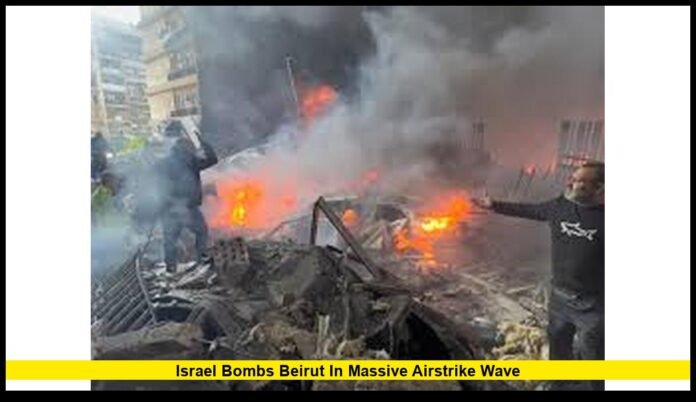

The situation in the Middle East took a sharp and dangerous turn as israel bombs beirut, triggering one of the most intense escalations seen in recent months. A series of powerful airstrikes struck multiple areas of Lebanon’s capital, sending shockwaves across the region and raising urgent concerns about the potential for a wider conflict.
The strikes unfolded rapidly, with explosions reported across Beirut in quick succession. Residents described scenes of panic as buildings shook, fires erupted, and emergency sirens filled the air. Within hours, the attacks dominated global attention, highlighting the fragile and volatile state of the ongoing confrontation between Israel and Hezbollah.
Understanding what led to this moment, how the attacks were carried out, and what it means for civilians and international stability is critical as events continue to unfold.
Stay informed as we break down the latest developments and what they signal for the days ahead.
A Sudden and Powerful Wave of Airstrikes
The latest air campaign targeted several locations across Beirut and surrounding regions. Witnesses reported hearing multiple jets overhead before a sequence of explosions lit up the skyline.
The strikes were not limited to one district. Instead, they were spread across different parts of the city, indicating a coordinated effort aimed at multiple objectives simultaneously. Smoke columns rose from several neighborhoods, while emergency responders rushed to affected areas to search for survivors and contain fires.
This level of intensity marked a significant escalation compared to earlier incidents. The scale of the operation suggested a shift in strategy, focusing on delivering a strong and immediate impact.
For many residents, the attacks came with little warning, leaving communities scrambling to find safety amid the chaos.
Targets and Strategic Objectives
Israeli officials indicated that the airstrikes were directed at sites believed to be linked to Hezbollah’s military infrastructure. These included locations described as command centers, storage facilities, and operational hubs.
The complexity of the situation lies in the geography of Beirut itself. Many of the targeted areas are densely populated, with residential buildings, businesses, and public spaces located close to one another. This proximity has made it difficult to isolate military targets without affecting civilian surroundings.
Military planners emphasized that the operation was designed to weaken Hezbollah’s capabilities and disrupt its ability to launch attacks. However, the urban environment has amplified the consequences of these strikes, increasing the risk to civilians and infrastructure.
Immediate Impact on Civilians
The human toll of the strikes has been severe. Hospitals in Beirut quickly reported an influx of injured individuals, many suffering from blast-related injuries and burns.
Emergency teams worked around the clock, navigating damaged roads and unstable structures to reach those trapped under debris. In some areas, rescue efforts were slowed by ongoing fires and the risk of additional collapses.
Families were forced to flee their homes in the middle of the night, carrying only what they could manage. Shelters, already under strain from previous waves of displacement, became even more crowded.
Electricity outages and communication disruptions added to the confusion, making it harder for people to locate loved ones or receive updates about safety conditions.
Beirut’s Infrastructure Under Strain
The airstrikes have placed enormous pressure on Beirut’s infrastructure.
Several buildings sustained heavy damage, including residential complexes and commercial properties. Roads in affected districts became blocked with debris, complicating emergency access and slowing down aid delivery.
Power outages spread across multiple neighborhoods, leaving many residents without electricity. Water systems were also impacted in certain areas, raising concerns about access to basic necessities.
Healthcare facilities, already stretched thin, faced mounting challenges as they struggled to accommodate the growing number of patients. Medical staff worked extended hours, often with limited supplies, to treat the injured.
Hezbollah’s Position and Possible Response
Hezbollah has not immediately launched a large-scale retaliation following the latest strikes, but the situation remains highly volatile.
The group has previously signaled that its actions are tied to developments on the ground. With continued airstrikes targeting areas within Lebanon, the likelihood of a response remains a key concern.
Any escalation from Hezbollah could lead to a broader cycle of attacks, increasing the risk of sustained conflict. Observers note that both sides appear to be carefully weighing their next moves, even as tensions remain at a critical level.
Regional Tensions and Broader Context
The latest developments in Beirut are part of a larger pattern of rising tensions across the Middle East.
Clashes between Israel and Hezbollah have intensified over recent months, fueled by a combination of military actions, political dynamics, and regional rivalries. The situation has been further complicated by overlapping conflicts and shifting alliances.
While some diplomatic efforts have aimed to reduce tensions in other areas, the front involving Lebanon has remained active. This has created a complex landscape where progress in one area does not necessarily translate into stability elsewhere.
The strikes on Beirut highlight how quickly the situation can escalate, even amid attempts at broader de-escalation.
International Concern and Diplomatic Pressure
The airstrikes have drawn strong reactions from around the world.
Governments and international organizations have expressed concern about the growing civilian impact and the risk of further escalation. Calls for restraint and dialogue have increased, with many urging all sides to prioritize the protection of civilians.
Diplomatic efforts are underway to address the situation, but progress remains uncertain. The challenge lies in balancing immediate security concerns with the need for long-term stability.
As discussions continue, the reality on the ground remains tense, with ongoing uncertainty about how events will unfold.
Economic and Global Implications
The conflict has implications that extend far beyond the region.
Rising tensions in the Middle East can influence global markets, particularly in areas such as energy and trade. Uncertainty about the stability of the region often leads to fluctuations that can impact economies worldwide.
For the United States and other countries, the situation also carries strategic importance. Decisions made in response to these developments can shape diplomatic relations and security policies.
The escalation in Beirut serves as a reminder of how interconnected global events have become.
Life in Beirut Amid the Crisis
For residents of Beirut, daily life has been profoundly disrupted.
Schools have closed in several areas, and businesses have shut down as safety concerns take priority. Streets that were once busy with activity now show signs of damage and abandonment in affected districts.
Despite these challenges, communities have shown resilience. Neighbors have come together to support one another, sharing resources and helping those in need.
Volunteers have joined emergency efforts, assisting with rescue operations and providing aid to displaced families. These acts of solidarity highlight the strength of local communities in the face of adversity.
What to Watch in the Coming Days
The next phase of the situation will depend on several key factors.
A major concern is whether further airstrikes will continue at the same intensity. The possibility of retaliation from Hezbollah also remains a critical variable that could shape the trajectory of the conflict.
Diplomatic efforts will play a significant role in determining whether tensions can be reduced. However, achieving meaningful progress will require coordination among multiple stakeholders, each with their own interests and priorities.
The situation remains fluid, with developments unfolding rapidly.
Conclusion
The latest escalation, marked by the moment israel bombs beirut, underscores the fragile and unpredictable nature of the conflict. What began as a series of localized clashes has evolved into a broader confrontation with significant humanitarian and geopolitical consequences.
As Beirut grapples with the aftermath of the airstrikes, the world watches closely, aware that the next steps could have far-reaching implications.
What do you think about the escalating situation in Beirut? Share your thoughts and stay connected for the latest updates as this story continues to unfold.