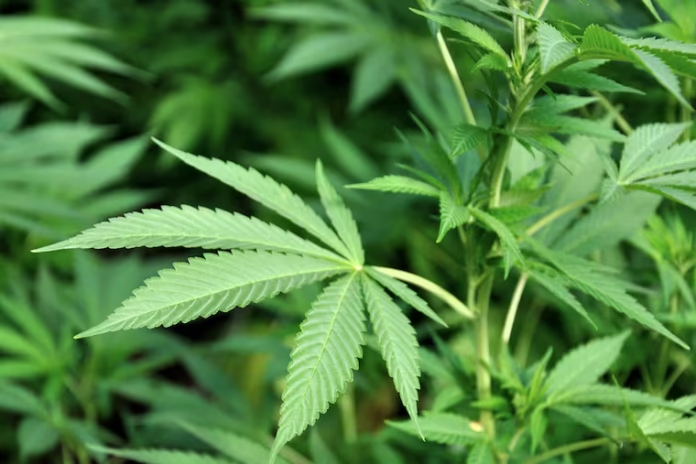

Is weed legal in Minnesota? Yes, recreational cannabis use by adults 21 and older has been legal since August 1, 2023, after the state passed a comprehensive cannabis reform bill. This change allowed adults to possess, grow, and consume cannabis under defined limits. However, while the law legalized possession and home cultivation, the commercial marketplace has taken longer to roll out, leaving residents with a mix of freedoms and restrictions.
Current Legal Status and Possession Rules
Minnesota law clearly outlines what adults over 21 are allowed to possess and grow for personal use. Under the state’s legalization framework, individuals may possess up to 2 ounces of cannabis flower in public, giving adults the ability to carry a reasonable amount while outside the home for personal use.
The law also permits adults to hold up to 8 grams of cannabis concentrate, which includes stronger, more refined forms like oils or waxes. These products are more potent, which is why the limit is set lower than for flower.
For edibles, adults are allowed to carry up to 800 milligrams of THC when they are outside their home. This total includes all edible products in their possession, such as gummies or infused snacks.
Inside the home, Minnesota allows a much larger amount. Adults may store up to 2 pounds of cannabis flower in their private residence. This higher limit accounts for people who grow their own plants or prefer to keep a larger personal supply at home.
Speaking of cultivation, the law also gives adults the right to grow up to 8 cannabis plants, with no more than 4 of them flowering at one time. This lets individuals cultivate their own cannabis for personal use, while still placing boundaries that separate personal growing from commercial-scale production.
These possession and cultivation limits are among the most detailed in the nation, offering adults significant freedom while maintaining safety guidelines that prevent misuse and ensure the law remains clear and easy to follow.
Retail Market and Rollout Challenges
Although legalization officially began in 2023, Minnesota’s retail cannabis system is still developing and has moved more slowly than many expected. The state’s Office of Cannabis Management has spent much of 2024 and 2025 building the detailed framework needed to regulate a statewide market. This includes creating application requirements, reviewing background checks, evaluating proposed business locations, and preparing the lottery process used to select qualified operators.
Throughout 2025, the state began issuing the first waves of conditional approvals for different types of cannabis businesses, including retailers, cultivators, and microbusinesses. However, receiving a conditional license does not automatically mean a dispensary can open its doors. Businesses must still complete inspections, secure compliant facilities, verify local zoning approval, and meet packaging, testing, and security standards. These steps have slowed progression toward full retail availability.
Because of these delays, the opening of the first non-tribal, fully licensed dispensaries—originally anticipated early in 2025—shifted to later in the year. Even with licenses issued, many operators are still not ready for launch due to limited cultivation and manufacturing capacity across the state. With only a small number of growers currently active, product supply remains tight, meaning new dispensaries may open gradually rather than all at once.
For now, access to legal cannabis remains limited for many residents. Home cultivation continues to be a primary option for adults who want a consistent supply, and tribal-run dispensaries remain one of the few retail choices available, as tribal nations operate under their own regulatory systems and began adult-use sales earlier than the state market.
A major focus of the rollout has been social equity. Minnesota designed its licensing system to give priority to applicants from communities disproportionately impacted by past cannabis enforcement. This includes individuals with prior low-level cannabis convictions, those who lived in areas heavily affected by drug-related policing, and certain veteran categories. While the intent is to build a fairer industry, the additional verification processes for these applicants have contributed to the slower pace of approvals.
Overall, Minnesota’s retail market is in a transitional phase. Licensing is underway, businesses are preparing to open, and the state continues working toward a fully functioning commercial system. Until the supply chain and retail infrastructure are fully in place, consumers should expect limited availability and a gradual rollout rather than an immediate statewide launch.
Local Governments and Restrictions
Cities and counties across Minnesota are taking different approaches. Some local governments have embraced cannabis businesses, preparing zoning and regulations for dispensaries. Others have imposed moratoriums or outright bans on cannabis retailers, creating a patchwork of availability.
For example, while certain communities are planning to host cannabis shops, others argue that cannabis sales could bring challenges, from youth exposure to public safety concerns. The state requires at least one retail option for every 12,500 residents, but local resistance is complicating rollout.
Municipal Cannabis Stores
One of the most unique developments in Minnesota is the consideration of municipally owned cannabis stores. Over a dozen cities are exploring the idea, modeled after the state’s municipal liquor stores. These “cannabis munis” would allow local governments to control sales directly, ensuring revenue goes back into the community.
While some officials see this as a long-term benefit, critics note that the first years may bring financial shortfalls as these stores establish themselves and compete with private dispensaries. Still, this idea positions Minnesota as a potential national leader in municipal cannabis retail.
Read also-States Where Weed Is Legal: U.S. Expands Cannabis Access in 2025
Tribal Nations and Jurisdiction Issues
Tribal nations in Minnesota have played a major role in cannabis sales since legalization. Several tribal governments began selling cannabis soon after it became legal, often opening earlier than state-licensed stores. However, questions of jurisdiction have caused tension.
While tribes assert sovereignty over cannabis operations on their lands, state authorities have sometimes challenged these businesses, especially in cases involving non-tribal members. This ongoing push and pull between state law and tribal sovereignty continues to shape how cannabis sales operate in different parts of the state.
Cannabis in Public Spaces
Minnesota law allows cannabis use in private homes, but public consumption is restricted. Some cities have introduced additional rules. For example, smoking cannabis in public parks has been banned in certain areas. Instead of issuing fines, officials generally ask violators to leave, but these measures highlight how public consumption remains a sensitive issue.
At the same time, low-dose THC beverages and edibles are permitted for sale at certain public events and venues, reflecting Minnesota’s attempt to regulate cannabis in a way that blends safety with consumer demand.
Read also-States Where Weed Is Legal: U.S. Expands Cannabis Access in 2025
Key Facts at a Glance
| Area | Status as of August 2025 |
|---|---|
| Legal Status | Recreational use legal for adults 21+ |
| Possession Limits | 2 oz in public, 2 lbs at home, 8 plants (max 4 flowering) |
| Retail Market | Licensing underway, dispensaries expected 2025 |
| Municipal Stores | 13+ cities considering government-run cannabis shops |
| Local Bans | Some cities restricting or banning dispensaries |
| Tribal Role | Tribes running early shops, facing legal challenges |
| Public Consumption | Banned in some parks and public spaces |
Conclusion
So, is weed legal in Minnesota? Yes, adults can legally possess and grow cannabis, but the retail landscape remains in transition. The rollout of licensed dispensaries, local government decisions, and tribal sovereignty disputes all continue to shape how legalization works in practice. Minnesota has embraced legalization, but its evolving policies show that the story of cannabis in the state is far from finished.
What do you think about Minnesota’s approach? Share your thoughts below and join the conversation on how legalization is unfolding.
Disclaimer: The content in this article is provided for informational purposes only and should not be taken as legal advice. Cannabis laws are complicated and frequently updated. Anyone considering cannabis use, possession, or cultivation should seek guidance from a licensed attorney or review the most up-to-date Minnesota state regulations. This information reflects the situation as of August 2025 and may not capture later changes. Compliance with federal, state, and local laws is essential. The details here are drawn from publicly available online sources, and readers should confirm accuracy with official authorities. We do not promote or encourage cannabis use.