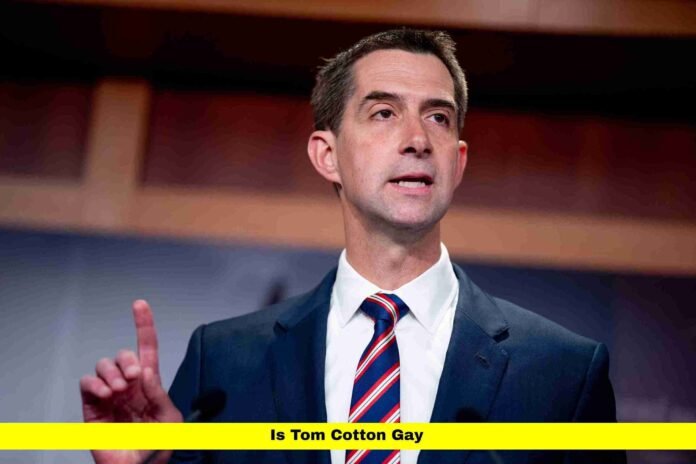

Is Tom Cotton gay is a question that continues to surface across online search trends, political discussion boards, and social media platforms, despite the absence of any confirmed public declaration addressing the subject. The persistence of this inquiry reflects broader patterns in how personal identity questions emerge around high-profile political figures in the digital era.
This article explores what is publicly known, why the topic continues to circulate, and how factual clarity can coexist with respect for personal boundaries.
Why This Question Continues to Appear
Search behavior often reveals public curiosity rather than new information. In this case, recurring interest stems from repeated online discussion rather than verified developments. Once a question gains visibility through search engines or social media, it can reappear indefinitely, even when no new facts emerge.
Political figures with national profiles tend to attract personal speculation simply because of their visibility. Over time, repetition alone can give the impression that an unresolved issue exists, even when public records remain unchanged.
Public Profile and Political Visibility
Tom Cotton is a U.S. senator representing Arkansas and has held a prominent role in American politics for over a decade. His career includes military service, legal training, service in the House of Representatives, and continued tenure in the Senate. His policy positions and legislative record have kept him frequently in the national spotlight.
With that visibility comes increased public scrutiny. Questions that might never arise for private citizens often surface for elected officials, even when unrelated to their official duties.
What Is Publicly Known About His Personal Life
Certain aspects of his personal life are a matter of public record. He is married and has children, and these details have been consistently acknowledged through official biographies and public appearances. Beyond those widely shared facts, he has not publicly discussed or defined his sexual orientation.
Public knowledge stops where voluntary disclosure ends. Without a direct statement, no additional conclusions can be drawn responsibly.
Absence of Confirmation or Disclosure
There has been no public announcement, interview, or statement in which he has identified himself as gay. This absence is significant, because sexual orientation is a personal identity that can only be confirmed by the individual.
Silence on this topic should not be interpreted as ambiguity. It simply reflects a choice not to publicly address a private matter.
How Online Speculation Takes Shape
Speculation often begins without a clear origin. A comment, meme, or anonymous post can circulate widely, especially when repeated across platforms. Over time, repetition can replace evidence in the public imagination.
Once a phrase gains traction, algorithms amplify it. Search engines respond to demand, not accuracy, which can make speculation appear more substantial than it is.
The Role of Social Media Amplification
Social media rewards engagement. Questions framed around identity tend to attract attention, comments, and debate. Even when no factual basis exists, engagement alone can sustain visibility.
This dynamic explains why certain questions persist long after their relevance has faded. Visibility does not equal verification.
Distinguishing Curiosity From Fact
Public curiosity is not inherently problematic. Problems arise when curiosity is mistaken for evidence. Facts require confirmation, and confirmation requires direct disclosure or reliable documentation.
In this case, neither exists beyond what has already been publicly acknowledged.
Why Sexual Orientation Cannot Be Assumed
Sexual orientation cannot be inferred from political beliefs, public demeanor, or personal style. Attempts to do so rely on stereotypes rather than reality.
Assumption often reflects cultural bias more than factual insight. Responsible discussion avoids drawing conclusions without confirmation.
Public Identity Versus Private Identity
Elected officials serve in public roles, but they remain private individuals. Their policy decisions and leadership actions are subject to public evaluation, while personal identity remains private unless voluntarily shared.
This distinction exists to preserve both transparency and dignity.
Media Standards and Responsible Coverage
Professional political coverage avoids speculation about personal identity unless directly relevant or publicly disclosed. This standard protects credibility and ensures focus remains on governance rather than conjecture.
When rumors dominate discourse, clarity becomes essential.
Why Silence Is Often Misinterpreted
Silence can be misread in digital spaces where constant disclosure is expected. In reality, many public figures choose not to address personal questions unrelated to their work.
Choosing not to comment does not imply confirmation, denial, or concealment. It simply reflects a boundary.
Search Trends and Algorithmic Feedback Loops
Search engines mirror user behavior. When a question is typed frequently, it rises in visibility regardless of factual basis. This creates feedback loops where visibility fuels further curiosity.
Understanding this mechanism helps explain why certain topics never disappear.
Impact of Repeated Speculation
Repeated speculation can blur the line between rumor and reality. For readers encountering the topic for the first time, repetition alone may suggest unresolved truth.
Clear factual framing is necessary to prevent misinformation from solidifying.
Confirmed Information Versus Assumptions
Only a few points are confirmed. He is a U.S. senator. He is married. He has children. He has not publicly identified as gay.
Anything beyond those facts enters speculative territory and should be treated as such.
Why Accurate Framing Matters
Accuracy protects readers and public figures alike. It prevents the spread of misleading narratives and keeps discourse grounded in reality.
In political reporting, this balance supports informed discussion rather than sensationalism.
Addressing the Question Without Speculation
The most responsible way to address recurring questions is to clarify what is known and acknowledge what is not. In this case, clarification ends speculation rather than fueling it.
There is no new development to report, only the continued absence of confirmation.
Cultural Shifts and Public Curiosity
As discussions around identity become more open, curiosity about public figures increases. This cultural shift has positive aspects, but it also increases the risk of overreach.
Respecting individual boundaries remains essential.
Why the Topic Persists Over Time
Some questions persist simply because they are easy to repeat and difficult to conclusively close. Without a definitive statement, curiosity lingers, even when facts remain unchanged.
Persistence does not imply progress.
Understanding Digital Permanence
Online content rarely disappears. Old discussions resurface, are reframed, and gain new attention. This permanence contributes to the illusion of ongoing relevance.
Recognizing this pattern helps readers evaluate recurring topics more critically.
Separating Governance From Gossip
Political accountability depends on scrutiny of actions and policies, not speculation about personal identity. Shifting focus back to governance strengthens democratic discourse.
Personal speculation offers little insight into public leadership.
Final Clarification for Readers
There is no verified information confirming that he identifies as gay. Public records and statements do not support such a conclusion. Respecting that boundary ensures accuracy and fairness.
Clarity does not require intrusion.
Why This Explanation Matters
Answering recurring questions responsibly prevents misinformation from filling informational gaps. It also reinforces the importance of evidence over assumption.
In an era of constant content, restraint is a form of accuracy.
Closing Perspective
Questions about personal identity often reveal more about digital culture than about the individuals involved. Repetition, algorithms, and curiosity combine to sustain topics long after facts have settled.
Understanding that dynamic helps readers navigate modern political discourse more thoughtfully.
What are your thoughts on how personal questions about public figures spread online, and where should the line be drawn? Share your perspective or stay informed as conversations like this continue to evolve.