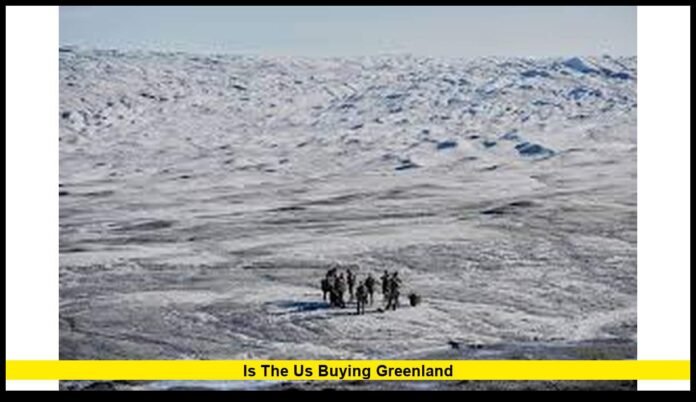

Is the US buying Greenland? That question has reemerged as a serious topic of global discussion as political statements, diplomatic responses, and Arctic security concerns converge in early 2026. What once sounded symbolic or unlikely is now being treated with renewed attention by governments, analysts, and the public alike.
As of today, Greenland has not been sold, transferred, or placed under any formal agreement involving the United States. No legal process is underway to change its status. Still, the intensity of recent rhetoric has elevated the issue beyond speculation, placing Greenland firmly at the center of a broader geopolitical conversation.
A Shift in Global Attention Toward the Arctic
The Arctic is no longer viewed as a distant or secondary region. Climate change has reshaped its geography, reduced ice coverage, and opened new maritime pathways that were once inaccessible. These changes have altered global trade calculations and defense planning, drawing increased attention from major powers.
As the Arctic becomes more accessible, it also becomes more contested. Nations are reassessing how they protect their interests in northern regions, from shipping routes to airspace monitoring. Greenland’s location places it directly within this evolving strategic framework.
This shift in global attention explains why Greenland has become more prominent in security discussions and why questions about its future have resurfaced with new urgency.
Greenland’s Geographic and Strategic Role
Greenland occupies a critical position between North America and Europe. Its vast landmass stretches deep into the Arctic, offering a natural platform for surveillance, early-warning systems, and long-range monitoring.
From a defense standpoint, Greenland provides coverage over key air and sea corridors. These routes are increasingly relevant as military and commercial activity expands across northern latitudes. Control over or access to infrastructure in Greenland can significantly influence situational awareness in the region.
Beyond defense, Greenland’s geography also matters for scientific research, climate monitoring, and communication networks. These factors collectively contribute to its growing strategic relevance.
Why U.S. Interest Has Intensified
Recent statements from U.S. officials have placed Greenland within a broader national security context. The emphasis has been on its strategic location, existing infrastructure, and potential role in future defense planning.
Unlike earlier periods when similar ideas were dismissed quickly, current discussions have been framed in more deliberate terms. This has led international observers to interpret the messaging as part of a long-term strategic reassessment rather than casual political commentary.
The renewed focus reflects a changing security environment where geography once considered remote is now central to planning.
Denmark’s Position and Greenland’s Autonomy
Denmark maintains sovereignty over Greenland while granting it extensive self-governing powers. This arrangement allows Greenland to manage most domestic affairs while Denmark oversees defense and foreign policy.
Both Danish officials and Greenland’s leadership have been clear in their response to renewed attention. Greenland is not for sale, and any discussion about its future must involve the people who live there.
Greenland’s government has consistently emphasized self-determination as a core principle. Local leaders have highlighted the importance of cultural preservation, political autonomy, and economic development guided by Greenlandic priorities.
This firm stance underscores the political reality surrounding any discussion of ownership or transfer.
The Role of Military Language in the Debate
One of the most sensitive aspects of the current discussion has been the use of military language. Statements suggesting that all options remain possible have unsettled allies and raised concerns across diplomatic circles.
Even without specific plans, such language carries weight. In international relations, rhetoric alone can influence perceptions, alter defense postures, and strain relationships among allied nations.
In the Arctic, where cooperation has historically outweighed confrontation, heightened military language risks shifting the tone toward competition. This has prompted calls from various quarters for careful communication and renewed emphasis on diplomacy.
Diplomatic Engagement Behind the Scenes
Despite public tension, diplomatic channels remain active. Discussions between the United States, Denmark, and Greenland continue to focus on cooperation rather than confrontation.
Key areas of dialogue include:
- Arctic security coordination
- Defense infrastructure agreements
- Economic and scientific collaboration
These talks aim to strengthen partnerships without challenging sovereignty. Many analysts view this approach as the most realistic path forward in a complex geopolitical environment.
Natural Resources and Economic Considerations
Greenland is believed to possess significant mineral resources, including materials critical to modern technology and energy systems. As global demand for these resources grows, interest in Greenland’s economic potential has increased.
Resource development remains a sensitive issue within Greenland. Local authorities emphasize that any extraction must align with environmental protections and community interests.
While economic factors contribute to Greenland’s strategic profile, they also highlight the importance of local control and sustainable development.
Public Opinion and Global Response
The renewed debate has sparked strong reactions worldwide. Many view territorial acquisition as outdated in a modern, interconnected world. From this perspective, respect for sovereignty and international law remains essential for global stability.
Others frame the discussion around security necessity, arguing that changing geopolitical realities require new approaches. This divide has fueled public debate across media platforms, policy forums, and political institutions.
International concern often centers on precedent. Allowing pressure-based changes to territorial status could weaken norms that have guided global relations for decades.
Legal Barriers to Any Transfer
Any lawful change to Greenland’s status would face substantial obstacles. These include approval from multiple governing bodies, potential public referendums, and compliance with international agreements.
Without broad consent, no transfer would be recognized as legitimate. These legal realities make a formal purchase or acquisition highly unlikely under current conditions.
This framework reinforces why discussions remain theoretical rather than actionable.
Greenland’s Internal Political Landscape
Within Greenland, the renewed attention has intensified local political discussion. Issues of autonomy, independence, and economic self-sufficiency have gained prominence.
Some residents view global interest as an opportunity to assert Greenland’s voice on the world stage. Others worry about being drawn into power struggles between larger nations.
These internal dynamics play a critical role in shaping Greenland’s response to external attention.
Is the US Buying Greenland Right Now?
At present, the answer remains no. There is no agreement, no negotiation in progress, and no legal pathway underway for a transfer of Greenland to the United States.
However, Greenland has become central to broader Arctic strategy discussions. This explains the renewed visibility of the issue and the intensity of global reactions.
The situation reflects a contest of influence rather than an imminent transaction.
What Developments May Follow
Greenland is likely to remain a focal point in international discussions throughout the coming months. Diplomatic engagement, strategic planning, and public debate will continue as Arctic competition evolves.
Future developments may include expanded cooperation agreements, increased investment in infrastructure, and deeper dialogue about governance and autonomy.
The direction of these developments will depend on how nations balance security interests with respect for sovereignty and cooperation.
Why This Debate Resonates Globally
The question surrounding Greenland reaches far beyond the Arctic and taps into some of the most defining issues shaping the modern world. At its core, the debate reflects shifting balances of power, evolving security priorities, and the ongoing tension between national interests and international cooperation. It highlights how geography, once considered fixed and predictable, is becoming a dynamic factor in global politics.
As climate change reshapes coastlines, opens new maritime routes, and alters access to natural resources, nations are being forced to rethink long-standing assumptions. Regions that were once peripheral are now strategically central, and Greenland exemplifies this transformation. Its situation underscores how environmental change can elevate the global importance of territories that were previously overlooked.
The debate also raises fundamental questions about alliances and trust. How major powers address sensitive issues involving smaller regions or self-governing territories sends powerful signals to allies and partners. Respect for sovereignty, adherence to international norms, and commitment to dialogue are being closely observed—not just by Arctic nations, but by governments around the world assessing the reliability of existing frameworks.
For emerging and smaller states, Greenland’s case resonates as a reminder of vulnerability in an era of heightened competition. Many see the discussion as a test of whether international principles can withstand strategic pressure, or whether power dynamics will increasingly dictate outcomes. This concern has amplified interest well beyond policy circles, drawing attention from civil society, academics, and global markets.
Ultimately, the debate resonates globally because it is not only about Greenland. It is about how nations respond to rapid change, how they balance security with cooperation, and how the rules of international engagement adapt to new realities. Greenland’s situation has become a reference point in these conversations, explaining why the discussion continues to command sustained attention far beyond the Arctic itself.
The Road Ahead
Greenland’s legal status remains unchanged, with no treaty, purchase agreement, or formal transfer under way. Yet its geopolitical importance continues to rise, shaping global conversations about defense strategy, economic opportunity, and environmental transformation at the top of the world. What happens next in Greenland will resonate far beyond its icy shores, influencing how governments approach diplomacy, national security, and cooperation in an era defined by strategic competition.
Over the coming months and years, several key trends are likely to shape the road ahead:
Governments around the world are strengthening their presence in the Arctic through increased diplomatic engagement, joint military exercises, and new agreements on scientific research. These moves reflect a broader recognition that Arctic stability depends on predictable cooperation, shared interests, and respect for local communities. Greenland’s geographic position gives it outsized influence in these efforts, serving as both a platform for monitoring northern passages and as a symbol of how the Arctic is becoming a priority for more capitals than ever before.
At the same time, local leaders in Greenland are raising their voices in international forums, asserting that any future cooperation must be consistent with their interests and their vision for economic development. This includes greater control over resource management, careful stewardship of the environment, and policies that benefit Greenlandic residents directly. These local priorities are shaping global negotiations in real time, reminding foreign powers that Arctic strategy can’t be separated from the will of the people who live there.
Economic factors will also play a growing role. As the global demand for minerals, clean energy materials, and shipping routes expands, Greenland’s potential as a source of strategic resources will continue to draw investment and attention. But these opportunities also come with challenges: balancing economic growth with cultural preservation, environmental protection, and long-term sustainability will remain central to Greenland’s internal debates and external relationships.
On the security front, Arctic defense planning is evolving rapidly. Nations with interests in the region are reassessing their capabilities, infrastructure, and alliances, seeking to strengthen readiness without undermining stability. Discussions about surveillance systems, shared radar networks, and coordinated patrols are increasingly common, reflecting a strategic environment where collaboration and caution must coexist.
How governments manage this moment will shape not only Arctic relations but also the norms that guide international cooperation in the years ahead. If diplomacy and mutual respect prevail, Greenland could become a model for constructive engagement in contested regions. If tension and unilateral action take precedence, the consequences could ripple across alliances, trade routes, and diplomatic institutions around the world.
For now, Greenland remains where it has always been—self-governing, strategically significant, and at the heart of discussions about the future of the Arctic. Its people continue to chart their own course, informed by local priorities and global realities. As climate patterns shift, Arctic access expands, and geopolitical interests intersect, the world will watch Greenland closely. This evolving story is not just about a single island; it is about how nations choose to navigate change, uphold cooperation, and define stability in a rapidly transforming world.
Readers are encouraged to stay informed and engaged as this important discussion continues to develop, shaping not only Arctic policy but also the global landscape for generations to come.
FAQs
Is the US buying Greenland right now?
No, there is no purchase agreement or formal negotiation in progress.
Who controls decisions about Greenland’s future?
Greenland’s people and governing institutions play a central role, alongside Denmark under existing arrangements.
Why has Greenland become so important globally?
Its location, resources, and role in Arctic security have increased its strategic significance.
Disclaimer:
This article is intended for informational purposes only and reflects publicly discussed developments as of the date of publication. It does not constitute legal, political, or policy advice.