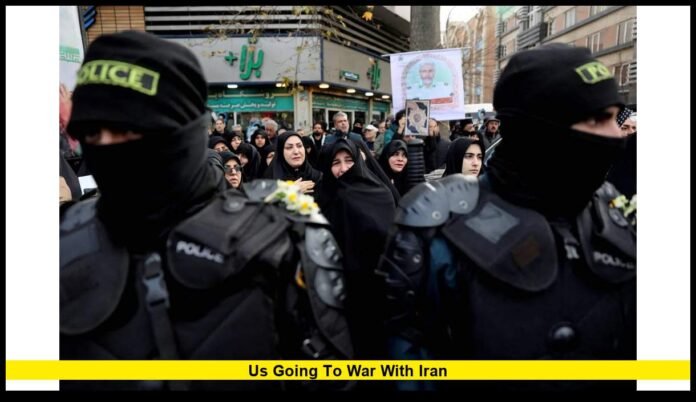

Growing discussion about the possibility of a direct military conflict between Washington and Tehran continues to dominate global security conversations in 2026. Headlines frequently raise concerns about whether tensions could escalate into open warfare. Verified developments show a persistent pattern of confrontation, regional incidents, and strategic deterrence — yet no formal war currently exists between the two countries.
The relationship remains one of the most consequential geopolitical rivalries in the world. Military readiness, economic pressure, regional proxy activity, and nuclear policy disputes shape daily developments. However, both governments continue operating below the threshold of conventional war while preparing for potential escalation scenarios.
Current Reality in 2026
As of February 2026, the United States and Iran remain adversaries but not active wartime opponents.
The situation is defined by sustained tension rather than direct battlefield engagement. Military actions occur in limited, targeted ways, typically tied to regional security incidents rather than large-scale campaigns.
Key confirmed conditions:
- No formal declaration of war
- Continued U.S. troop presence across the Middle East
- Active sanctions framework targeting Iran’s economy and defense sectors
- Ongoing incidents involving Iran-aligned armed groups
- Diplomatic communication continuing through indirect channels
This combination creates a volatile but controlled environment.
Why Conflict Fears Keep Rising
Public concern intensifies whenever security incidents occur in the region.
Several recurring triggers drive speculation:
- Attacks on U.S. personnel or bases
- Missile or drone launches attributed to Iran-aligned groups
- Naval confrontations in strategic waterways
- Developments related to Iran’s nuclear activities
- U.S. military deployments or retaliatory strikes
Each event increases attention even when leaders emphasize limited objectives.
Military Strategy: Deterrence First
The United States maintains a layered military posture designed to prevent escalation while ensuring rapid response capability.
Major components include:
- Carrier strike group rotations
- Air defense systems protecting bases and partners
- Long-range strike capability positioned nearby
- Naval patrols safeguarding shipping routes
- Intelligence and surveillance operations
Iran mirrors this approach through asymmetric strategy.
Iran’s posture emphasizes:
- Ballistic missile development
- Drone warfare capability
- Fast naval craft and coastal defense
- Proxy networks across multiple countries
- Domestic air defense modernization
Both sides signal readiness without initiating large-scale war.
Indirect Conflict Defines The Relationship
Most confrontation occurs through regional actors rather than direct military clashes.
This dynamic is central to understanding the rivalry. Iran maintains influence through armed groups across the Middle East, while the United States conducts targeted responses when American forces, infrastructure, or allies face threats.
Primary areas of tension include:
- Iraq
- Syria
- Yemen
- The Red Sea
- The Persian Gulf
These locations repeatedly produce incidents that shape global headlines.
The Nuclear Issue Remains Central
Iran’s nuclear program continues to be the most significant strategic concern for Washington.
In 2026, the situation is characterized by stalled diplomatic progress and ongoing monitoring disputes. Sanctions remain a primary policy tool, and military planning consistently incorporates nuclear-related risk scenarios.
Core realities:
- Negotiations have not fully collapsed but remain limited
- Monitoring disagreements persist
- The United States maintains prevention as its stated objective
- Iran continues nuclear advancement within contested limits
The nuclear file influences nearly every security decision between the two countries.
Official Messaging From Washington
U.S. policy language consistently emphasizes deterrence, defense, and regional stability.
Key priorities include:
- Protecting American personnel
- Preventing escalation into regional war
- Maintaining freedom of navigation
- Supporting partner security
- Blocking nuclear weapon development
Military actions are typically framed as limited responses rather than steps toward full conflict.
Tehran’s Strategic Messaging
Iran’s leadership presents its posture as defensive and resistant to external pressure.
Major themes include:
- Opposition to sanctions
- Assertion of regional influence
- Deterrence through missile capability
- Support for aligned groups
- Readiness to respond to perceived attacks
Iran often signals willingness to retaliate while avoiding direct confrontation with U.S. territory.
The Escalation Pattern
A recognizable cycle has defined developments for years.
Typical sequence:
- A regional incident occurs
- Limited U.S. strikes follow
- Iran-aligned groups respond
- Diplomatic messaging intensifies
- Tensions temporarily ease
This pattern explains why conflict fears rise repeatedly without transitioning into war.
Legal And Political Constraints In The United States
A large-scale war would require significant political steps.
Important realities:
- Congress has not authorized war against Iran
- War powers debates remain active
- Lawmakers periodically push for escalation limits
- Public opinion shows caution toward new major wars
These factors act as structural barriers to direct conflict.
Role Of Allies
Regional partners strongly influence strategy.
Security cooperation focuses on:
- Integrated air and missile defense
- Intelligence sharing
- Joint military exercises
- Naval coordination
- Crisis response planning
Allies generally support deterrence while encouraging diplomatic solutions.
Economic Pressure As Strategy
Sanctions remain a central element of policy.
Measures target:
- Energy exports
- Financial networks
- Military procurement channels
- Specific individuals and organizations
Economic pressure aims to shape behavior without triggering full military escalation.
Maritime Security: A Persistent Risk
Shipping lanes remain one of the most sensitive flashpoints.
Ongoing concerns include:
- Vessel seizures
- Drone attacks on commercial ships
- Naval standoffs
- Threats to energy transport routes
The U.S. Navy maintains patrols to protect global trade flow and reassure partners.
Information Environment And Public Perception
Online discussion often suggests immediate conflict risk.
However, policy signals show a more complex reality:
- Leaders emphasize avoiding regional war
- Military actions remain limited
- Diplomatic communication continues
- Crisis management mechanisms are active
The difference between perception and policy drives recurring alarm.
Signals That Would Indicate Major Escalation
Certain developments would represent a clear shift toward war.
Indicators include:
- Sustained air campaigns against Iranian territory
- Direct strikes between national forces at scale
- Congressional authorization for war
- Large troop mobilizations
- Disconnection of major global shipping routes
None of these indicators are currently present.
Historical Experience Shapes Decisions
Decades of confrontation influence present-day strategy.
Important historical elements include:
- Long sanctions history
- Gulf security tensions
- Past military incidents
- Nuclear diplomacy cycles
- Proxy conflict patterns
Both governments operate with awareness of escalation consequences.
Technology And Modern Conflict Dynamics
Modern warfare tools allow confrontation without traditional war.
Key factors:
- Precision strike capability
- Drone dominance
- Cyber operations
- Intelligence-driven targeting
- Proxy strategy
These methods enable sustained rivalry below the threshold of large-scale war.
Domestic Politics Matter
Internal considerations shape strategic decisions.
In the United States:
- Voter caution toward major military commitments
- Congressional oversight pressure
- Budget priorities
- Election cycle dynamics
In Iran:
- Economic strain
- Internal political stability
- Strategic messaging priorities
- Deterrence credibility
Domestic realities encourage measured escalation.
Energy Markets And Global Economy
The possibility of conflict carries major economic implications.
Widely recognized risks:
- Oil price volatility
- Supply chain disruption
- Shipping insurance increases
- Market uncertainty
- Inflation pressure
These risks reinforce global interest in preventing escalation.
Regional Security Architecture
Security structures across the Middle East continue evolving.
Important trends:
- Expanded air defense cooperation
- Increased joint exercises
- Missile defense investment
- Intelligence integration
- Maritime coalition operations
These measures aim to deter escalation rather than prepare for invasion.
Diplomacy Still Functions
Even during periods of tension, communication persists.
Diplomatic activity often involves:
- European intermediaries
- Regional partners
- Backchannel talks
- Crisis de-escalation efforts
These channels reduce the risk of miscalculation.
Media Cycles And Narrative Surges
Interest spikes around specific events:
- High-profile strikes
- Nuclear developments
- Shipping incidents
- Political speeches
- Military deployments
Attention rises quickly and stabilizes as verified details emerge.
Strategic Balance: Confrontation Without War
The relationship currently reflects a balance between pressure and restraint.
Core characteristics:
- Continuous readiness
- Limited military responses
- Economic pressure persistence
- Diplomatic communication
- Regional competition
This balance defines the present environment.
Potential Triggers Experts Watch Closely
Security analysts consistently monitor several risk areas:
- Large casualty incidents involving U.S. forces
- Direct attacks on critical energy infrastructure
- Major nuclear escalation developments
- Rapid military mobilization
- Sustained disruption of maritime trade
These scenarios could alter strategic calculations.
Why Large-Scale War Remains Unlikely In The Near Term
Multiple structural factors discourage direct conflict:
- High economic cost
- Regional escalation risk
- Global market impact
- Military uncertainty
- Political constraints
Deterrence remains the dominant approach.
Global Stakes
The rivalry affects international security far beyond the Middle East.
Potential global implications include:
- Alliance dynamics
- Energy market stability
- Defense spending trends
- Diplomatic alignment shifts
- Trade route security
This explains continued worldwide attention.
2026 Outlook
Current conditions point to ongoing tension with managed risk.
Verified conclusions:
- Military readiness remains elevated
- Limited strikes may continue
- Economic pressure remains central
- Diplomatic channels persist
- Direct war is not underway
The environment remains volatile but controlled.
Conclusion
Discussion about the possibility of direct military conflict between Washington and Tehran reflects genuine geopolitical risk rather than immediate reality. The relationship is defined by deterrence, regional competition, and crisis management. Both sides prepare for escalation while actively avoiding the threshold of large-scale war.
Security developments will continue to shape headlines, but structural constraints, economic stakes, and diplomatic engagement remain powerful forces preventing direct confrontation.
Do you believe tensions are stabilizing or moving toward escalation? Share your perspective in the comments and stay informed as developments unfold.