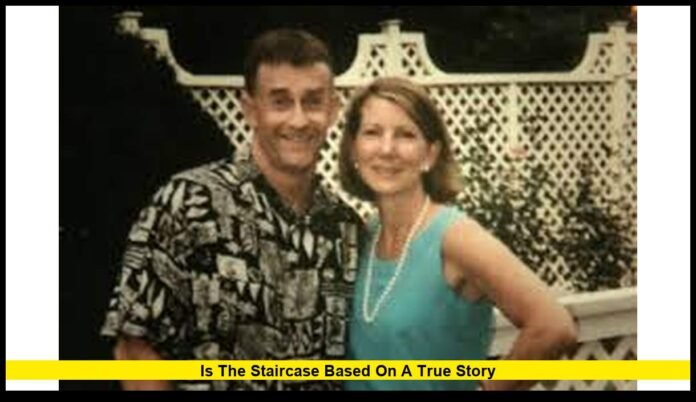

Is the staircase based on a true story is a question that continues to surge across search results as American viewers revisit one of the most talked-about true-crime cases of the last two decades. The story remains a major point of public interest because every film, documentary, and dramatized series bearing the title The Staircase is rooted in a real event: the 2001 death of Kathleen Peterson in Durham, North Carolina, and the long legal battle that followed. As new audiences discover the case, curiosity grows about what actually happened, what details are verified, and how much of what they see in dramatizations reflects reality.
This article provides the most updated, factual, and comprehensive look at the real story behind the televised versions. The legal developments, the public reaction, and the ongoing fascination are all grounded in confirmed events. For U.S. readers who want clarity, this is the full picture.
The Real Event That Sparked a National Discussion
The story begins on December 9, 2001. Kathleen Peterson, a respected corporate executive and community figure, was found dead at the bottom of a staircase in the home she shared with her husband, novelist Michael Peterson. The 911 call reported an emergency involving a fall, but the scene raised questions immediately. Medical examiners and investigators began a detailed review, and the case shifted quickly from a possible accident to a potential homicide. That shift formed the foundation of everything that came afterward.
What made the story especially unusual was how much access the public eventually gained to the legal process. A camera crew began filming inside the Peterson home and during trial preparations almost immediately. That decision would ultimately create one of the most in-depth true-crime documentaries ever captured. Years later, dramatized retellings would bring the case to a whole new generation.
How the Investigation Unfolded
When first responders arrived, they documented extensive injuries, including multiple lacerations to Kathleen’s scalp. Investigators, after examining the home and reviewing the evidence, determined that the injuries were not consistent with a simple fall. That conclusion set the direction for the entire case.
Authorities moved toward a homicide investigation, and Michael Peterson soon became the primary focus. His background, past relationships, family dynamics, and financial situation were closely examined. These details later became focal points for both prosecution and defense teams, and many were included in the televised versions of the case.
The official charge was filed: Michael Peterson was accused of murdering his wife.
Inside the 2003 Trial That Captivated America
The 2003 trial became one of the most followed legal proceedings of its time. Several factors contributed to its national spotlight:
- A well-known family in an affluent neighborhood
- Conflicting forensic interpretations
- A legal team willing to allow cameras unprecedented access
- A divided public unsure what to believe
The prosecution presented its theory of homicide, pointing to the blood evidence and the nature of the injuries. The defense countered with expert opinions suggesting an accidental fall could not be ruled out. Family members and friends offered testimony that opened windows into the personal lives of both Kathleen and Michael.
After months of testimony, the verdict was delivered: Michael Peterson was found guilty of murder. He was sentenced to prison, closing the first chapter of the legal saga but opening an entirely new chapter in public discussion.
Why the Documentary Became a Cultural Turning Point
Long before streaming platforms dominated entertainment, the documentary filmed during the investigation and trial became a groundbreaking form of storytelling. Viewers received a rare look into strategy meetings, emotional family moments, private conversations, and scenes inside the courtroom. Unlike most documentaries, this one gave audiences the sense of watching events unfold in real time rather than reconstructing them after the fact.
When later episodes were added in the following years, the documentary didn’t just tell the story — it evolved along with the case itself. That element contributed heavily to renewed interest every time a new dramatization or update surfaced.
Major Legal Shift: The Conviction Overturned
In 2011, a pivotal development occurred. The original conviction was vacated after a judge ruled that a key expert witness in the 2003 trial presented testimony that should not have been admitted. This ruling did not resolve the case outright, but it changed the legal landscape dramatically.
Instead of a closed chapter, the case returned to active status. For the first time since his conviction, Peterson was released from prison on bond while awaiting a new trial. The possibility of fresh proceedings placed the case back into the national conversation and fueled many retrospectives.
The 2017 Alford Plea and the Final Legal Resolution
By 2017, after years of preparation for a potential retrial, Michael Peterson made a significant legal decision. He entered an Alford plea to voluntary manslaughter. In the U.S. legal system, an Alford plea allows a defendant to assert innocence while accepting that prosecutors have enough evidence to secure a conviction.
Because Peterson had already served years in custody, the court sentenced him to time served. This brought the criminal case to its official conclusion. There have been no additional legal proceedings related to Kathleen Peterson’s death since then.
For factual clarity:
- The original conviction no longer stands.
- The Alford plea is the final recorded outcome.
- The case is not currently active in any criminal court.
How the Dramatized Versions Connect to the Real Story
As interest in the true story remained strong, new dramatized projects entered production. Unlike the original documentary, these scripted adaptations used actors to portray the key figures and re-created scenes for dramatic effect. While much of the storyline followed the known timeline, dramatizations always include artistic interpretation. That means they may blend factual events with re-imagined conversations or scenes crafted to enhance storytelling.
The dramatized series brought renewed attention to the central question: what parts are real, and what parts are dramatized for television? This question, paired with the true events, continues to generate public debate.
Despite creative liberties, the core factual structure of every version remains rooted in reality:
- Kathleen’s death in 2001
- The investigation and arrest
- The 2003 trial
- The overturned conviction
- The 2017 Alford plea
These are the cornerstones that anchor all adaptations.
Why the Case Still Holds America’s Attention Today
More than two decades after Kathleen’s death, the case remains one of the most widely discussed true-crime stories in the country. Several factors explain its lasting impact:
1. Unusual Access
Few cases have been filmed so extensively during an active legal battle.
2. Conflicting Interpretations
Forensic experts disagreed on the injuries, keeping public debate alive.
3. Complex Family Dynamics
The blended family structure added multiple emotional layers to the narrative.
4. Evolving Legal Outcomes
The vacated conviction and later Alford plea created a story that continued to shift over time.
5. Popularity of True Crime
As the genre grew in the U.S., viewers repeatedly returned to cases with strong narrative arcs and unanswered questions.
The combination of these factors ensures that the story remains culturally significant, even long after the courtroom doors closed.
Breaking Down the Verified Timeline
To give readers clear insight, here is the chronological overview of confirmed events:
• December 9, 2001: Kathleen Peterson is found dead at the bottom of the staircase inside the family home.
• 2002: The investigation continues, and prosecutors prepare charges.
• 2003: Michael Peterson is tried and convicted of murder.
• 2004 onward: Documentary episodes begin releasing, giving the public a long-form look into the case.
• 2011: The murder conviction is vacated due to issues surrounding expert testimony.
• 2017: Peterson enters an Alford plea to voluntary manslaughter and is sentenced to time served.
• 2022–2025: Dramatized versions and renewed media coverage bring the story back into focus.
Every adaptation and documentary reflects this timeline, even if the narrative structure differs.
So, Is the Staircase Based on a True Story?
Yes. Absolutely. The televised versions are built on real events, real people, and a documented legal journey that unfolded over many years. While dramatizations add creative interpretation, the true story remains the backbone of every retelling.
The question is the staircase based on a true story continues to trend because the case itself still raises discussions about forensic science, courtroom strategy, family relationships, and how the justice system handles complex evidence. The emotional weight of the story, paired with decades of public attention, ensures that the real events behind the screen remain deeply compelling for American audiences.
What part of this case stands out most to you? Share your thoughts below and join the conversation.