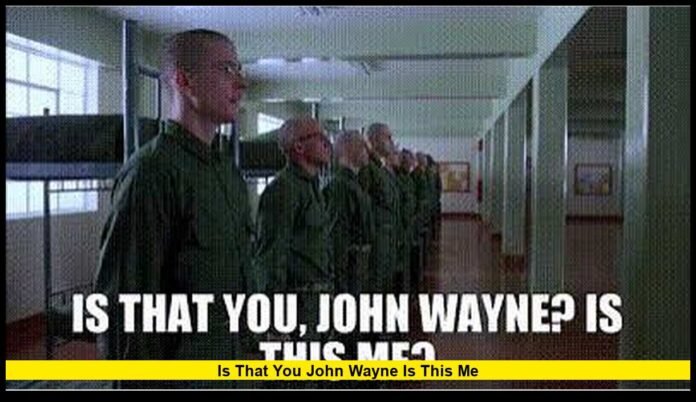

The phrase “is that you john wayne is this me” is closely associated with Full Metal Jacket, Stanley Kubrick’s acclaimed 1987 war film. Delivered by Matthew Modine as Private Joker, the line combines dark humor with a pointed reference to legendary actor John Wayne. Its unusual wording and memorable delivery have helped make it one of the film’s most recognizable moments.
The quote appears during the movie’s Marine Corps boot camp sequence. Joker uses an imitation of John Wayne to poke fun at the commanding behavior of Gunnery Sergeant Hartman, played by R. Lee Ermey. The remark briefly disrupts the strict atmosphere that defines the recruits’ training.
However, the exchange means more than simply making fun of a drill instructor. It highlights the difference between Hollywood’s image of a fearless American soldier and the difficult process of preparing young men for military service. The scene also introduces Joker’s sarcastic personality and the film’s broader exploration of identity, authority, and violence.
Where Does “Is That You, John Wayne? Is This Me?” Come From?
The famous line comes from Full Metal Jacket, released in American theaters on June 26, 1987. Stanley Kubrick directed the movie, which follows a group of young Marines from basic training to the Vietnam War.
Matthew Modine plays Private James T. “Joker” Davis, a recruit whose intelligence and sarcasm distinguish him from his fellow Marines. R. Lee Ermey portrays Gunnery Sergeant Hartman, the instructor responsible for turning inexperienced recruits into disciplined soldiers.
The opening section follows the recruits through demanding physical exercises, strict routines, and relentless verbal criticism. Hartman uses intimidation to establish his authority and expects the young men to respond without hesitation.
Joker’s remark breaks that pattern. Instead of remaining completely silent, he makes a sarcastic comparison between Hartman and John Wayne’s familiar screen persona.
Hartman hears the comment and demands to know who said it. Joker eventually identifies himself, creating a confrontation that reinforces the instructor’s intolerance for disrespect.
This scene establishes an important difference between the two characters. Hartman demands obedience, while Joker continues to observe his surroundings critically. His humor becomes a way to express that independence, even when doing so carries consequences.
What Does the Famous John Wayne Quote Mean?
The line works because John Wayne represents a recognizable image of American heroism.
Wayne became famous for playing confident cowboys, military officers, and other tough characters. His screen persona often emphasized courage, determination, authority, and traditional masculinity.
Joker draws on that familiar image when he imitates Wayne. His question compares Hartman’s aggressive performance with the commanding behavior audiences associate with fictional military heroes.
The second part of the line turns the joke toward Joker himself. By asking whether the situation involves him, Joker raises a question about his own role in the military environment.
The recruits are expected to change their behavior, accept strict discipline, and follow orders. Their instructors want them to develop the qualities associated with Marines, including toughness, discipline, and obedience.
Joker’s sarcastic remark suggests that he recognizes the performative side of this transformation. He sees how the instructor embodies a particular image of military authority, while the recruits are expected to adopt their own military identities.
The humor therefore carries an underlying question: are the characters developing their own identities, or are they learning to perform the roles demanded of them?
That question fits the film’s broader themes. Full Metal Jacket examines how military institutions influence individual behavior and how the experience of war challenges familiar ideas about courage and heroism.
Why John Wayne Was the Perfect Reference
John Wayne was one of the most recognizable figures in American cinema. His long career included Westerns, war films, and historical dramas that helped establish his enduring screen image.
Movies such as The Searchers (1956), The Man Who Shot Liberty Valance (1962), and The Green Berets (1968) strengthened his association with toughness and American military or frontier traditions.
His characters often projected confidence in difficult circumstances. They represented a familiar kind of screen hero who appeared prepared to face danger without displaying much uncertainty.
That image makes Wayne an effective reference in Full Metal Jacket.
Hartman’s aggressive behavior resembles a dramatic performance of authority. His shouting, commands, and uncompromising manner can seem almost theatrical when viewed through Joker’s imitation.
The comparison creates comedy, but it also challenges the audience to distinguish movie conventions from real military experiences.
Hollywood frequently presents soldiers as decisive heroes who understand their missions and overcome danger through determination. Kubrick’s film offers a more complicated picture of military life.
The recruits experience humiliation, pressure, exhaustion, and uncertainty. Later, the Marines encounter violence and situations that do not follow the neat patterns of a conventional adventure story.
By invoking John Wayne, Joker makes that contrast visible in a few words.