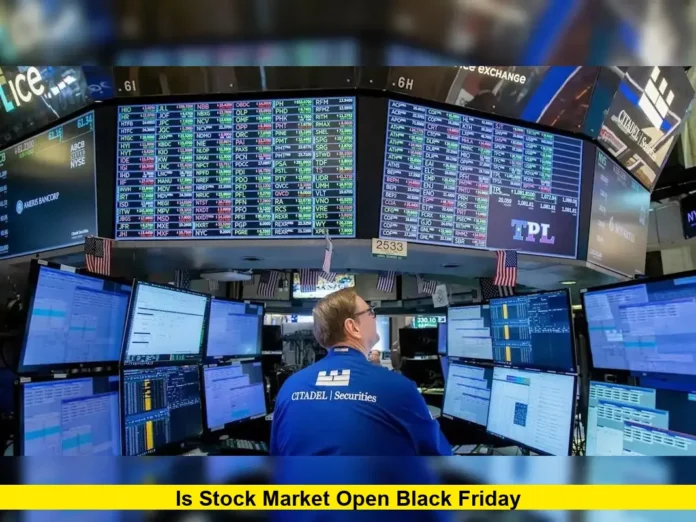

Is stock market open Black Friday? Yes, the U.S. stock market opens on the day after Thanksgiving, but it operates on a shortened schedule that every trader, investor, and portfolio manager should understand. With the holiday season bringing lighter activity, reduced staffing, and modified trading hours, Black Friday becomes a unique session that requires careful planning. This guide provides a comprehensive breakdown of what to expect in 2025, how the early close affects trading decisions, and what investors should prepare for as the long holiday weekend unfolds.
Understanding the Thanksgiving and Black Friday market structure
Thanksgiving is one of the few federal holidays that fully shuts down the major U.S. exchanges. That means the New York Stock Exchange, Nasdaq, and most other major equity and options venues close all day. The following morning, however, markets reopen but with the traditional shortened Black Friday schedule.
This early close has been a long-standing practice across U.S. markets. The day after Thanksgiving typically shows reduced participation as financial professionals take time off, trading desks operate with slimmer staffing, and retail investors focus on the start of the holiday shopping season rather than managing portfolios. Despite that, the reduced session still plays an important role in the week’s momentum, especially in sectors with heavy holiday-related activity.
Black Friday 2025 hours: what investors should expect
For 2025, U.S. stock exchanges open at their normal time in the morning and close at 1:00 p.m. Eastern Time for equities. Many options products follow a similar schedule, though certain contracts remain open until 1:15 p.m. Eastern Time. These times shape the overall liquidity picture for the day.
Premarket hours remain available for investors who want to react to overnight developments or adjust positions ahead of the shortened session. After the early close, after-hours trading will not run as long as usual and often becomes more limited due to reduced participation.
Why the early close matters for traders
A shortened session may seem simple at first, but it introduces several timing challenges.
1. Less time to execute strategies
With only a few hours before the 1:00 p.m. close, traders must plan ahead. Those who normally make decisions late in the afternoon will find that the traditional market rhythm is compressed.
2. Lower liquidity and wider spreads
Holiday trading typically comes with lighter volume. Fewer participants means bid-ask spreads can widen, especially in mid-cap and small-cap names. Even large-cap stocks that normally trade with tight spreads may see fluctuations that make execution less predictable than on a normal trading day.
3. Fewer institutional orders
Many institutional desks operate on reduced schedules. Those who remain active often manage risk conservatively, meaning fewer large block trades and potentially more variability in prices.
4. Options traders need to track contract cutoffs
Since not all options follow the exact equity closing time, investors must confirm hours for each product. A difference of even 15 minutes can affect exercise and assignment timing, particularly near expiration dates.
Impact on market behavior during Black Friday
Historically, the day after Thanksgiving tends to produce modest moves compared to high-volume news days, but it can still witness sudden surges depending on economic and retail data.
Retail-focused stocks often attract attention as analysts start tracking early holiday shopping strength. Meanwhile, industries dependent on consumer sentiment—electronics, specialty retail, e-commerce, and travel—may see more noticeable price swings. The shorter window can intensify the reaction to any premarket or morning reports.
Because trading winds down early, momentum patterns often shift. The first hour of the session becomes unusually active, resembling the typical open but compressed with heavier adjustments. By late morning, trading frequently transitions into a slower, more uneven pace because many participants choose to wrap up positions early.
How long-term investors should approach the holiday session
For buy-and-hold investors, Black Friday does not require major strategy changes, but it still carries a few practical considerations.
Settlement timing
Since the session closes early, settlement cycles continue as usual but bank-related transfers may face delays due to the holiday week. Investors who need funds in or out of brokerage accounts should plan those movements ahead of time.
Portfolio rebalancing
While it is possible to rebalance during the shortened session, many long-term investors prefer full trading days to manage executions with more predictable liquidity. The early close can introduce higher volatility in certain names, especially those with lower float.
Dividend planning
Dividend capture strategies remain unchanged, but investors should review ex-dividend dates around the holiday period to avoid miscalculations from the altered trading schedule.
Weekend risk
Since the market closes early Friday and remains shut until Monday, any late-Friday economic or geopolitical developments accumulate into Monday’s open. Long-term investors familiar with weekend risk usually account for this, but the shortened Friday amplifies the time gap because afternoon trading is unavailable.
How brokers operate during the holiday session
Brokerages generally keep their platforms available for the shortened trading hours, but live support teams often run with lean staffing, and some departments work limited shifts. Investors needing assistance with corporate actions, options exercise decisions, account verification, or trade disputes may face longer wait times.
Transfers between banks and brokerages may take additional days because several financial institutions adjust their processing schedules around Thanksgiving. Anyone planning a withdrawal or deposit should initiate it earlier in the week.
Automated systems for order routing continue as usual, but with lower liquidity, traders should double-check whether they are using market, limit, or stop orders to avoid unintended outcomes.
Tips for navigating the 2025 Black Friday trading session
1. Use limit orders whenever possible
Given the likelihood of wider spreads, limit orders provide clearer control over execution prices. Market orders may fill at less favorable levels during lighter volume periods.
2. Check your broker’s exact closing times
Even though exchanges announce the 1:00 p.m. equity close, some brokers adjust their own internal cutoff for order submissions. Traders working across asset classes, including futures and forex, should confirm each platform’s schedule.
3. Review sector-specific catalysts
Holiday shopping trends, consumer-spending forecasts, and early sales reports can influence certain stocks sharply. Retail and e-commerce names often experience heightened activity even during a shortened session.
4. Manage open options positions carefully
Before the early close, investors should check whether they are at risk of unexpected assignment or whether they need to exercise in-the-money positions. Because some contracts stay open until 1:15 p.m., timing becomes particularly important.
5. Consider reducing same-day trading
Day traders may find it more difficult to spot clean setups during the abbreviated trading period. With fewer participants and altered momentum patterns, choppy conditions can become more common.
Previewing the week after Thanksgiving
The Monday following Black Friday often brings stronger participation. Investors return to full schedules, research teams release new outlooks, and early holiday retail data can influence sector performance. The early close on Friday means Monday’s open also acts as a reaction point for any news released after the 1:00 p.m. cutoff.
Corporate earnings nearing the end of November may generate substantial movement early in the following week. Traders who prefer full-session clarity use Monday rather than Black Friday for larger adjustments.
The role of the keyword topic in investor planning
By now, many investors search online for clear guidance about holiday schedules, making is stock market open black friday one of the most common questions during Thanksgiving week. Understanding trading hours is essential because even small changes in timing affect execution, risk management, and portfolio adjustments. The early close shapes the entire rhythm of the day, and traders who prepare ahead gain a smoother experience during one of the year’s most unusual trading sessions.
Final recap for Black Friday 2025
- U.S. stock markets are closed on Thanksgiving Day.
- Markets reopen on Black Friday with a 1:00 p.m. ET close for equities.
- Many options close at 1:15 p.m. ET, depending on the product.
- Liquidity is typically lower, spreads can widen, and execution timing becomes more important.
- Traders should plan carefully, use limit orders, and confirm schedules with their broker.
- Long-term investors face minimal impact but should be aware of settlement timing and weekend risks.
As holiday activity picks up and the shopping season begins, the Black Friday session continues to serve as an important but compact trading window. Investors who understand the adjusted schedule can approach the day with confidence, clarity, and a solid plan.