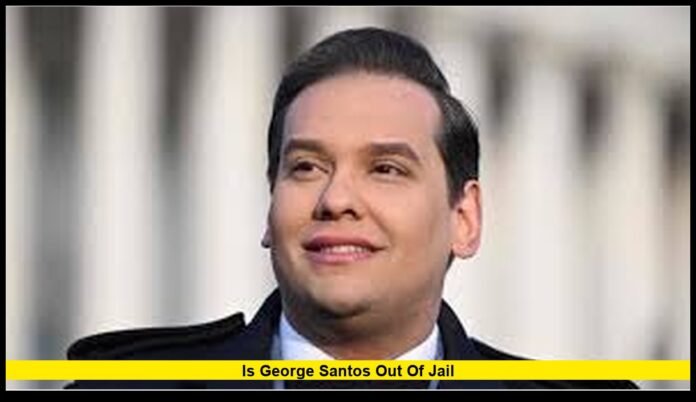

Many Americans are asking, is George Santos out of jail? The answer is: yes. As of October 17, 2025, former U.S. Representative George Santos has been released from federal prison following a presidential commutation of his 87-month sentence. But while he’s physically free, the full story is far more complex—and far from over.
How Santos Ended Up in Prison
Santos, once elected to represent New York’s 3rd Congressional District, was expelled from Congress in December 2023 after a lavish House Ethics Committee report found he misrepresented key aspects of his background. Among the allegations: fictitious education credentials, exaggerated work history, and misused campaign funds.
He pleaded guilty in August 2024 to wire fraud and aggravated identity theft tied to his 2022 campaign. In April of 2025, a federal judge sentenced him to 87 months (just over 7 years) in prison and ordered restitution. Santos began serving his sentence in July at the Federal Correctional Institution Fairton in New Jersey.
The Release: What ‘Out of Jail’ Really Means
When the question is George Santos out of jail is answered with “yes,” it comes with important caveats:
- On October 17, 2025, then-President Donald Trump granted a commutation of Santos’s sentence. That means his prison time was ended immediately.
- The commutation does not erase his conviction or the criminal record. He remains a convicted felon.
- Although he’s no longer incarcerated, Santos may still be subject to supervised release, restitution orders, or other legal obligations—unless the commutation explicitly waives them.
- His political status remains tarnished. While his prison term is over, his public life, finances and legal legacy are far from settled.
Timeline of Key Events
| Date | Event |
|---|---|
| August 2024 | Santos pleads guilty to fraud and identity theft charges |
| April 25 2025 | Sentenced to 87 months in federal prison |
| July 2025 | Reports to FCI Fairton to begin serving sentence |
| October 17 2025 | Sentence commuted; Santos released immediately |
Why the Release Is So Controversial
Santos’s early release has sparked a wide range of reactions and raises serious questions about justice, politics and accountability:
- Many critics argue the commutation undermines the rule of law, especially considering the large number of counts and the lengthy original sentence.
- Supporters claim the six-to-seven-year sentence was overly harsh for the crimes committed and highlight his reported suffering in prison—solitary confinement, alleged mistreatment.
- The optics are troubling for officials: A former congressman, convicted of defrauding donors and misusing funds, released less than four months into a long sentence.
- For U.S. voters, the case plays into ongoing concerns about two-tier justice—whether powerful figures receive more favourable treatment than ordinary citizens.
What Santos Is Doing Now That He’s Free
Even though the question is George Santos out of jail has an affirmative answer, what his life looks like outside prison is still unfolding:
- He has publicly thanked Trump for the clemency and has stated an interest in focusing on criminal justice reform, citing his time in prison as “dehumanizing.”
- Santos says he does not currently intend to run for Congress—though political commentators remain skeptical.
- His finances, public image and legal obligations are under heavy scrutiny: restitution, civil suits, state investigations and future employability are all on the table.
- He has claimed he was placed in solitary confinement and denied basic medical care—details that played into the narrative around his release.
Legal and Political Fallout
Release from prison does not mean the end of the story for Santos. Several areas remain active:
- He must still deal with the residual effects of the conviction: loss of certain civil rights, a criminal record, potential future restrictions.
- He may face civil actions or state investigations, separate from the federal case that led to his prison sentence.
- Politically, his prospects appear dim: Many in both parties view him as a liability, but his ability to influence and speak publicly is now permitted.
- For the justice system, the case has become a reference point in debates over sentencing equity, executive clemency and public-office accountability.
Why This Case Matters to the U.S. Public
The question is George Santos out of jail is relevant beyond one individual—it touches broader themes that resonate with millions of Americans:
- Trust in government: Citizens expect public officials to be held to high standards; how this case is handled influences perceptions of integrity.
- Justice system fairness: When high-profile figures receive leniency, it impacts the perception of whether the system treats people equally.
- The power of executive clemency: The president’s ability to commute or pardon sentences is vast, and this case highlights how it can be used (and perceived) in political ways.
- Political redemption and consequences: Free from prison, but not free from reputation or responsibility, Santos’s next moves will be watched closely.
Final Thoughts
Yes—is George Santos out of jail? The answer is yes. He has been released after his federal sentence was commuted. But being out of jail does not mean the story is over. His criminal conviction remains, his reputation is tainted, and the broader consequences of his actions—including political, legal and ethical—are still very much in motion.
Do you think this case sets a precedent for how public-office misconduct is handled? Share your thoughts below and stay tuned for further developments on George Santos.