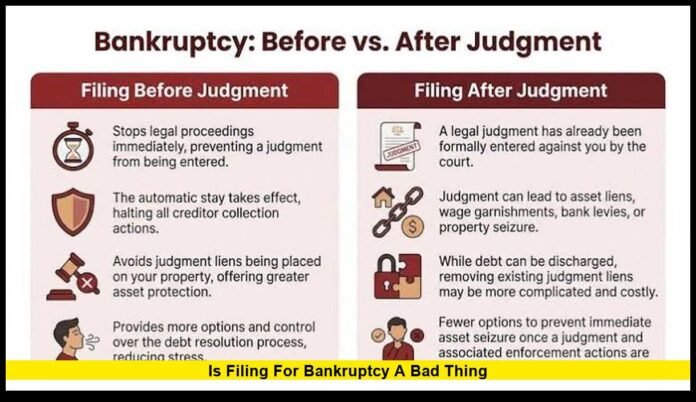

For households facing mounting bills, missed payments, and persistent collection calls, is filing for bankruptcy a bad thing is a question that can shape their financial future. In the United States, bankruptcy is a legal process designed to help eligible people manage debts they cannot reasonably repay. Although filing can affect credit, property, and future borrowing, it may also provide a path toward financial stability when other solutions are no longer practical.
Rising household expenses, unexpected medical costs, job losses, and high-interest debt can leave families struggling to meet their obligations. Bankruptcy is not the right answer for everyone, but understanding how it works can help consumers make informed decisions rather than remain trapped in an unsustainable financial situation.
Bankruptcy Is a Legal Option, Not a Personal Failure
Financial setbacks do not always result from careless spending. A prolonged illness, divorce, reduced income, or failed business can create obligations that exceed a person’s ability to pay.
Federal bankruptcy law establishes procedures for handling these circumstances. Depending on the case, eligible individuals may qualify to discharge certain debts, enter a court-approved repayment plan, or receive temporary protection from many collection actions.
The purpose is to provide a structured legal process for debt resolution. Filing does not erase every financial obligation, and the outcome depends on the bankruptcy chapter, the nature of the debts, income, property, and eligibility requirements.
For consumers considering this step, the most important issue is whether bankruptcy offers a more realistic route to financial recovery than continuing with existing payment arrangements.
How Bankruptcy Can Help People Under Financial Pressure
One major benefit is the potential discharge of qualifying unsecured debts, including certain credit card balances, medical bills, and personal loans. Removing eligible obligations can make it easier to cover necessities and establish a manageable budget.
Bankruptcy can also trigger an automatic stay, which generally pauses many collection activities once a petition is filed. Depending on the circumstances, this may stop certain lawsuits, collection calls, and wage garnishments. Exceptions apply, and the protection may be limited in some repeat filings.
For people facing serious financial distress, this temporary legal protection can create time to organize records, evaluate options, and proceed through the court process.
However, consumers should not assume that filing automatically stops every legal action or prevents every creditor from pursuing its rights. Secured creditors may retain rights against collateral, and some proceedings are treated differently under bankruptcy law.
Chapter 7 and Chapter 13 Serve Different Needs
Choosing the correct bankruptcy chapter is an important part of the process. Chapter 7 and Chapter 13 are the two main options commonly considered by individual consumers.
Chapter 7 generally involves the liquidation of nonexempt property, where applicable, and may allow eligible debtors to discharge qualifying debts. Many straightforward cases conclude within a few months. Eligibility rules, including an applicable means test, can affect whether someone qualifies.
Chapter 13 is structured around a court-approved repayment plan, usually lasting three to five years. It is generally intended for individuals with regular income who meet the applicable debt limits and other legal requirements. It may help eligible homeowners address certain overdue mortgage payments while following the plan.
Neither option guarantees that a person will keep every asset or eliminate every debt. Property exemptions, income, secured loans, and individual circumstances can significantly affect the outcome.
The Credit Consequences Can Last for Years
A bankruptcy filing can make it more difficult to qualify for credit, particularly shortly after the case begins. Lenders may impose higher interest rates, offer smaller credit limits, or decline applications.
Under federal credit-reporting rules, bankruptcy can generally remain on a consumer credit report for up to 10 years, depending on the type of filing and applicable reporting requirements.
That period does not mean a person must wait a decade before rebuilding credit. Positive payment history, low credit utilization, responsible account management, and stable finances can support gradual improvement.
Consumers should also recognize that serious delinquencies and collection accounts can damage credit even if they never file for bankruptcy. The financial consequences of continuing to miss payments should therefore be considered alongside the potential effects of filing.
Which Debts May Survive Bankruptcy?
Not every obligation qualifies for discharge. Child support, alimony, most student loans, certain tax debts, criminal restitution, and some court-ordered obligations may remain payable, subject to specific legal exceptions.
Student loans, for example, may be discharged in bankruptcy when the debtor satisfies the applicable legal standard, often through a separate court proceeding. They should not automatically be treated as either dischargeable or permanently impossible to discharge.
Mortgages and auto loans also require careful consideration. Bankruptcy may address personal liability on certain debts, but it does not automatically eliminate liens against homes or vehicles.
Before filing, consumers should identify which debts could potentially be discharged and which obligations would continue. This distinction is essential to estimating whether bankruptcy would provide meaningful financial relief.
Alternatives Worth Reviewing Before Filing
Bankruptcy may be unnecessary when debt remains manageable and the financial difficulty is temporary. Depending on the situation, consumers may consider negotiating directly with creditors, working with a nonprofit credit counselor, or exploring a debt management plan.
A realistic household budget may also help when expenses can be reduced or income is expected to recover. Debt settlement is another possibility, but it can involve fees, tax consequences, continued collection efforts, and potential credit damage.
People should be cautious about companies promising guaranteed debt elimination or demanding substantial upfront payments. Reviewing the terms carefully and seeking independent guidance can help reduce the risk of costly mistakes.
When Professional Advice Becomes Important
Legal guidance can be particularly valuable when a person owns a home, has significant assets, faces foreclosure, has received a creditor lawsuit, or owes complicated tax obligations.
An attorney familiar with bankruptcy law can assess eligibility, explain exemptions, identify potential risks, and compare available options. A nonprofit credit counselor may also help evaluate budgeting and repayment strategies.
Consumers should avoid transferring property or making unusual payments to selected creditors simply to prepare for bankruptcy. Certain transactions can create legal complications, so professional advice should come before major financial moves.
Making a Decision Based on Financial Reality
Ultimately, is filing for bankruptcy a bad thing depends on the person’s circumstances, the debts involved, and the alternatives available. For some Americans, bankruptcy can offer a practical way to address overwhelming obligations and begin rebuilding. For others, a negotiated repayment arrangement or another debt-relief strategy may be more suitable.
The decision should reflect a clear assessment of income, essential expenses, assets, debt balances, and future financial goals. Understanding the legal consequences before filing can help consumers avoid unrealistic expectations and choose an approach that supports lasting financial stability.