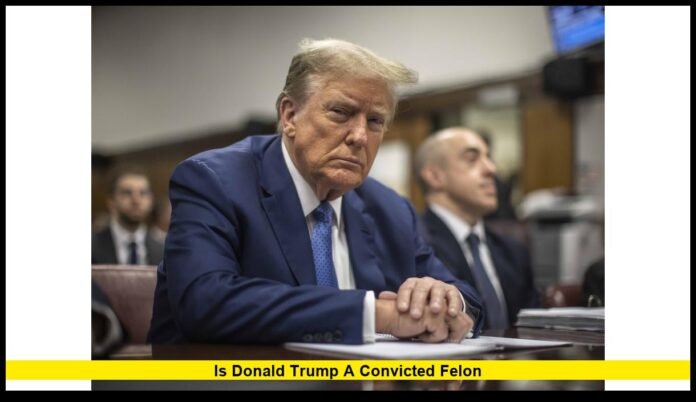

Is Donald Trump a convicted felon is a question that continues to shape national discussions, and the answer remains unchanged as of today. Donald J. Trump is still legally classified as a convicted felon following his May 30, 2024 conviction in New York on 34 counts of falsifying business records. The conviction stands while his legal team continues efforts to challenge it, making this one of the most consequential legal and political storylines in modern American history.
This article takes a deeper, more detailed look at what the conviction means, how it happened, and why it remains so central to public conversation as the nation heads into another pivotal period.
How the Felony Conviction Came to Be
Trump’s conviction originated from a New York criminal case involving reimbursements tied to a payment made in 2016. Prosecutors argued that the reimbursements were deliberately recorded as legal expenses to mask the true nature of the payment. Because the records were entered in a way that prosecutors said concealed relevant information and influenced the election, each entry was treated as a felony under New York law.
The trial unfolded over several weeks in the spring of 2024. Jurors heard testimony from multiple witnesses, reviewed business records, and examined internal communications. The state’s case focused heavily on the structure of the payments, the intention behind the paperwork, and the timing surrounding the 2016 election cycle.
After deliberating, the jury issued a unanimous verdict on all 34 charges. Once the verdict was announced, Trump became the first former or sitting U.S. president ever convicted of a felony.
The Sentencing and What It Really Means
In January 2025, the court issued an unconditional discharge. This meant that while the felony conviction remained on Trump’s record, he did not receive jail time, a fine, probation, or community service. The decision surprised many observers who expected a more traditional form of sentencing for felony offenses.
However, an unconditional discharge carries weight. It confirms the felony label, preserves the conviction itself, and ensures it appears permanently on criminal record checks unless overturned on appeal. It is a legal acknowledgment that the offense occurred, even without additional punishment.
Despite the lack of incarceration or fines, the conviction has real implications:
- The felony classification remains legally valid.
- Gun ownership restrictions apply under federal law for individuals with felony convictions.
- The conviction is part of the historical record regardless of sentencing leniency.
What it does not affect is Trump’s ability to vote or to run for elected office, as U.S. law does not bar felons from holding federal positions, including the presidency.
Appeal Efforts and Current Status
Trump’s legal team immediately began pursuing appeals after the verdict, challenging both procedural decisions and the admissibility of certain trial materials. They also raised arguments connected to presidential immunity based on prior judicial rulings that addressed the boundaries of criminal exposure for former presidents.
In late 2025, higher courts reopened review of some issues that the defense had raised earlier. These developments do not overturn the conviction, but they do create additional steps for lower courts to consider. As of today, the conviction remains fully active while the appeal process continues.
It is important to note:
- The conviction has not been vacated, reversed, or paused.
- The appeal does not erase Trump’s current legal classification.
- Any future change would require a formal ruling, which has not yet occurred.
The legal pathway ahead includes further hearings, written arguments, and potentially a multi-stage review in both state and federal courts.
How This Conviction Fits Within Trump’s Broader Legal Landscape
Over recent years, Trump has faced a variety of legal challenges across multiple jurisdictions. However, this New York case remains the only criminal case that resulted in a felony conviction. Several other matters were dismissed, paused, or altered as circumstances changed, but none produced another felony record.
This makes the hush-money case uniquely significant. It stands alone as the sole criminal conviction attached to a former president in U.S. history. This distinction continues to influence national dialogue because of both the historical nature of the conviction and the political context surrounding Trump’s active role in public life.
Political and Public Impact of the Felony Conviction
Because Trump remains a central figure in American politics, the felony conviction carries implications that go far beyond courtroom proceedings.
1. Influence on Public Opinion
The label “convicted felon” impacts perceptions among voters. Some view the conviction as a sign of accountability, while others believe it reflects political targeting. Regardless of opinion, the legal fact of the conviction plays a role in how campaigns, analysts, and voters frame discussions about his leadership and future political activity.
2. Historic Precedent
Never before in American history has a former president been convicted on felony charges. The precedent set by this outcome will be examined for decades as scholars, lawmakers, and courts debate how criminal law intersects with high-level public office.
3. Legal Strategy in Future Cases
The conviction also shapes how other courts and prosecutors evaluate Trump’s credibility and public conduct as various legal matters continue to evolve. While the hush-money case is separate from other disputes, the existence of a felony record can have ripple effects.
Understanding What the Conviction Does Not Change
Even with a felony conviction, Trump retains several key rights and privileges:
- He can still run for president or any other federal office.
- He can still vote in his home state.
- He continues to lead major political efforts and campaigns.
There is no constitutional provision that prohibits a convicted felon from serving as president. As a result, the conviction does not alter ballot eligibility or campaign viability.
Why Americans Continue Asking the Same Question
The question “Is Donald Trump a convicted felon?” keeps resurfacing because the answer has major implications across legal, political, and cultural spheres. Several factors contribute to the ongoing relevance:
- The appeal process is still active, keeping the public uncertain about long-term outcomes.
- The conviction remains unprecedented, making every new development historically significant.
- Trump continues to be a major political figure, ensuring intense public attention.
- Supporters and critics interpret the conviction differently, creating continued debate.
The combination of legal developments, political implications, and historical weight ensures the topic remains central in national news coverage.
Where Things Stand Today
As of December 2025:
- Donald Trump remains a convicted felon.
- The conviction has not been overturned or suspended.
- His sentence of unconditional discharge is fully in place.
- Appeal activity continues, but it has not changed his legal status.
- This remains the only active felony conviction associated with a former U.S. president.
The legal system may ultimately alter the outcome, but that has not yet occurred. Until courts issue a contrary ruling, the conviction stands as a matter of law and record.
The Larger Significance of This Moment
Trump’s conviction represents a major turning point in American legal history. It illustrates the complexity of holding powerful figures accountable, the tension between political influence and judicial processes, and the evolving expectations of public officeholders.
The case also highlights how deeply law and politics can intertwine. No matter how appeals unfold, the conviction has already left a lasting imprint on America’s political landscape. It shapes conversations about democracy, justice, leadership, and public trust.
For many Americans, the topic is not only about one man’s legal status, but also about what it means for the country’s future and the standards it sets for those who lead it.
As the appeals progress and new rulings emerge, the story will continue to develop — but for now, the conviction remains firmly in place, and the nation continues to watch closely.