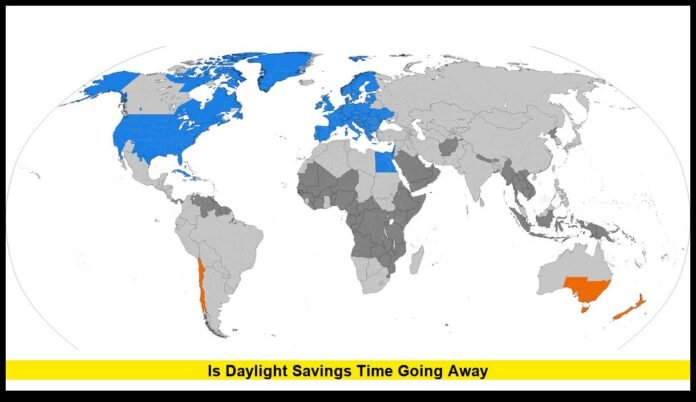

Is daylight savings time going away? As of October 17, 2026, the United States continues to follow its existing daylight saving time schedule, and no nationwide change has taken effect to end the twice-yearly clock adjustments. The Sunshine Protection Act has been proposed to make daylight saving time permanent, but the legislation has not completed the process required to become law. Americans should still prepare to turn their clocks back on November 1, 2026.
The debate centers on whether the country should stop switching between standard time and daylight saving time. Supporters want longer evening daylight throughout the year. Critics warn that permanent daylight saving time could leave winter mornings darker, particularly for children and people commuting to work.
For now, Americans cannot assume the twice-yearly time change will disappear. Any nationwide change requires the necessary federal legislation to become law. Until that happens, the existing schedule remains in effect.
Is Daylight Saving Time Going Away in 2026?
No. Daylight saving time is not going away in 2026 under the current federal rules. Congress has considered legislation to end the seasonal clock changes, but lawmakers have not completed the process needed to replace the existing system.
The Sunshine Protection Act has received significant attention as a proposal to make daylight saving time permanent. Its goal is to eliminate the practice of moving clocks forward in spring and backward in fall.
However, support for a bill does not automatically change federal law. Congress must complete the legislative process before a new timekeeping system can take effect.
For American households, the immediate result is straightforward: the regular fall time change remains scheduled for November 2026.
Here is the current situation:
- Current federal law: Seasonal daylight saving time continues.
- Proposed legislation: The Sunshine Protection Act seeks to make daylight saving time permanent.
- Legislative status: The proposal has not become law.
- November 2026: Most Americans who observe daylight saving time will turn their clocks back one hour.
- Permanent change: No nationwide switch to year-round daylight saving time has taken effect.
The proposal remains important because it could change how Americans experience daylight during winter. Nevertheless, its future depends on further legislative action.
When Does Daylight Saving Time End in 2026?
Daylight saving time ends on Sunday, November 1, 2026, for most Americans who observe it. At 2 a.m. local daylight saving time, clocks move back to 1 a.m. standard time.
This change gives people an extra hour on the clock that night. It also shifts sunrise and sunset earlier according to the clock, bringing the country into the standard-time period.
The 2026 schedule follows the existing federal rule. Daylight saving time begins on the second Sunday in March and ends on the first Sunday in November.
The key dates are:
| Event | Date in 2026 | What happens |
|---|---|---|
| Daylight saving time begins | March 8 | Clocks move forward one hour |
| Daylight saving time ends | November 1 | Clocks move back one hour |
| Standard time resumes | November 1 | Most observing areas return to standard time |
These dates remain in effect unless a new law changes the rules. The proposed legislation has not replaced the existing calendar.
People who use smartphones and internet-connected devices can generally expect automatic clock updates. However, manually operated clocks, some appliances, and older devices may require adjustment.
The November change also matters for travel, work schedules, transportation, and appointments. People should check the time carefully when arranging activities around the transition.
What Is the Sunshine Protection Act?
The Sunshine Protection Act is federal legislation intended to make daylight saving time permanent across much of the United States. Its central goal is to eliminate the annual spring and fall clock changes.
Under the proposed arrangement, the country would keep daylight saving time throughout the year rather than return to standard time every November.
That would mean clocks would no longer move backward in the fall. Americans would also stop moving clocks forward each spring under the proposed system.
Supporters say the change would give people more daylight during the evening hours. They argue that later sunsets could make it easier for families to spend time outdoors after school and work.
The legislation also reflects concerns about the effects of changing clocks twice a year. People must adjust their sleep schedules, while businesses and public services must manage the transition.
However, making daylight saving time permanent is not the same as eliminating daylight saving time altogether. The distinction matters when answering whether the practice is going away.
The bill seeks to end the clock changes by keeping daylight saving time year-round. It does not propose a nationwide return to permanent standard time.
That difference has shaped the national debate. Some lawmakers and other supporters favor permanent daylight saving time, while others prefer permanent standard time.
Until Congress enacts a new law, the existing federal framework continues to govern the dates when daylight saving time begins and ends.
Why Has Ending Daylight Saving Time Been Difficult?
The proposal has attracted attention for years, but lawmakers have struggled to reach a final agreement.
One reason is that Americans disagree about which time system would work best throughout the year. Ending clock changes may sound simple, but the choice affects morning and evening daylight differently.
Permanent daylight saving time would keep clocks one hour ahead of standard time during the winter months. That would provide later sunsets, but it would also produce later sunrises.
In northern parts of the country, winter mornings can already be dark when many students and workers leave home. Moving the clock forward year-round could make some of those mornings darker still.
Supporters of permanent daylight saving time emphasize the benefits of additional evening light. Opponents often focus on morning visibility, sleep schedules, and the daily routines of children and early-shift workers.
Geography complicates the issue further. Sunrise and sunset times vary across time zones and with distance from their eastern or western boundaries.
A policy that produces a comfortable winter schedule in one region may create very different conditions elsewhere. That makes a nationwide solution more complicated than simply changing the clocks.
Lawmakers must also decide how the federal system should interact with existing state rules. Federal legislation would need to address how states currently observing standard time fit into any new arrangement.
These disagreements have kept the issue from reaching a lasting nationwide resolution. Even strong support for ending clock changes does not automatically settle the question of which time standard should replace the current system.
What Would Permanent Daylight Saving Time Mean for Americans?
Making daylight saving time permanent would change how people experience daylight during the winter months.
Under the current system, clocks return to standard time in November. This makes sunrise and sunset occur earlier according to the clock than they did under daylight saving time.
Permanent daylight saving time would keep clocks one hour ahead of standard time throughout the year. Winter sunsets would occur later on the clock, but winter sunrises would also happen later.
The proposed change could affect everyday routines in several ways:
- Evening activities: More daylight would remain later in the afternoon and evening during winter.
- Morning commutes: Some people would travel to work or school in darker conditions.
- Family schedules: Parents might need to consider daylight conditions when arranging school travel and outdoor activities.
- Business operations: Employers and businesses could maintain a consistent annual clock schedule without seasonal adjustments.
- Travel and appointments: People would no longer need to account for the annual spring and fall clock changes if the permanent system took effect.
These outcomes describe the proposed system, not a change already in force.
The actual amount of daylight would not increase. Instead, the clock would align differently with sunrise and sunset.
This distinction is central to the debate. People who prefer brighter evenings may welcome the change, while those who prioritize morning daylight may oppose it.
Which U.S. States Do Not Observe Daylight Saving Time?
Although most of the United States follows daylight saving time, some locations do not participate in the seasonal clock change.
Hawaii and most of Arizona remain on standard time throughout the year. Several U.S. territories also do not observe daylight saving time.
The exceptions include:
- Hawaii
- Most of Arizona
- American Samoa
- Guam
- The Northern Mariana Islands
- Puerto Rico
- The U.S. Virgin Islands
The Navajo Nation, which extends across parts of Arizona, Utah, and New Mexico, observes daylight saving time. This creates an important distinction within Arizona, where most of the state stays on standard time.
These existing exceptions show that the United States does not follow one identical clock-changing practice everywhere. Federal law allows states to opt out of daylight saving time by adopting permanent standard time under the applicable rules.
However, states cannot independently adopt permanent daylight saving time under the current federal framework. A state that wants to keep daylight saving time throughout the year needs federal authorization.
That distinction helps explain why states cannot simply stop changing their clocks in the fall while remaining on daylight saving time. A federal legislative change would be necessary to permit that arrangement.
Is Permanent Standard Time an Alternative to Ending Clock Changes?
Yes. Permanent standard time is another approach to ending the twice-yearly clock changes.
Instead of keeping clocks on daylight saving time throughout the year, this approach would keep them on standard time. Clocks would no longer move forward in spring or backward in fall.
The two approaches would eliminate seasonal adjustments, but they would produce different daylight patterns.
| Feature | Permanent daylight saving time | Permanent standard time |
|---|---|---|
| Seasonal clock changes | Eliminated | Eliminated |
| Winter evenings | Later sunsets by the clock | Earlier sunsets by the clock |
| Winter mornings | Later sunrises by the clock | Earlier sunrises by the clock |
| Main attraction | More evening daylight | More morning daylight |
Supporters of permanent standard time often emphasize alignment with the natural daylight cycle and concerns about winter mornings. Supporters of permanent daylight saving time generally prioritize evening light and consistent schedules.
Neither option has replaced the existing nationwide system through enacted federal legislation.
The debate therefore involves more than deciding whether clocks should change. It also involves deciding which time standard Americans should follow throughout the year.
Could Daylight Saving Time End in 2027?
A permanent change could take effect in a future year if Congress passes legislation and the measure becomes law. However, a nationwide end to seasonal clock changes in 2027 is not guaranteed.
The Sunshine Protection Act has been proposed as a way to introduce permanent daylight saving time. Its progress has kept the issue in the national conversation, but the proposal remains unresolved.
Any discussion of a 2027 start date must distinguish between a proposed implementation plan and an enacted legal requirement.
Americans should not assume they will stop changing their clocks in March or November 2027. The dates remain governed by the existing system unless federal law changes.
Under the current schedule, daylight saving time is expected to begin again on March 14, 2027.
A future Congress could revisit the legislation or consider a different approach. Lawmakers could also continue debating permanent standard time instead of permanent daylight saving time.
Until an official change occurs, the safest approach is to plan around the published calendar and follow confirmed legislative developments.
What Should Americans Expect This Fall?
Americans who observe daylight saving time should expect the usual fall transition on November 1, 2026.
At 2 a.m., clocks will move back to 1 a.m. local time. Most modern phones and computers will make the adjustment automatically, while manual clocks may need attention.
People can prepare by taking a few simple steps:
- Check the time settings on older electronic devices.
- Confirm travel and appointment times around November 1.
- Remember that some states and territories do not observe daylight saving time.
- Follow confirmed federal announcements for any future legislative changes.
There is no need to change daily plans based on the assumption that daylight saving time has already been abolished. The current law remains in effect.
The next major question is whether lawmakers will revisit permanent daylight saving time. Until they enact a new law, the existing schedule remains the one Americans should follow.
Why the Daylight Saving Time Debate Matters
The debate affects daily routines across the country. Seasonal clock changes influence when people wake up, travel to work, take children to school, and finish their activities in the evening.
Supporters of ending the changes argue that a consistent schedule could reduce disruption. They also believe that keeping clocks on daylight saving time could give people more opportunities to enjoy outdoor activities after work.
Others argue that permanent standard time would better accommodate winter mornings. They are concerned about children traveling to school and workers commuting before sunrise.
The competing priorities help explain why the issue remains unresolved despite repeated legislative efforts.
The decision would affect millions of people, but it would not change the actual amount of daylight available each day. Instead, it would change how clocks align with sunrise and sunset.
That distinction is important. A later sunset on the clock does not create more sunlight. It changes the relationship between daylight and the hours people use for work, school, and recreation.
For that reason, the question of whether daylight saving time is going away involves practical considerations as well as political debate.
What Happens Next With Daylight Saving Time?
The next step depends on whether federal lawmakers revisit the Sunshine Protection Act or pursue another legislative proposal.
The proposal has kept permanent daylight saving time under consideration, but it has not completed the legislative process required to become law.
A future change would require confirmed action through Congress and the other steps necessary for a bill to become law. Until then, the existing timekeeping rules remain in place.
Americans should distinguish between a proposed change and an enacted law. The two are not interchangeable, and confusing them could lead to incorrect expectations about upcoming clock changes.
For the immediate future, November 1, 2026, remains the scheduled end of daylight saving time. March 14, 2027, remains the scheduled start of the next daylight saving period.
The bottom line: Daylight saving time is not going away yet. The debate continues, but the United States still follows its existing seasonal clock-change schedule.
Frequently Asked Questions
Is daylight savings time going away permanently?
No. The United States has not enacted a nationwide change eliminating seasonal clock adjustments. Permanent daylight saving time remains a legislative proposal rather than a nationwide requirement.
Will we turn the clocks back in November 2026?
Yes. Most Americans who observe daylight saving time will turn their clocks back one hour on November 1, 2026.
Did Congress pass the Sunshine Protection Act?
The proposal has not become federal law. Passing legislation through Congress requires completing the necessary steps before the measure can take effect.
Will daylight saving time end in 2027?
No nationwide end to seasonal clock changes has been confirmed for 2027. The existing schedule remains in effect unless Congress enacts a change.
Does the Sunshine Protection Act propose permanent standard time?
No. The legislation proposes making daylight saving time permanent, which would keep clocks on the daylight saving schedule throughout the year.
Which U.S. states do not observe daylight saving time?
Hawaii and most of Arizona do not observe daylight saving time. Several U.S. territories also remain on standard time throughout the year.
Can states permanently adopt daylight saving time on their own?
No. Under current federal rules, states can opt out of daylight saving time by adopting permanent standard time. They cannot independently require permanent daylight saving time without federal authorization.
Why do some Americans want daylight saving time to end?
Many people want to eliminate the disruption caused by changing clocks twice a year. However, they disagree about whether permanent daylight saving time or permanent standard time would provide the better year-round schedule.
What is the next daylight saving time change after November 2026?
Under the current schedule, daylight saving time begins again on March 14, 2027, when clocks move forward one hour.
What do you think about ending the twice-yearly clock changes? Share your opinion in the comments and stay updated on confirmed developments.