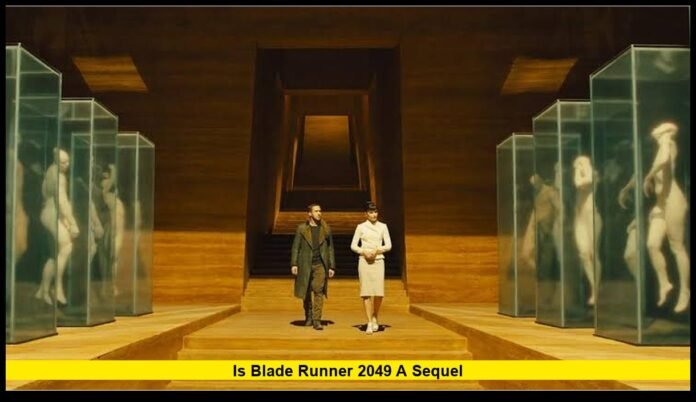

Is Blade Runner 2049 a sequel? Yes, Blade Runner 2049 is the direct sequel to the original Blade Runner, released in 1982. The 2017 science-fiction film continues the story approximately 30 years later, bringing Harrison Ford back as Rick Deckard and introducing Ryan Gosling as Officer K, a new blade runner working in a dystopian Los Angeles.
Directed by Denis Villeneuve, the film builds on the original movie’s fictional world while introducing a new mystery involving replicants, artificial memories, and the possibility of replicant reproduction. Instead of simply repeating the first film’s story, it explores familiar questions about identity, humanity, and the value of individual life through a different protagonist.
The Blade Runner franchise continues to develop, with Blade Runner 2099 scheduled to premiere on Prime Video on November 25, 2026. The upcoming limited series takes place 50 years after the events of Blade Runner 2049.
For anyone wondering whether the 2017 movie is a sequel, remake, or reboot, the answer is clear. It continues the original film’s story, preserves its established continuity, and introduces new characters whose experiences expand the franchise.
Is Blade Runner 2049 a Direct Sequel to the Original Blade Runner?
Yes. Blade Runner 2049 directly continues the narrative established in the 1982 film directed by Ridley Scott.
The original movie takes place in a dystopian Los Angeles in 2019. It follows Rick Deckard, a former police officer assigned to track down and retire rogue replicants. These artificially created beings resemble humans, but society treats them as manufactured labor rather than people with equal rights.
Their existence raises difficult questions about freedom, morality, and what separates human beings from artificial life.
The sequel moves the story forward by three decades. Its central character, Officer K, is a replicant employed by the Los Angeles Police Department as a blade runner. His job involves identifying and retiring replicants who violate the rules established by human authorities.
During an investigation, K discovers evidence that challenges accepted beliefs about replicants. His findings lead him toward a secret with potentially significant consequences for the future of human and artificial life.
Several elements establish the film as a direct sequel:
- The same fictional universe: Both movies take place in the same dystopian future.
- A returning central character: Harrison Ford reprises his role as Rick Deckard.
- A connected timeline: The sequel takes place in 2049, 30 years after the original film’s setting.
- Continuing themes: Both films examine artificial life, memory, identity, and mortality.
- Creative continuity: Ridley Scott served as an executive producer, while Hampton Fancher returned as a screenwriter.
These connections distinguish Blade Runner 2049 from a remake or an unrelated science-fiction production. The film continues an established story while giving audiences a new protagonist and a different mystery to follow.
What Is the Difference Between Blade Runner and Blade Runner 2049?
Although the two films share the same universe, they approach their stories from different perspectives.
The original Blade Runner follows Deckard as he investigates a group of replicants who have returned to Earth. His assignment becomes more complicated as he confronts questions about their emotions, experiences, and desire to survive.
Blade Runner 2049 shifts the focus to Officer K. He begins with a professional investigation, but his discoveries gradually force him to question his identity and the beliefs that govern his existence.
The differences extend beyond their leading characters. The sequel depicts a society that has changed over three decades, with developments in replicant technology and new corporate interests shaping the future.
The following comparison explains the relationship between the films.
| Feature | Blade Runner (1982) | Blade Runner 2049 (2017) |
|---|---|---|
| Director | Ridley Scott | Denis Villeneuve |
| Main character | Rick Deckard | Officer K |
| Lead actor | Harrison Ford | Ryan Gosling |
| Story setting | 2019 | 2049 |
| Main conflict | Tracking rogue replicants | Investigating a secret involving replicants |
| Franchise role | Original film | Direct sequel |
The sequel also revisits Deckard’s unresolved place in the franchise. His history becomes important to K’s investigation, allowing the film to develop the original story rather than simply repeat it.
This approach gives Blade Runner 2049 its own identity while maintaining the continuity that connects both movies.
Why Is Blade Runner 2049 Set 30 Years After the First Movie?
The 30-year gap is a central part of the sequel’s narrative. The original film takes place in 2019, while the sequel moves the story to 2049.
This time jump allows the fictional world to evolve. It also gives the events of the original movie time to influence society without requiring the sequel to follow Deckard immediately after his earlier investigation.
By 2049, replicant technology has developed further. Newer replicants work under human supervision and carry out dangerous assignments. The Los Angeles Police Department continues to employ blade runners to identify and retire replicants who break the law.
Officer K works within this system. His assignments initially appear straightforward, but his discoveries reveal that the rules governing replicants may rest on incomplete information.
The time jump also explains why Deckard is absent from the beginning of the sequel. He has been missing for decades, and K’s investigation eventually leads him toward the former blade runner.
The setting serves two important purposes. It preserves the original story’s continuity and introduces a future shaped by decades of technological and social change.
What Is Blade Runner 2049 About?
Blade Runner 2049 follows Officer K, played by Ryan Gosling, a replicant working as a blade runner for the Los Angeles Police Department.
During a routine assignment, K uncovers evidence connected to a secret that could have far-reaching consequences. His discovery challenges established assumptions about replicants and threatens to destabilize the existing social order.
The mystery centers on the possibility that a replicant gave birth to a child. Such an event would challenge the accepted understanding of replicant biology and potentially transform the future of artificial life.
K’s investigation brings him closer to Rick Deckard, played by Harrison Ford. Deckard has disappeared from public life, but his connection to the mystery makes him an important figure in K’s search for answers.
The investigation also attracts the attention of Niander Wallace, played by Jared Leto. Wallace controls a powerful replicant manufacturing operation and wants to expand the production of artificial workers.
The possibility of replicant reproduction threatens the business model and ambitions behind his operation. Wallace sees the ability to reproduce as a potential way to expand replicant production beyond existing manufacturing limitations.
As K pursues the truth, he also begins to question his own memories and identity. His investigation becomes more than a police assignment because the evidence challenges his understanding of who he is.
The film combines a detective story with philosophical questions about consciousness, artificial intelligence, personal identity, and freedom. These elements connect the sequel to the original while giving K a distinct journey.
How Does Harrison Ford Connect the Sequel to the Original?
Harrison Ford’s return as Rick Deckard is one of the most important links between the two movies.
Deckard was the central character in the original film. In Blade Runner 2049, he becomes a key figure in Officer K’s investigation, bringing the history of the earlier story into the new narrative.
The original film leaves questions about Deckard’s identity and experiences open to interpretation. The sequel revisits some of that uncertainty without turning every mystery into a simple explanation.
His connection to the events surrounding replicant reproduction also gives the character a new purpose. Instead of merely repeating his former role as a blade runner, Deckard becomes central to a discovery that could change the future.
Ford’s performance provides a familiar point of reference for viewers who watched the original movie. His presence establishes the continuity between the films, even though Ryan Gosling carries most of the sequel’s story.
The sequel does not require Deckard to dominate the narrative. Instead, it uses his history to deepen K’s investigation and explore the consequences of events that occurred decades earlier.
This balance allows the movie to respect the original protagonist while establishing Officer K as a distinct leading character.
Who Plays the Main Characters in Blade Runner 2049?
Blade Runner 2049 combines returning characters with new figures who shape its central mystery. Each character contributes to the film’s investigation of replicants, corporate power, and personal identity.
Ryan Gosling as Officer K
Gosling plays the sequel’s central protagonist. K is a replicant employed by the Los Angeles Police Department. His investigation uncovers evidence that challenges his understanding of replicants and his own place in society.
Harrison Ford as Rick Deckard
Ford returns as the protagonist of the original film. Deckard’s disappearance and connection to the central mystery make him crucial to K’s investigation.
Ana de Armas as Joi
Joi is a holographic companion in K’s life. Her relationship with him raises questions about emotional attachment, artificial intelligence, and the meaning of genuine connection.
Robin Wright as Lieutenant Joshi
Joshi supervises K and represents the police authority responsible for managing the investigation. She understands that the discovery could have serious consequences if it becomes public.
Jared Leto as Niander Wallace
Wallace is a powerful replicant manufacturer whose ambitions depend on controlling production and expanding the use of artificial labor.
Sylvia Hoeks as Luv
Luv works closely with Wallace. Her role connects the corporate struggle over replicants with the threats K encounters during his investigation.
Other important cast members include Dave Bautista as Sapper Morton, Mackenzie Davis as Mariette, Carla Juri as Dr. Ana Stelline, Lennie James as Mister Cotton, and Edward James Olmos as Gaff.
Together, these characters establish a broader world than the one presented in the original film. They also help the sequel examine the relationships between replicants, humans, institutions, and corporations in 2049.
Does Blade Runner 2049 Continue the Original Film’s Main Themes?
Yes. The sequel retains the original film’s philosophical concerns while examining familiar questions from a different perspective.
One of the central themes is the meaning of humanity. Replicants are artificial beings created for specific purposes, yet their experiences can include fear, attachment, suffering, and a desire to survive.
This contradiction challenges the assumption that a manufactured being cannot possess meaningful emotions or an individual identity.
Memory is another major theme. In the Blade Runner universe, memories can be implanted or manufactured. This technology complicates the distinction between personal experience and information placed in someone’s mind.
Officer K’s investigation turns that question into a personal struggle. As he examines evidence surrounding the central mystery, he begins to reconsider the memories and beliefs that shape his sense of self.
The sequel also explores exploitation and corporate power. Replicants perform work that benefits human society, but powerful organizations control their creation and determine how they should behave.
Wallace represents the dangers of technological advancement without meaningful ethical limits. His ambitions demonstrate how innovation can increase corporate power without necessarily improving the lives of the beings affected by it.
Finally, the film examines the difference between being special and making meaningful choices. K’s journey challenges his assumptions about his identity and eventually forces him to decide what kind of person he wants to be.
These themes connect the sequel directly to the original movie. They also allow Blade Runner 2049 to stand on its own as a story about consciousness, dignity, and personal responsibility.
Do You Need to Watch Blade Runner Before Blade Runner 2049?
Watching the original Blade Runner first is strongly recommended, although viewers can understand the basic plot of the sequel without seeing it.
The 2017 film introduces Officer K and explains the central investigation through his experiences. New viewers can follow his assignment, his discoveries, and his search for Deckard without knowing every detail of the original story.
However, the 1982 film provides important context. It introduces the concept of replicants, establishes Deckard’s history, and raises questions that the sequel revisits.
Watching the original also makes the returning characters more meaningful. Viewers can better appreciate the significance of Deckard’s role and the changes that have occurred during the 30-year gap.
For the clearest viewing order, follow this sequence:
- Blade Runner (1982): The original story introduces Deckard and the replicant conflict.
- Blade Runner 2049 (2017): The sequel advances the timeline and follows Officer K’s investigation.
- Blade Runner 2099: The upcoming limited series moves the franchise forward to another period.
This order follows the franchise’s main chronological progression. The first two entries are feature films, while the third is a television series set decades later.
Viewers who prefer to start with the newer movie can still understand its central mystery. Nevertheless, watching the original first provides a richer understanding of the characters and the questions that carry across both films.
Is Blade Runner 2049 a Remake or a Reboot?
Blade Runner 2049 is a sequel, not a remake or a reboot.
A remake retells an earlier story, often with a new cast or updated production techniques. A reboot typically restarts a franchise or reintroduces its fictional world with a substantially reset continuity.
The 2017 film does neither. It continues the existing narrative, advances the timeline, and brings back a major character from the original movie.
The distinction matters because the sequel does not replace Deckard’s story. Instead, it explores the consequences of the world established in 1982.
Its new protagonist, Officer K, allows the filmmakers to examine that world from another perspective. The movie introduces new characters and conflicts while retaining the history and continuity of the original.
The title also identifies the story’s setting. The year 2049 distinguishes the sequel from the original film’s 2019 setting and establishes the time that has passed between the two narratives.
Although the movies have different directors, they belong to the same continuous fictional universe.
Who Directed Blade Runner 2049?
Denis Villeneuve directed Blade Runner 2049, taking over the filmmaking role from Ridley Scott, who directed the original film.
Villeneuve was already known for science-fiction films and carefully constructed suspense. His approach to the sequel emphasizes atmosphere, visual storytelling, and the gradual discovery of information.
Ridley Scott remained involved as an executive producer. Hampton Fancher, who co-wrote the original film, also returned as a screenwriter alongside Michael Green.
This combination brought together people familiar with the original film and a director with his own filmmaking style.
Roger Deakins served as cinematographer, helping establish the sequel’s distinctive visual identity. The film uses large architectural spaces, contrasting environments, and carefully composed images to communicate the scale and isolation of its future world.
Hans Zimmer and Benjamin Wallfisch composed the score, building on the atmospheric musical tradition associated with the franchise.
The production therefore combined continuity in its story and creative personnel with a new director’s interpretation of the material.
How Long Is Blade Runner 2049?
Blade Runner 2049 has a theatrical runtime of approximately 164 minutes, or 2 hours and 44 minutes.
That makes it a substantial commitment for viewers accustomed to shorter action or science-fiction films. The movie allows considerable time for its mystery, character development, and visual atmosphere to unfold.
Its pacing differs from that of a conventional action thriller. Although the story includes investigations, confrontations, and moments of danger, it also devotes significant attention to silence, setting, and the characters’ internal conflicts.
The longer runtime supports the film’s gradual approach to storytelling. Information emerges through discoveries and conversations rather than constant action.
For viewers planning a first watch, setting aside nearly three hours is sensible, especially if they want to experience the film without interruptions.
The original Blade Runner is also worth watching beforehand to understand the history behind the sequel’s central mystery.
What Is the Connection Between Blade Runner 2049 and Blade Runner 2099?
The next major chapter in the franchise is Blade Runner 2099, a limited television series scheduled to premiere on Prime Video on November 25, 2026.
As of November 2, 2026, the series has not yet premiered. Its announced release date places it 50 years after the events of Blade Runner 2049.
The series continues the franchise’s exploration of the relationship between humans and replicants while introducing a new story and central characters.
Hunter Schafer stars as Cora, a fugitive who assumes another identity. Michelle Yeoh plays Olwen, a replicant approaching the end of her life.
The story follows Cora as she becomes involved in a dangerous investigation that threatens the fragile balance of the future society.
Silka Luisa serves as creator and showrunner, while Ridley Scott is an executive producer. The announced first season consists of eight episodes.
The series is designed to continue the franchise’s broader narrative while introducing viewers to a different period in its history.
Its existence also reinforces the significance of the 2017 film. Blade Runner 2049 is not simply a follow-up to the original movie; it also establishes the world from which the next major screen installment moves forward.
The chronology is straightforward:
| Title | Format | Story setting |
|---|---|---|
| Blade Runner | Feature film | 2019 |
| Blade Runner 2049 | Feature film | 2049 |
| Blade Runner 2099 | Limited series | 2099 |
The three titles represent successive periods in the same fictional universe. The series extends the timeline rather than replacing the events of the earlier films.
Where Can You Watch Blade Runner 2049 in the United States?
American viewers can check digital rental and purchase services for Blade Runner 2049. Availability through subscription streaming services can change, so viewers should confirm the current listing before choosing a platform.
The film has also received home-video releases, allowing audiences to watch it outside theaters.
When checking a streaming service, distinguish between a subscription that includes the movie and a separate rental or purchase option. A title appearing in a service’s catalog does not always mean it is included with the standard subscription.
The original Blade Runner is also available through digital viewing options, making it possible to watch both films in sequence.
For viewers new to the franchise, watching the original before the sequel offers the clearest introduction to the characters, the fictional technology, and the questions that carry across both stories.
Why Blade Runner 2049 Remains Important to the Franchise
The sequel’s importance comes from its ability to continue an established story without simply repeating it.
Officer K’s investigation introduces a new central mystery, but that mystery grows directly from the world and unresolved questions of the original film. Deckard’s return strengthens the connection while giving the newer protagonist room to develop independently.
The movie also broadens the franchise’s examination of replicants. Instead of focusing only on whether artificial beings can imitate human behavior, it considers what might happen if they develop capabilities that challenge the social order built around them.
Its approach to memory, identity, and emotional attachment continues the original film’s philosophical tradition. At the same time, its new characters and conflicts create a distinct narrative.
The upcoming Blade Runner 2099 series gives that narrative additional relevance. With its story set five decades after the sequel, it will explore another stage in the fictional world’s development.
For anyone asking whether Blade Runner 2049 is a sequel, the answer is definitive. It continues the original film’s story, restores a central character, advances the timeline, and provides the narrative foundation for the next announced screen installment.
Frequently Asked Questions
1. Is Blade Runner 2049 a sequel to Blade Runner?
Yes. Blade Runner 2049 is the direct sequel to Ridley Scott’s 1982 science-fiction film. It continues the same fictional universe approximately 30 years after the original story.
2. Is Blade Runner 2049 the second movie in the franchise?
Yes. It is the second major feature film in the franchise’s main movie sequence, following Blade Runner (1982). The franchise also includes short films and the upcoming Blade Runner 2099 television series.
3. Does Harrison Ford appear in Blade Runner 2049?
Yes. Harrison Ford reprises his role as Rick Deckard, the central character from the original film. Deckard becomes an important part of Officer K’s investigation.
4. Is Ryan Gosling the main character in Blade Runner 2049?
Yes. Ryan Gosling plays Officer K, a replicant working as a blade runner for the Los Angeles Police Department. His investigation drives the sequel’s main storyline.
5. Can I watch Blade Runner 2049 without watching the original?
Yes. The sequel introduces its main character and central mystery, so new viewers can follow the basic plot. However, watching the original first provides valuable background and makes the returning characters more meaningful.
6. Is Blade Runner 2049 a remake of the 1982 movie?
No. It continues the original story rather than retelling it. The sequel introduces a new protagonist and advances the timeline from 2019 to 2049.
7. How many years after the original does Blade Runner 2049 take place?
The story takes place 30 years after the original film’s 2019 setting. Its main events occur in 2049.
8. Who directed Blade Runner 2049?
Denis Villeneuve directed the 2017 sequel. Ridley Scott, who directed the original, served as an executive producer.
9. Is Blade Runner 2099 a sequel to Blade Runner 2049?
Blade Runner 2099 continues the franchise’s fictional timeline as a limited television series. Its story takes place 50 years after the events of the 2017 film. Its announced premiere date is November 25, 2026, on Prime Video.
10. Is another Blade Runner movie confirmed after Blade Runner 2049?
The announced next major screen installment is Blade Runner 2099, a television series rather than a feature film. A further feature-film sequel has not been established by the information included here.
11. What is the main story of Blade Runner 2049?
The film follows Officer K as he uncovers a secret involving replicants and searches for Rick Deckard. His investigation challenges accepted beliefs about artificial life and forces him to reconsider his identity.
12. How long is Blade Runner 2049?
The film runs approximately 164 minutes, or 2 hours and 44 minutes. Its extended runtime gives the mystery, characters, and futuristic setting room to develop.
Final Verdict: Is Blade Runner 2049 a Sequel?
Yes, Blade Runner 2049 is a direct sequel to the 1982 Blade Runner. Directed by Denis Villeneuve, it continues the story 30 years later, introduces Officer K, and brings Harrison Ford back as Rick Deckard. Its narrative expands the original film’s exploration of replicants, memory, identity, and humanity while establishing the timeline that leads to Blade Runner 2099.
Have you watched both Blade Runner films? Share your thoughts on the sequel and stay tuned for the next chapter in this iconic science-fiction universe.