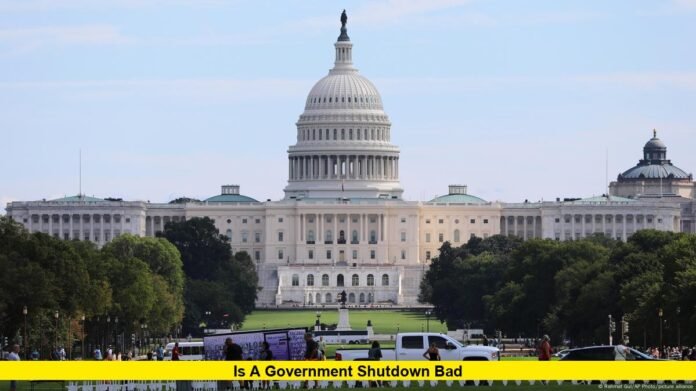

The question is a government shutdown bad has taken center stage again as the United States faces yet another painful funding lapse. On October 1, 2025, the federal government entered a shutdown after lawmakers failed to pass a budget agreement by the deadline. The political standoff is already affecting millions of Americans — from federal employees and contractors to families relying on government programs.
This shutdown has quickly become more than a headline. It is a lived reality for workers missing paychecks, small businesses losing contracts, travelers facing longer delays, and communities watching vital services grind to a halt. Let’s take a closer look at why this happened, what is being impacted, and why the effects prove that a government shutdown is, indeed, bad for the country.
Why the 2025 Shutdown Happened
Every fiscal year, Congress must approve spending bills to keep the government running. If lawmakers fail to agree on funding, agencies lose their legal authority to operate fully. That’s exactly what happened this time.
The core disputes revolve around health care, Medicaid, and budget priorities.
- House Republicans passed a short-term resolution, known as a continuing resolution (CR), to extend funding temporarily.
- Democrats rejected it, arguing that temporary fixes without restoring health care funds and reversing Medicaid cuts would only prolong uncertainty.
- The Senate could not agree on a compromise, with both sides standing firm on their conditions.
- The White House then directed federal agencies to begin shutdown procedures, including furloughs and suspension of many services.
Unlike past shutdowns, this one also comes with new instructions from the administration suggesting permanent staffing cuts may follow, raising the stakes for workers and agencies.
Federal Workers on the Frontline
Perhaps the most visible impact of any shutdown is on the federal workforce. In 2025, the numbers are staggering:
- 900,000 federal employees furloughed without pay.
- 700,000 employees deemed “essential” are still working — but without paychecks until funding is restored.
The effects ripple quickly. Families dependent on federal salaries face difficulty paying rent, mortgages, and other bills. While back pay is expected once the shutdown ends, that does little to ease immediate financial strain.
Departments hit hardest include:
- Health and Human Services (HHS) – Nearly half of staff sent home.
- Centers for Disease Control and Prevention (CDC) – Over 60% sidelined, limiting the ability to track and respond to health threats.
- National Institutes of Health (NIH) – Roughly three-quarters furloughed, slowing down vital medical research.
- Federal Aviation Administration (FAA) – More than 11,000 employees off duty, while air traffic controllers continue working unpaid.
- Transportation Security Administration (TSA) – Agents remain on duty but without pay, raising concerns about staffing shortages if the shutdown lingers.
These numbers show why the human toll of a shutdown is far from abstract — it directly interrupts the livelihoods of millions of Americans.
Impact on Public Services and Daily Life
Beyond workers, a government shutdown weakens services that ordinary Americans depend on. Some effects are immediate, while others worsen the longer the shutdown continues.
Closed or Limited Federal Operations
- National Parks and Museums – Many close or operate with minimal staff, leaving visitors turned away.
- Passport and Visa Processing – Delays pile up as non-essential staff are furloughed.
- Small Business Loans – Federal loan approvals are paused, slowing entrepreneurship and local business growth.
Health and Safety at Risk
- Public health tracking at the CDC is scaled back.
- New clinical trials at NIH are delayed, impacting patients awaiting treatment opportunities.
- Food safety inspections by the FDA are limited, creating risk of outbreaks going undetected.
Social Programs in Jeopardy
- The WIC nutrition program for low-income mothers and children faces suspension if the shutdown drags on.
- Federal housing and education programs see slowed operations, delaying assistance to families who need it most.
Essential programs like Social Security, Medicare, and Medicaid continue, but administrative support slows down, leaving beneficiaries facing longer wait times.
The Economic Fallout
When people ask, is a government shutdown bad for the economy? the answer is straightforward: yes.
Here’s how the shutdown already weighs on the financial landscape:
- Lost Wages – Federal employees lose around $400 million per day in combined wages, even if back pay comes later.
- Travel Industry Losses – An estimated $1 billion per week is at stake from delays, reduced staffing, and canceled travel plans.
- Local Communities Hit Hard – Cities with large federal workforces, like Washington D.C., Maryland, Virginia, and parts of the West and South, see reduced consumer spending almost immediately.
- Investor and Market Confidence – Markets dislike uncertainty. Credit rating agencies are watching closely, warning that prolonged dysfunction could damage America’s global financial credibility.
- Economic Growth Risks – Past shutdowns have shaved billions off GDP growth. If this one continues, it could weigh down recovery momentum across multiple sectors.
For many Americans, these consequences might feel invisible at first. But as the shutdown extends, the reality shows up in delayed paychecks, postponed projects, weaker local economies, and rising frustration.
Read Also-How Many Government Shutdowns Have There Been in U.S. History
The Political Dimension
While the economic and workforce effects are measurable, the political damage is equally serious.
- Partisan Deadlock: Neither party wants to back down, fearing backlash from their base.
- Erosion of Trust: Americans lose confidence in government when basic functions stop over political disputes.
- Polarization Deepens: Shutdowns amplify divisions rather than fostering compromise.
History shows that prolonged shutdowns often damage approval ratings for the party seen as “responsible.” However, in today’s polarized climate, blame is more likely to split along partisan lines, leaving the public caught in the middle.
Comparisons to Past Shutdowns
To understand the weight of the current moment, it helps to look at history.
- 1995-96 Shutdown: Lasted 21 days, then the longest in history at the time.
- 2013 Shutdown: Lasted 16 days, primarily over health care funding disputes.
- 2018-2019 Shutdown: The longest ever at 35 days, heavily affecting federal workers and delaying airport security and other services.
Each time, the pattern repeats: workers suffer, services decline, and the economy takes a hit. The 2025 shutdown is no different — except that the political environment is even more volatile.
Why a Shutdown Is Clearly Bad
Bringing all of these pieces together makes the answer clear.
- Bad for Workers: Families lose income, face financial stress, and endure uncertainty.
- Bad for Services: Public health, research, and community programs are disrupted.
- Bad for the Economy: Billions in productivity and wages are lost.
- Bad for Global Standing: Markets see instability, credit ratings face scrutiny, and international confidence declines.
- Bad for Democracy: Political stalemate replaces effective governance, weakening public faith.
In short, every major area of society feels the impact of a shutdown.
What Comes Next
While no timeline is certain, there are a few possible paths forward:
- A Short-Term Deal: Lawmakers may pass another continuing resolution to temporarily reopen the government.
- Policy Concessions: One side could give ground on health care or budget cuts to break the deadlock.
- Prolonged Shutdown: If neither side compromises, the shutdown could last weeks or months, with growing costs.
- Public Pressure: As frustration rises, voters may force lawmakers to act faster.
For now, Americans should prepare for slower services, uncertain timelines, and financial strain until Congress finds a resolution.
Final Thoughts
When people debate is a government shutdown bad, the 2025 crisis provides a resounding answer. From workers and families to businesses and government agencies, the pain is widespread. The damage grows the longer the shutdown drags on. While politics created this situation, the consequences fall on ordinary people who simply need their government to function.
What are your thoughts on the shutdown — should leaders compromise quickly to protect workers and the economy, or hold firm on their priorities? Share your opinion below and keep the conversation going.