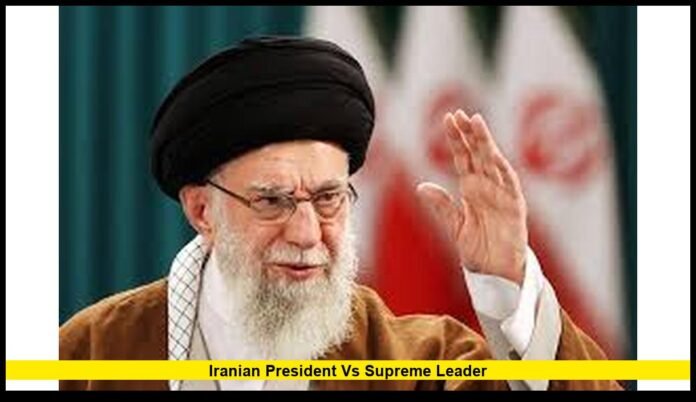

The topic of iranian president vs supreme leader remains essential for understanding how Iran’s government operates in 2026. President Masoud Pezeshkian currently leads the country’s executive branch, while Supreme Leader Ayatollah Ali Khamenei holds the highest authority in the Islamic Republic. Iran’s constitution gives the Supreme Leader sweeping control over national security, the armed forces, and major political decisions, while the president manages administration and economic policy.
This system blends elections with religious oversight. For U.S. readers following developments in the Middle East, the relationship between these two roles explains why Iran’s political structure functions differently from many other governments.
The Structure of Iran’s Government
Iran’s modern political framework formed after the 1979 Islamic Revolution. The revolution replaced the monarchy with the Islamic Republic, creating a system that combines elected institutions with powerful clerical leadership.
Several bodies share authority within this structure. However, two positions dominate the political landscape:
- Supreme Leader
- President
Both offices influence the country’s direction. Yet the constitution places the Supreme Leader above all other officials.
The president runs the executive branch but must operate within policies approved by the Supreme Leader and other oversight institutions.
Role of the Supreme Leader
The Supreme Leader serves as the highest political and religious authority in Iran. Ayatollah Ali Khamenei has held the position since 1989.
The constitution grants this office extensive authority over the country’s key institutions.
Major powers include:
- Command of the armed forces
- Oversight of the Islamic Revolutionary Guard Corps
- Authority over national security strategy
- Appointment of the judiciary chief
- Control over state broadcasting
- Influence over foreign policy direction
The Supreme Leader also appoints half of the members of the Guardian Council. This body reviews legislation and supervises elections.
Through these responsibilities, the Supreme Leader maintains control over the country’s most important political and security decisions.
Masoud Pezeshkian and the Iranian Presidency
Masoud Pezeshkian became Iran’s president in July 2024 after winning a runoff election. His victory followed the death of President Ebrahim Raisi in May 2024.
Raisi died in a helicopter crash in northwestern Iran while returning from an official event. The accident triggered a rapid election process required by Iranian law.
Pezeshkian previously served as:
- Minister of Health
- Member of the Iranian parliament
- Deputy speaker of parliament
He trained as a heart surgeon and remained active in public service for decades before running for president.
After the election, he became the ninth president of the Islamic Republic.
Despite leading the executive branch, his authority operates within the broader system led by the Supreme Leader.
Iranian President vs Supreme Leader: Key Differences in Authority
The comparison between the iranian president vs supreme leader highlights how Iran divides power between elected leadership and clerical oversight.
The two roles differ significantly in their responsibilities.
| Category | Supreme Leader | President |
|---|---|---|
| Position in hierarchy | Highest authority | Senior elected official |
| Military command | Direct control | No command authority |
| Security policy | Final decision-maker | Participates in implementation |
| Cabinet appointments | No direct role | Selects ministers |
| Election method | Chosen by Assembly of Experts | Elected by citizens |
This structure ensures that the country’s ideological direction remains under religious leadership even when elected officials change.
Responsibilities of the President
The president manages daily governance and economic policy.
Key duties include:
- Leading the executive branch
- Managing ministries and government agencies
- Preparing the national budget
- Proposing economic reforms
- Representing Iran in international meetings
The president appoints ministers who oversee areas such as finance, health, energy, and transportation. Iran’s parliament reviews and approves those appointments.
The administration also oversees economic planning and infrastructure development.
Even with these responsibilities, major policy shifts require approval from leadership institutions tied to the Supreme Leader.
How the Supreme Leader Influences Policy
The Supreme Leader influences both domestic and foreign policy decisions.
National security strategies flow through institutions connected to this office. One of the most important is the Supreme National Security Council.
This council coordinates security policy and includes senior officials from several branches of government.
Members often include:
- The president
- Military commanders
- Senior government officials
- Representatives appointed by the Supreme Leader
While the president participates in these discussions, the Supreme Leader holds the final authority on strategic matters.
The Guardian Council and Political Oversight
Another powerful institution in Iran’s political system is the Guardian Council.
This council plays a key role in maintaining the country’s ideological framework.
The Guardian Council has two major responsibilities:
- Reviewing legislation passed by parliament
- Approving candidates for elections
Twelve members serve on the council. The Supreme Leader appoints six Islamic jurists, while parliament selects six legal experts nominated by the judiciary.
This process ensures strong oversight over both lawmaking and elections.
Through this council, the Supreme Leader maintains influence across multiple branches of government.
Parliament and the Executive Branch
Iran’s parliament, known as the Islamic Consultative Assembly, works alongside the president in shaping domestic policy.
Members of parliament propose and debate legislation. They also approve the national budget and confirm cabinet appointments.
The president’s administration works closely with parliament when implementing economic plans or government programs.
However, laws passed by parliament must pass review by the Guardian Council before they take effect.
This system creates several layers of authority within Iran’s government.
Foreign Policy Leadership
Foreign policy provides another clear example of the balance between the president and the Supreme Leader.
The president often represents Iran during international meetings and diplomatic events. Government ministries also handle negotiations and diplomatic outreach.
However, the Supreme Leader sets the overall direction of foreign relations.
Key decisions related to national security and regional strategy fall under the authority of the Supreme Leader and the national security establishment.
This structure explains why Iranian foreign policy remains relatively consistent even when different presidents take office.
Military and Security Control
Control of the military remains firmly under the Supreme Leader.
The constitution designates the Supreme Leader as commander-in-chief of Iran’s armed forces.
This authority includes:
- The regular military
- The Islamic Revolutionary Guard Corps
- National defense strategy
Military commanders receive appointments from the Supreme Leader.
The president does not control the military but participates in national security discussions through government councils.
This division reinforces the Supreme Leader’s role as the ultimate authority on defense matters.
Why This Leadership Structure Matters
The balance between elected government and religious authority defines Iran’s political system.
For global observers, understanding the relationship between these positions helps explain how Iran makes major decisions.
Presidential elections can influence economic policies and administrative priorities. Yet the country’s overall strategic direction remains tied to the Supreme Leader’s leadership.
Because of this structure, changes in presidential leadership rarely produce dramatic shifts in national policy.
Public Elections and Political Participation
Iran holds regular elections for the presidency and parliament.
Citizens vote directly for presidential candidates. Elections typically involve multiple candidates approved through the country’s political oversight system.
Presidential terms last four years, and candidates may serve two consecutive terms.
While elections allow citizens to influence government leadership, the broader political framework remains guided by religious leadership institutions.
This balance forms a defining feature of Iran’s governance model.
A System Shaped by Revolution and Religion
Iran’s political structure reflects the ideological vision that emerged after the Islamic Revolution.
The system aims to combine public participation through elections with religious supervision from senior clerics.
In this arrangement:
- The president manages governance and administration.
- The Supreme Leader oversees national direction and ideological leadership.
The relationship between these roles continues to shape how Iran approaches policy, diplomacy, and security.
For observers around the world, the comparison between the iranian president vs supreme leader offers a clear view of how authority operates within the Islamic Republic.
What are your thoughts on how Iran divides power between elected leaders and religious authority? Share your perspective in the comments and join the discussion.