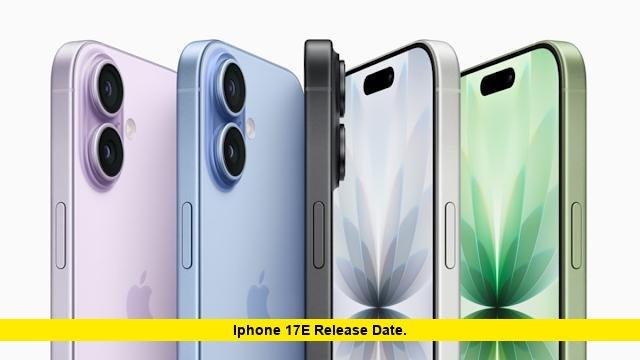

Apple has now officially put an end to the rumors around the iphone 17e release date, confirming a March rollout with earlier-than-expected availability for U.S. buyers and other major markets. The new budget-friendly iPhone 17e brings double the entry storage, an updated camera system, and familiar design refinements, while keeping the starting price steady for American customers. This makes it one of the most closely watched iPhone launches of early 2026 for value-focused users who still want modern performance and features.
Just announced through Apple’s own channels, iPhone 17e will open for pre-orders on Wednesday, March 4, with in-store and online availability beginning Wednesday, March 11, across more than 70 countries and regions, including the United States. Apple is targeting the broad midrange smartphone market with a device that blends proven hardware with refreshed internals, focusing on everyday reliability, solid camera performance, and improved storage for apps, photos, and video.
If you are considering an upgrade this spring, now is the ideal time to compare your current device, check carrier trade‑in deals, and decide whether the 17e’s balance of price and features matches what you need from your next iPhone.
iPhone 17e release date and availability
Apple’s timeline for the iPhone 17e is clear and precise for March 2026 in the U.S. market. Pre-orders are scheduled to begin on Wednesday, March 4, at 6:15 a.m. Pacific Time for customers in the United States and more than 70 additional regions. Retail and shipping availability then follows one week later, on Wednesday, March 11, meaning early buyers will not have to wait long between ordering and receiving their devices.
The company is rolling out iPhone 17e simultaneously across key global markets, including the U.S., Canada, the U.K., and major regions in Europe and Asia. This approach mirrors Apple’s strategy with other recent iPhone launches, where first‑wave countries receive access at the same time rather than in staggered phases. For American customers, the synchronized timing simplifies buying decisions, as both Apple’s own channels and major U.S. carriers will be aligned around the same launch window.
Price and storage: double the base capacity
One of the most significant practical upgrades for everyday users is the new storage configuration. iPhone 17e starts at 256GB of storage, doubling the base capacity of the previous generation while keeping the same entry price of 599 dollars in the United States. For many buyers, this shift alone reduces the need to pay more for higher tiers just to accommodate growing photo libraries, 4K video, and larger modern apps and games.
By moving the baseline to 256GB, Apple positions iPhone 17e as a long‑term device that can handle years of updates and usage without running out of space too quickly. This is especially important for users who shoot a lot of video, download streaming content for offline viewing, or use their phones for work files. In practical terms, the new base level makes the 17e feel closer to higher‑end models of previous generations, but at a midrange price point.
Design, colors, and everyday usability
Visually, iPhone 17e leans into a clean, modern look rather than a radical redesign. The phone is offered in three colors with a matte finish: black, white, and a soft pink tone that gives buyers a subtle new option without drifting into overly bright or neon shades. The matte surface is designed to resist fingerprints and provide a more secure in-hand feel compared with glossy finishes.
The device continues Apple’s current language of flat edges and a straightforward front design that emphasizes the display. While it does not aim to compete with the most premium flagships in terms of luxurious materials, it is positioned as a sturdy, attractive phone that fits comfortably into everyday usage—whether that is tossed into a backpack, slipped into a pocket, or used with a slim protective case. For many U.S. buyers focused on reliability and comfort, this familiar design is a positive rather than a drawback.
Performance and hardware focus
Internally, iPhone 17e is built to handle typical daily workloads with ease: messaging, social apps, web browsing, video streaming, navigation, and casual gaming. Apple highlights faster performance compared with the prior e‑series model, enabled by a newer generation chip and optimizations across the system. This should translate to quicker app launches, smoother multitasking, and better long‑term responsiveness as future iOS updates arrive.
The emphasis is not on extreme benchmark numbers but on consistent real‑world performance. For U.S. users who plan to keep their phones for several years, this design strategy matters. A balanced chip, efficient power management, and software tuning can help maintain battery life and responsiveness over time. That makes the 17e particularly attractive for students, professionals, and families who want a dependable daily driver without crossing into premium pricing.
Camera upgrades and everyday photography
Apple also calls out an upgraded camera experience on iPhone 17e, aimed at improving common scenarios like selfies, portraits, and low‑light photos. The front camera has been enhanced over the previous e‑series model, providing clearer detail and better performance for video calls and social content. On the back, the camera system is designed to offer solid results for casual photography, with computational enhancements helping with color, contrast, and detail in challenging lighting.
While this model does not attempt to replace high‑end multi‑camera flagships, it is tuned for reliability: pull out the phone, tap the shutter, and expect a good photo without extensive adjustment. For many U.S. users who primarily upload photos to social platforms, share images with friends and family, or capture trips and everyday moments, this level of quality is more than sufficient. Combined with the larger base storage, it also makes keeping more photos and videos on-device far more practical.
Who the iPhone 17e is for in the U.S.
Within Apple’s lineup, iPhone 17e clearly targets value‑conscious buyers who want a modern iPhone experience without paying flagship prices. It slots in as a compelling option for:
- Users coming from older devices with 64GB or 128GB storage who constantly run out of space.
- Parents purchasing a capable, longer‑lasting phone for teens or college students.
- Professionals who want a reliable secondary device for work and travel.
- Anyone who prefers a straightforward, durable phone over experimental or luxury designs.
For these groups, the combination of the 599‑dollar starting price, 256GB base storage, and March 11 availability date makes the decision much easier. There is enough time to compare trade‑in offers, check installment plans from carriers, and weigh the 17e against other midrange phones on the U.S. market.
What U.S. buyers should do next
With dates now set, American customers have a clear path forward. If you are interested in iPhone 17e, you can plan around the March 4 pre‑order window and March 11 release. This also gives you a short period to back up your current device, clear out old phones you might trade in, and review cases, screen protectors, and accessories that match the new colors and finish.
Checking options from Apple, major carriers, and large retailers will help you find the best combination of trade‑in values and monthly payment plans. Because the base storage is already high, many buyers will be able to select the entry configuration without worrying about future space limitations, which can keep monthly costs down.
If you are thinking about upgrading this spring or comparing Apple’s latest midrange option to your current phone, share your thoughts and questions below so others can learn from your experience and stay in the loop as more users get hands-on with the new iPhone.