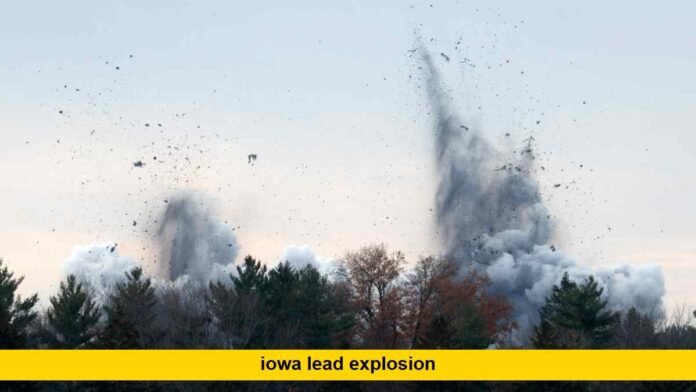

The Iowa lead explosion has drawn significant attention after the U.S. Army carried out a controlled detonation of nearly five tons of deteriorated lead azide at the Iowa Army Ammunition Plant near Middletown, Iowa. The operation was conducted to eliminate an unstable stockpile of explosive material that officials said had become increasingly dangerous to handle, move, or store.
The planned blast was completed on November 25, 2026, following a series of delays, safety preparations, public concerns, and legal challenges. Although the detonation was intended to prevent a potentially catastrophic accidental explosion, the operation also raised concerns about the possible release of lead-containing particles into the surrounding environment.
The immediate military disposal operation has now been completed, but the broader situation continues to involve environmental monitoring, public health concerns, and questions about whether additional testing or cleanup could be required. Residents and people following the incident are particularly interested in air quality, possible lead dust contamination, the safety of nearby homes and farmland, and what authorities will report after completing their post-event assessments.
Why the Army Chose a Controlled Detonation
The material involved in the operation had reportedly become unstable after prolonged storage. During inspections, officials identified severe degradation and crystallization affecting approximately 68 drums of lead azide stored at the ammunition plant.
Lead azide is a primary explosive used to initiate larger explosive charges. Its condition was especially concerning because crystallized material can become extremely sensitive to disturbances such as friction, vibration, heat, or shock. The Army said these characteristics made moving, opening, chemically treating, or transporting the stockpile too dangerous.
Military and federal specialists evaluated disposal options before approving the in-place detonation. Their position was that the risk of leaving the material in its deteriorated state had become unacceptable, while a carefully planned explosion offered the opportunity to control the timing, location, weather conditions, and safety measures.
Officials also emphasized that the operation was conducted by specialized explosive ordnance disposal personnel, with coordination among the Army and multiple federal, state, and local agencies.
How the Explosion Was Prepared and Carried Out
The operation required extensive preparation because officials were dealing with both a dangerous explosive stockpile and a potential environmental hazard.
The Army prepared protective structures and containment measures around the affected material. Safety preparations included reinforcing the area with barriers, constructing protective earthworks, and using water-based measures intended to limit dust and airborne particles.
The operation was also planned around weather conditions. Wind direction and speed were important considerations because airborne particles, if released, could move away from the facility and potentially settle in other locations.
Authorities developed dispersion and deposition modeling to estimate the potential movement of dust. Those models helped determine protective recommendations, including the evacuation area and locations where people were advised to remain indoors.
The controlled detonation was completed on November 25. Witnesses reported hearing loud blasts and seeing smoke and debris rise from the ammunition plant. Officials described the operation as the necessary step to eliminate the unstable stockpile.
What Environmental Monitoring Revealed After the Blast
One of the most closely watched developments following the detonation was the early air-monitoring information.
EPA Administrator Lee Zeldin said that air monitors had not detected lead shortly after the explosion. Early reports also indicated that monitoring continued beyond the initial period following the detonation.
That information was encouraging, but it does not represent a complete environmental assessment. Lead-containing particles could potentially settle onto surfaces or soil, and different environmental samples may provide information that air monitoring alone cannot establish.
The EPA had collected more than 1,200 baseline environmental samples before the operation, including:
- Water samples: 210
- Soil samples: 650
- Dust samples: 297
- Air samples: 59
These samples were intended to provide a baseline against which post-detonation measurements could be compared.
The agency also deployed personnel and contractors to support monitoring in the surrounding region. Officials said sampling would continue after the blast and that additional remediation could be considered if testing identified areas requiring action.
The distinction between early air-monitoring results and the full environmental evaluation is important. A monitor reporting no lead at a particular location and time does not automatically establish that every nearby surface, property, or environmental compartment is free of lead.
Evacuation and Shelter-in-Place Guidance
Public safety recommendations were based on the potential movement of dust and the need to protect residents while the operation was underway.
Middletown residents and people in immediately affected areas were advised to relocate temporarily. FEMA supported evacuation assistance, including transportation, temporary lodging, food, water, and other supplies for individuals who needed help leaving the area.
Residents who were unable to arrange transportation independently could seek assistance. Officials also advised people within a broader potential impact area to remain indoors, keep doors and windows closed, and limit outdoor activity while the dust plume passed.
The evacuation and sheltering recommendations were precautionary measures based on modeling and risk assessment. They were not confirmation that every location within the recommended area had been contaminated.
Authorities said evacuees would be notified when it was safe to return. Residents were encouraged to follow location-specific instructions rather than rely on general reports about the explosion.
Potential Environmental Impact on Homes, Farms, and Water
The environmental concerns surrounding the Iowa lead explosion extended beyond the immediate detonation site because lead-containing particles could potentially settle on a variety of surfaces.
Lead dust can be difficult to detect without testing. It may settle on soil, outdoor equipment, vehicles, windowsills, porches, garden areas, and other surfaces where people or animals could come into contact with it.
Agricultural concerns were also part of the public discussion. Farms near the ammunition plant could potentially be affected by dust deposition, depending on weather conditions and the actual movement of particles.
Concerns About Farmland and Crops
Farmers and agricultural residents were concerned about whether lead-containing particles could settle on fields, crops, equipment, or other agricultural surfaces.
Environmental sampling is necessary to determine whether any measurable contamination occurred. Officials may use soil and surface testing to assess potential exposure and decide whether additional precautions are needed.
If lead is detected in an agricultural area, the appropriate response would depend on the location, concentration, type of exposure, and relevant public health and environmental standards.
Livestock and Animal Safety
Livestock and pets could potentially come into contact with lead-containing dust deposited on outdoor surfaces or soil.
People responsible for animals in areas identified by authorities should follow any available guidance about feeding areas, outdoor access, water sources, and cleaning.
The possibility of exposure does not mean animals have necessarily been contaminated. Testing and location-specific assessment would be required to determine whether an actual risk exists.
Water and Drainage Concerns
Lead-containing particles could potentially enter environmental systems through runoff or other pathways. Water sampling is therefore part of the monitoring effort.
Officials collected baseline water samples before the detonation and planned continued sampling afterward. Those measurements are important for determining whether water sources or related environmental areas experienced any change.
At this stage, residents should avoid making assumptions about contamination based solely on the fact that the explosion occurred. Environmental conclusions should be based on sampling results and official assessments.
Health Risks Associated With Lead Exposure
Lead is a toxic metal that can affect multiple systems in the body. Exposure may occur through inhalation of airborne particles or by swallowing dust that settles on hands, food, toys, soil, and other surfaces.
The potential health effects depend on several factors, including the amount of lead absorbed, the duration of exposure, age, and individual health circumstances.
Children are particularly vulnerable because their brains and nervous systems are still developing. Lead exposure can affect learning, behavior, development, and other aspects of health. Pregnant women also face concerns because lead exposure can affect pregnancy and fetal development.
Other potential health effects associated with lead exposure include neurological effects, kidney problems, blood-related effects, and cardiovascular concerns.
A person may not experience immediate symptoms after exposure. That is why public health officials emphasize prevention, exposure assessment, and testing when appropriate rather than relying only on how someone feels.
Who May Need Additional Precautions?
Public health authorities generally identify certain groups as especially vulnerable to lead exposure.
These include:
- Children, particularly those younger than six
- Pregnant women
- Infants
- People with certain chronic health conditions
- Individuals who may have had direct contact with lead-containing dust
- Residents whose homes or properties are located in areas identified for additional monitoring
Parents and caregivers should pay particular attention to children’s hands, toys, outdoor play equipment, and surfaces that children frequently touch.
Residents who believe they may have been exposed should consult healthcare professionals and follow current recommendations from state and local public health authorities.
What Residents Can Do After Returning Home
Residents who return to properties following evacuation or sheltering guidance should follow any instructions provided by emergency officials.
If authorities identify an area as potentially affected by lead-containing dust, recommended precautions may include carefully wiping outdoor surfaces with a wet cloth, avoiding dry sweeping, and preventing dust from being tracked indoors.
People should pay attention to commonly touched outdoor areas, including:
- Window ledges and windowsills
- Outdoor railings
- Children’s play equipment
- Patio furniture
- Door handles and entry areas
- Vehicles and outdoor equipment
Wet cleaning can help avoid unnecessarily stirring dust into the air. Residents should avoid using cleaning methods that may spread potentially contaminated material.
For properties where contamination is suspected or confirmed, official guidance should take priority over general household cleaning advice. More specialized testing or remediation may be necessary depending on the results.
Legal Challenges and Public Opposition
The detonation proceeded after environmental organizations challenged the government’s plans and sought to prevent the operation.
Opponents questioned whether the Army and EPA had adequately evaluated alternative disposal methods and whether the public had received sufficient information about the potential environmental consequences. Concerns also involved the timing of the operation, the emergency permitting process, and the adequacy of the safeguards.
The legal proceedings included a temporary pause, but the court ultimately allowed the operation to proceed after reviewing the emergency request and the government’s mitigation measures.
The dispute reflected a difficult situation: officials argued that the degraded explosives presented an immediate safety threat, while environmental advocates argued that the potential effects of a large lead-containing detonation required stronger review and additional safeguards.
The legal outcome allowed the Army to proceed with the controlled operation. It did not eliminate the need for environmental monitoring or settle every question about potential long-term effects.
Why Neighboring States Were Monitoring the Situation
The location of the ammunition plant near the Mississippi River region meant that neighboring areas could potentially be affected depending on wind conditions.
Officials in Missouri and Illinois monitored the situation and evaluated possible impacts based on forecasts and modeling. The anticipated movement of the plume changed as weather conditions were updated, making the timing and direction of potential particle movement an important part of the emergency response.
Missouri public health officials described the expected risk in their state as low while acknowledging that lead-containing dust could potentially travel and settle depending on wind conditions.
Illinois officials also monitored the event and reviewed information about the projected plume.
The regional response illustrates why officials relied on weather models, monitoring equipment, and environmental sampling rather than making assumptions based only on distance from the ammunition plant.
What Happens Next?
The next stage of the response focuses on environmental results and public safety.
The Army has completed the immediate disposal operation, but EPA and other agencies are continuing their monitoring and assessment work. Authorities may release additional information as post-event sampling is completed and laboratory results become available.
The next steps may include:
- Continued air monitoring
- Additional soil and dust sampling
- Water testing
- Review of environmental data
- Public health recommendations
- Additional testing of potentially affected properties
- Remediation if contamination is confirmed
- Updated guidance for residents and agricultural areas
Any cleanup decisions will depend on the monitoring results and the assessment of actual environmental conditions.
Final Thoughts
The controlled detonation at the Iowa Army Ammunition Plant was carried out to eliminate a dangerous stockpile of deteriorated lead azide that officials considered too unstable to transport or treat through conventional methods. The Army completed the operation on November 25 after extensive preparation, coordination, safety planning, and legal proceedings.
Initial reports about air monitoring provided some encouraging information, with officials reporting no lead detected by certain monitors shortly after the explosion. However, the environmental response is continuing, and the final assessment will depend on additional sampling of air, soil, dust, and water.
For residents, the most important priority is to follow official public safety instructions and rely on confirmed environmental findings rather than assumptions or unverified reports. The coming days and weeks may provide a clearer understanding of whether the operation produced measurable environmental impacts and whether any additional cleanup or public health measures will be needed.
Stay informed about the latest developments in Iowa, and share your thoughts or questions about the controlled detonation and its potential environmental impact in the comments.