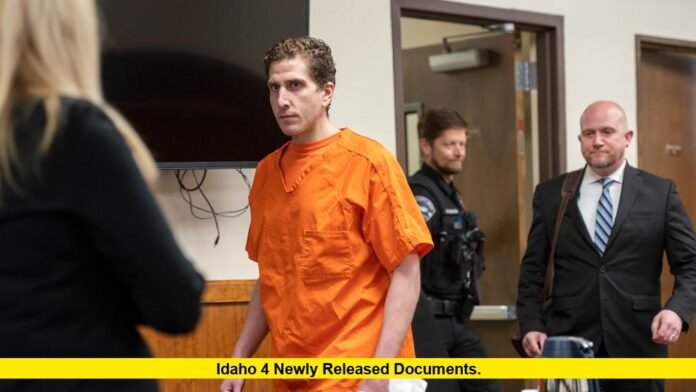

In a series of idaho 4 newly released documents, authorities have made public a large collection of investigative records tied to the brutal murders of four University of Idaho students in November 2022. The victims — Kaylee Goncalves, Madison Mogen, Xana Kernodle, and Ethan Chapin — were found stabbed to death inside an off-campus home in Moscow, Idaho, in a crime that shocked the nation and sparked one of the most closely followed criminal investigations in recent U.S. history.
The newly released material includes police reports, crime scene documentation, forensic analysis, and witness interview summaries. Together, these records provide the most complete factual picture yet of how investigators processed the scene, built their case, and ultimately secured a guilty plea from Bryan Kohberger, who was sentenced in 2025 to four consecutive life terms without the possibility of parole, plus additional time for burglary.
A Detailed Look Inside the Crime Scene
The documents contain extensive descriptions of the King Road residence where the four students were killed in the early morning hours of November 13, 2022. Investigators recorded heavy blood evidence in multiple bedrooms and common areas, showing the path of the attacker and the locations where the victims were found.
Room-by-room forensic logs detail:
- Blood spatter patterns on walls, bedding, and floors
- Personal items such as phones, clothing, and backpacks left in place
- Signs of forced or rapid movement through the house
- Evidence consistent with a single-edged knife attack
Photographic inventories and written observations confirm that two victims were located in an upstairs bedroom and two in a second-floor bedroom, with no signs of defensive weapons being used by any of them.
The Knife Sheath and DNA Breakthrough
One of the most significant pieces of evidence described in the released files is a leather knife sheath recovered from the bed of one of the victims. The sheath was found beneath one of the bodies and contained a single-source male DNA profile.
Laboratory analysis later matched this DNA to Bryan Kohberger through genetic comparison methods and confirmatory testing after his arrest. Investigators were unable to recover usable fingerprints from the sheath, but the DNA match became the central forensic link connecting him directly to the crime scene.
The documents confirm that:
- The sheath was consistent with a military-style fixed-blade knife
- The button snap and leather material preserved touch DNA
- The DNA profile matched Kohberger with statistical certainty
- The knife itself has not been publicly recovered
Digital and Vehicle Evidence
Investigative records outline how surveillance footage and vehicle analysis played a crucial role in the case. Cameras from the surrounding neighborhood and nearby businesses captured a white sedan repeatedly driving near the residence around the time of the murders.
Follow-up analysis identified the vehicle as a Hyundai Elantra. Additional traffic and campus surveillance later tracked similar movements consistent with Kohberger’s known vehicle.
Search warrants and forensic examinations detailed in the documents show that:
- Cellular data placed Kohberger’s phone in the area on multiple prior occasions
- His device was inactive during the window of the murders
- Video footage showed a vehicle matching his car’s model and year circling the neighborhood
- Investigators dismantled portions of the car in search of trace evidence
Witness Statements and Survivor Accounts
The released materials include summaries of interviews with the two surviving roommates. One of them reported hearing noises, voices, and what she later believed was an unfamiliar male figure inside the home during the early morning hours.
Key elements recorded include:
- Sounds of crying and a male voice saying reassuring words
- A masked man walking past her doorway toward the exit
- Freezing in fear and locking her door afterward
- Delayed emergency reporting once the full situation became apparent
Investigators noted that alcohol consumption and shock affected the precision of early statements, but later interviews helped establish a consistent sequence of events.
Behavioral Background of the Defendant
The documents also compile statements from individuals who interacted with Kohberger before the crimes, including classmates, instructors, and acquaintances. These accounts describe patterns of socially inappropriate behavior, confrontational interactions, and an intense interest in criminology topics.
Records indicate that:
- He studied criminal justice and forensic psychology
- He had conflicts with peers over discussions of violent crime
- Some individuals reported discomfort with his behavior
- He had conducted academic research related to criminal thinking
These details were used to establish context, not motive, as no official motive has been confirmed in the released material.
Legal Outcome and Sentencing
In 2025, Kohberger entered a guilty plea to four counts of first-degree murder and one count of burglary, avoiding a capital trial. The court sentenced him to:
- Four consecutive life sentences without parole
- An additional ten-year sentence for burglary
- Permanent incarceration in a state correctional facility
The newly released documents confirm that the plea was supported by extensive physical, digital, and testimonial evidence compiled over more than two years of investigation.
Impact on Families and the Community
Family impact statements referenced in the records describe the lasting trauma caused by the murders and by the public release of graphic materials. Relatives of the victims expressed grief, anger, and a desire for accountability while urging respectful handling of sensitive content.
Community records show that the case prompted:
- Increased campus security measures
- Changes in off-campus housing policies
- Expanded use of surveillance and safety programs
- Ongoing memorial efforts honoring the four students
What the Idaho 4 Newly Released Documents Ultimately Show
Taken together, the idaho 4 newly released documents provide a factual, comprehensive view of how the crime unfolded, how the suspect was identified, and how modern forensic and digital investigation techniques were applied in one of the most complex homicide cases of the decade.
They confirm:
- The presence of the suspect at the scene
- The sequence of investigative steps
- The forensic foundation of the conviction
- The legal finality of the sentencing
While some aspects, such as personal motive, remain legally unresolved in public filings, the evidentiary record now available establishes the full investigative trail that led to justice for the four victims.
Stay connected to this case and share your thoughts as new verified records continue to emerge.