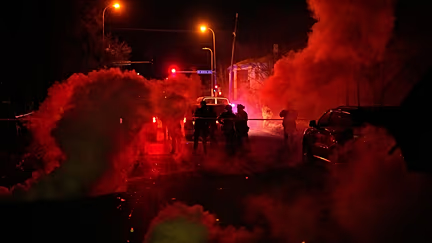

The deployment of federal immigration agents has transformed parts of Minnesota’s largest city into a tense battleground where law enforcement actions and community resistance collide. At the center of the crisis is ICE in Minneapolis, now the focal point of intense debate over use of force, civil liberties, and the reach of federal power.
In recent weeks, Minneapolis has witnessed a string of dramatic events: shootings involving immigration agents, mass protests, legal challenges against federal authorities, and political investigations targeting state and local leaders. These developments have cast a spotlight on the federal government’s immigration enforcement strategy and the deep unease it has generated among residents, advocacy groups, and elected officials.
Massive Federal Enforcement Operation Strains Community Relations
Since December 2025, federal agencies have executed what has been described as one of the largest immigration enforcement operations in modern U.S. history, bringing thousands of armed personnel to the Twin Cities area to apprehend undocumented immigrants and dismantle organized criminal networks.
The operation’s scale and intensity have overwhelmed parts of Minneapolis, with military-style tactics and frequent street confrontations unsettling neighborhoods. Law enforcement vehicles and agents in tactical gear have become an everyday sight, heightening anxiety and drawing sharp criticism from local residents.
Fatal Shooting Deepens Distrust and Outrage
The turning point came in early January 2026 when an immigration agent shot and killed a 37-year-old Minneapolis resident during a raid. Federal officials maintain the agent acted in self-defense after the individual’s vehicle allegedly moved toward officers. However, witnesses and community members sharply dispute that account, saying the circumstances do not align with claims of imminent danger.
The incident ignited immediate public outrage, with many locals questioning the necessity and proportionality of the force used by federal agents. Vigils and demonstrations swiftly followed, drawing thousands to city streets in protest and calling for accountability and a transparent investigation.
Second Shooting Fuels Escalation
Just days after the fatal encounter, another confrontation occurred in north Minneapolis when a man was shot in the leg by an immigration officer during a chaotic scene. Federal authorities assert the man engaged officers with makeshift weapons, prompting defensive action. Yet the individual’s family contends he was attempting to let a friend into his home and was not resisting or posing a threat.
This second violent encounter has further amplified tensions, with neighbors recounting a scene that unfolded differently from the official narrative. Bystanders say the situation escalated quickly, leaving residents stunned and distressed at the visible use of force on city streets.
Legal Challenges Mount Against Federal Authorities
The shockwaves from these incidents have led Minnesota state officials and the cities of Minneapolis and Saint Paul to take legal action against federal agencies. A lawsuit filed by the state argues that the aggressive deployment of immigration agents violates constitutional protections and exceeds federal authority. Plaintiffs claim that operations have harmed public safety, disrupted daily life, and infringed on residents’ rights.
The legal complaint paints a picture of a sweeping federal presence that has undermined local control and compelled police departments to divert resources from normal duties to respond to unrest and community distress. According to state leaders, schools have shut down temporarily for safety, and small businesses have seen customer traffic plunge due to fear of enforcement activities.
Political Investigations Underscore Deep Divisions
Amid the unrest, a federal inquiry has been launched into whether Minnesota’s governor and Minneapolis’s mayor obstructed federal immigration efforts through public criticism. The investigation scrutinizes statements by both officials, who have lambasted the federal response and called for restraint and respect for due process.
State and local leaders have rejected claims of obstruction, framing their remarks as legitimate expressions of concern for community welfare. The inquiry has fueled a broader political standoff over the balance between federal enforcement priorities and local governance.
Silent Corporations and Struggling Small Businesses
The sweeping enforcement campaign has also exacted an economic toll. Many small business owners in Minneapolis, especially along culturally vibrant commercial corridors, report steep declines in customers and revenue. Latino-owned restaurants and shops have reduced hours or temporarily closed, reflecting a climate of fear that deters patrons from gathering in formerly bustling areas.
By contrast, major corporations headquartered in the region have largely refrained from speaking out about the situation, prompting frustration among community advocates who expected stronger corporate solidarity with local residents facing upheaval.
Civil Rights Organizations Take Legal Action
In response to reports of questionable stops, arrests, and enforcement practices, civil liberties groups have filed lawsuits alleging that federal agents engaged in racial profiling and unconstitutional arrests. These legal filings assert that immigration enforcement actions have disproportionately targeted people of color and U.S. citizens, leading to detentions without probable cause and interactions that violate constitutional protections.
These cases spotlight growing concerns about the methods used by federal agents, particularly in situations involving nonviolent civilians and individuals with lawful status.
Protests Continue as Community Tensions Rise
Public demonstrations have continued unabated, with rallies drawing people from diverse backgrounds demanding justice and an end to what they view as heavy-handed federal tactics. Protesters have voiced a wide range of grievances, from calls for greater accountability to broader critiques of national immigration policy.
Tensions have occasionally spiked between demonstrators and law enforcement, with some confrontations marked by the deployment of crowd-control measures such as tear gas. Many residents express fear that federal tactics, designed primarily for immigration enforcement, are ill-suited for managing community protests and can escalate rather than defuse volatile situations.
Questions Around Authority and Community Safety
The Minneapolis situation has sparked a nationwide conversation about the legal foundations for major federal enforcement operations within city limits. One central question revolves around the legal authority federal agents have to enter private property or detain individuals without judicial warrants. Experts note that many immigration arrests rely on administrative warrants that do not normally authorize forced entry into homes — a point that has heightened scrutiny of recent enforcement encounters.
As legal debates unfold, the broader implications for civil liberties and constitutional safeguards have become central to public discourse, particularly in communities with large immigrant populations.
Public Sentiment Reflects Deep Divisions
Amid the turmoil, opinion within the public remains divided. While some support a strong federal response to immigration violations, others see the surge of agents and use of force as disproportionate and damaging to community trust. The divergent views reflect broader national tensions over immigration policy and questions about how best to enforce laws while maintaining civil rights and public safety.
As Minneapolis grapples with these unfolding events, the city’s residents, leaders, and legal institutions are confronting profound questions about federal power, accountability, and the future of immigration enforcement in American cities. The outcome of ongoing investigations, lawsuits, and political debates will likely influence national policy and local civic life in the months ahead.