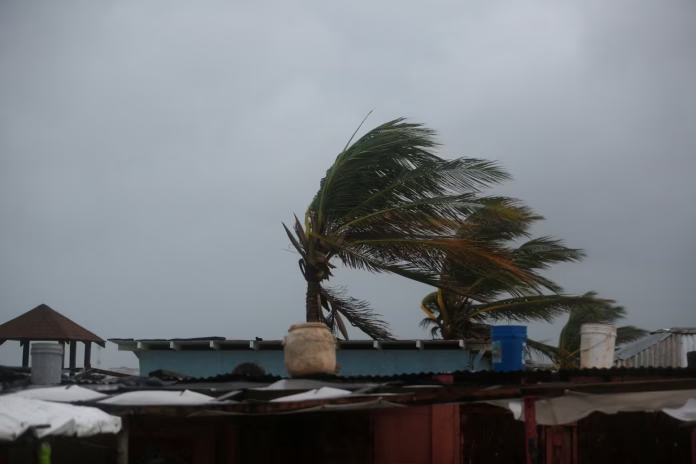

The Hurricane Melissa Jamaica update has dominated online searches this week, stirring confusion and concern across the Caribbean and the United States. While there is no official hurricane named Melissa in the Atlantic basin, Jamaica has faced severe weather linked to the remnants of Hurricane Milton, which recently transitioned into a low-pressure system hovering near the island.
Despite the naming mix-up, the storm’s impact is real—bringing flooding, flight delays, and widespread power outages. Both Jamaican and U.S. meteorological agencies are monitoring the situation closely as the system continues to affect parts of the Caribbean through the week.
Where the “Hurricane Melissa” Confusion Began
According to the Jamaica Meteorological Service (Met Service), the storm currently affecting the island was never named Melissa. The misunderstanding began when early satellite images labeled the system’s low-pressure center as “M Low,” short for Milton (Low Pressure).
Unfortunately, the abbreviation was misinterpreted on social media, where users began referring to it as “Hurricane Melissa.” Within hours, the term trended across X (formerly Twitter), TikTok, and Facebook.
Despite the confusion, the storm remains dangerous. The National Hurricane Center (NHC) in Miami reports sustained winds of 40 mph, with gusts exceeding 50 mph in Jamaica’s southern coastal regions.
Meteorologist Tamar Henry clarified that “while the name Melissa is incorrect, the rainfall and flooding threats are absolutely real.”
Current Conditions: Heavy Rain and Flooding Across Jamaica
As of Wednesday morning, torrential rain continues to soak much of Jamaica. The hardest-hit areas include Clarendon, Manchester, St. Elizabeth, and Kingston, where flash floods have disrupted transportation and power.
According to ODPEM (Office of Disaster Preparedness and Emergency Management), rainfall totals may reach 8–10 inches in some southern parishes by late Thursday. Floodwaters have damaged several roads near May Pen and Mandeville, and landslides have been reported along the central highlands.
Prime Minister Andrew Holness addressed the nation on Tuesday night, urging residents to take the warnings seriously. “The storm may not carry the name Melissa, but its impact has been significant,” he said.
Airport and Travel Disruptions
Air and sea travel have been heavily affected by the weather system.
Here’s the latest update from Jamaica’s main ports and airports:
- Norman Manley International Airport (Kingston): Dozens of flights were delayed or rescheduled due to strong winds and heavy rain.
- Sangster International Airport (Montego Bay): Operations continue with caution. Airlines including American, Delta, and JetBlue have issued weather advisories and flexible rebooking options.
- Coastal Ferry Services: Suspended island-wide, according to the Jamaica Port Authority, as waves of up to six feet make travel unsafe.
The U.S. Embassy in Kingston has urged American travelers to monitor updates and enroll in the Smart Traveler Enrollment Program (STEP) to receive real-time emergency notifications.
Power and Infrastructure Damage
The Jamaica Public Service Company (JPS) confirmed that more than 18,000 customers temporarily lost power on Tuesday evening due to downed lines and debris. By Wednesday morning, 90% of service had been restored, though rural communities in St. Elizabeth and Manchester remain affected.
In addition, the National Water Commission (NWC) reported minor disruptions to water supply systems in Clarendon due to clogged intakes caused by heavy runoff.
Local emergency shelters have opened in affected areas, and relief teams are providing food, blankets, and clean water to families displaced by flooding.
Emergency Officials Stress the Need for Preparedness
Both Jamaican and U.S. emergency officials emphasize that readiness saves lives, even when storms are downgraded from hurricane strength.
Residents are advised to:
- Keep flashlights, drinking water, and first aid kits ready.
- Avoid flooded roadways and unstable bridges.
- Follow official weather updates from metservice.gov.jm and hurricanes.gov.
- Identify nearby shelters and prepare to relocate if local officials recommend evacuation.
ODPEM Director Richard Thompson said, “Even smaller tropical systems can cause flash floods and landslides. We urge every household to remain alert.”
Meteorologists add that the late-October period has become increasingly unpredictable due to warming sea temperatures and atmospheric instability. For that reason, experts recommend maintaining hurricane kits through November.
Regional Impact Beyond Jamaica
The system’s effects extend well beyond Jamaica’s shores.
- Cayman Islands: Under a Tropical Storm Watch, expecting heavy rain and rough seas through Thursday night.
- Cuba (eastern provinces): Forecasts warn of flash floods and mudslides in mountainous regions.
- Haiti: Facing outer rain bands and localized flooding in coastal communities.
According to NOAA, the tropical depression is expected to weaken as it moves northwest toward the Cayman Islands, gradually losing energy over cooler waters.
The U.S. Connection: Storm Remnants Head Toward Florida
Although the system no longer qualifies as a hurricane, its moisture is drifting northward. The National Weather Service (NWS) Miami warns that Florida could experience heavy rain and gusty winds this weekend as the remnants interact with a cold front.
Meteorologist Laura Torres told The Weather Channel that “South Florida may see scattered flooding and travel delays through Sunday.” Airlines have already started monitoring potential disruptions at Miami International Airport and Fort Lauderdale-Hollywood International Airport.
Social Media Amplifies the “Melissa” Trend
The term Hurricane Melissa Jamaica update continues to dominate online searches. Analysts from Newsweek and Google Trends report a 500% surge in related queries within 24 hours.
This phenomenon, experts say, shows how misinformation spreads quickly during active weather events. “Once a name like Melissa catches on, it becomes part of the online narrative—even if it’s false,” noted digital researcher Tanya Rios.
Officials urge users to verify storm names through the NHC’s official Atlantic Storm List, which updates every few hours.
Trump’s Comment Adds to Online Confusion
Adding another layer of noise to this week’s trending topics, former President Donald Trump recently made headlines for unrelated political remarks, urging Microsoft to fire its global affairs president, Lisa Monaco.
Because both stories trended simultaneously on X, algorithmic overlaps caused search confusion, blending political and weather-related hashtags. This made it appear that “Hurricane Melissa” was part of a broader breaking news cycle.
Climate Scientists Warn of Intensifying Weather Patterns
Meteorologists link the severity of this year’s Caribbean storms to unusually warm ocean temperatures. Data from NOAA show that the Atlantic Basin in 2025 has already seen 14 named storms, including four hurricanes that reached Category 3 or higher.
Climate scientist Dr. Kevin Allen explained that “warmer seas mean more evaporation and energy for storms.” He added that future hurricane seasons could bring more erratic systems like this one—short-lived but highly disruptive.
In Washington, tech philanthropist Bill Gates recently addressed climate resilience at the Breakthrough Energy Summit, emphasizing that “climate adaptation must accelerate to protect small island nations like Jamaica.”
Tourism and Economic Outlook
Despite the disruptions, Jamaica’s tourism industry remains resilient. The Jamaica Hotel and Tourist Association (JHTA) reports minimal long-term damage to resort infrastructure.
Most major hotels in Montego Bay and Ocho Rios remain open, though some have postponed beach activities until seas calm. Cruise lines including Carnival and Royal Caribbean have adjusted itineraries but plan to resume normal operations within days.
Tourism Minister Edmund Bartlett assured travelers that “Jamaica remains safe and ready to welcome visitors once conditions improve.”
Economists estimate short-term agricultural losses could reach $5 million USD, mostly from flooded banana and yam crops in southern parishes. However, the government expects recovery to be swift.
Community Relief and U.S. Support
Volunteer organizations, including the Red Cross Jamaica, have mobilized to assist affected families. Shelters in Clarendon and Manchester are distributing food, clothing, and water purification tablets.
The U.S. Agency for International Development (USAID) confirmed it is coordinating with local partners to assess potential humanitarian needs. American expatriates living in Jamaica are encouraged to register with the embassy for real-time updates.
This spirit of cooperation underscores the strong ties between Jamaica and the United States during disaster response efforts.
Forecast for the Coming Days
Here’s what residents can expect next:
| Day | Forecast Summary | Expected Conditions |
|---|---|---|
| Wednesday Night | Heavy rain and gusty winds | Flooding likely in southern parishes |
| Thursday | Rain bands easing slowly | Gradual clearing across central Jamaica |
| Friday | Partly cloudy with light showers | Winds diminishing, seas improving |
| Weekend | Dry and sunny conditions | Full recovery period begins |
Meteorologists predict that by the weekend, Jamaica will transition back to typical tropical weather patterns, though occasional showers may linger.
Lessons From the Hurricane Melissa Jamaica Update Trend
The Hurricane Melissa Jamaica update story offers a valuable lesson for both media and the public. Online accuracy is critical during natural disasters. While social media helps spread alerts quickly, misinformation can also create unnecessary panic.
Officials urge users to cross-check storm names and follow only trusted agencies like the NHC, Met Service Jamaica, and ODPEM.
Ultimately, whether it’s Hurricane Milton, Melissa, or any other storm, the priority remains the same: protecting lives, homes, and communities.
As Jamaica dries out and begins recovery efforts, the island’s resilience shines through once again. From first responders to volunteers, every act of solidarity reinforces a message of strength and hope.
How has the storm affected you or your travel plans? Share your thoughts below and stay connected for verified weather and safety updates.