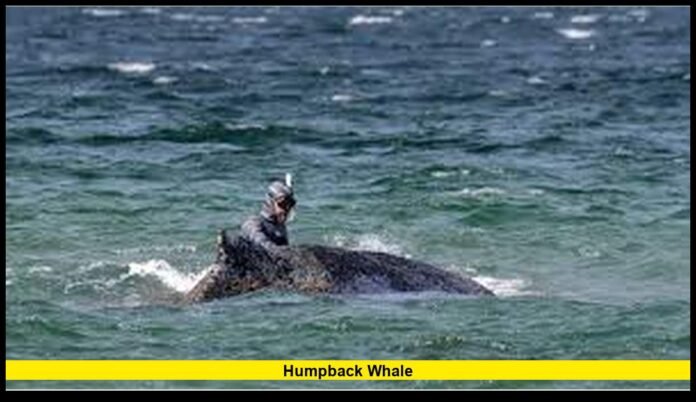

The extraordinary journey of a stranded humpback whale named Timmy has become one of the most emotional wildlife stories of 2026, capturing worldwide attention and igniting fierce debate over how humans should respond when giant marine animals enter dangerous waters. What started as a rescue effort along Germany’s Baltic coast evolved into an international spectacle involving scientists, rescue divers, government officials, private donors, and millions of people following the whale’s fate online.
For weeks, the young whale struggled in shallow waters far from its natural migration route. Rescue teams worked around the clock as the public watched every update closely. The story drew strong reactions because many believed the whale deserved every possible chance to survive, while others argued the operation risked prolonging suffering for an already weakened animal.
The whale’s eventual death near Denmark has now intensified discussions about marine conservation, changing ocean ecosystems, fishing hazards, and the growing number of whale encounters near populated coastlines.
Marine wildlife stories continue drawing massive public interest as ocean conditions change and whale migration patterns shift around the world. Readers following environmental developments are expected to see even more attention focused on whale protection efforts throughout 2026.
A Rare Whale Encounter in Dangerous Waters
The ordeal began when the whale appeared near Germany’s Baltic Sea coastline earlier this year. Marine experts quickly recognized that the animal was in serious danger.
Humpback whales do not normally remain in the Baltic Sea because the region is too shallow and lacks the deep, salty waters these massive mammals require for healthy movement and navigation. Scientists believe the whale may have become disoriented during migration or followed schools of fish into unfamiliar waters.
Soon after the whale entered the area, reports emerged that it had become stranded multiple times on sandbanks near the German coast. Rescue crews repeatedly attempted to guide the whale back into deeper channels, but the animal continued struggling to escape.
Witnesses described heartbreaking scenes as the whale lay partially trapped in shallow water for long periods. Teams sprayed water onto its body to prevent skin damage while marine specialists monitored its breathing and movements.
The whale eventually became known worldwide as “Timmy,” a nickname that spread rapidly through international media and social platforms.
Public interest exploded as photos and videos of the stranded whale circulated online.
The Massive Rescue Operation That Divided Experts
As Timmy’s condition worsened, debate intensified over whether rescuers should attempt a large-scale intervention.
Some marine biologists believed the whale’s health had already deteriorated too severely for survival. Others insisted that moving the whale back to deeper waters offered at least a small chance of recovery.
Eventually, a privately funded rescue mission moved forward.
The ambitious operation involved transporting the whale on a specially prepared water-filled barge toward the North Sea near Denmark. Reports indicated wealthy donors financed the mission after public pressure mounted for officials to take action.
Divers and rescue workers spent hours carefully maneuvering the whale into the transport vessel. Emotional scenes unfolded as rescue teams celebrated when the whale finally entered the barge.
The operation quickly became one of the most talked-about wildlife rescue attempts in Europe this year.
For many observers, the rescue symbolized hope and compassion. For critics, it represented a risky experiment with little chance of success.
Marine specialists repeatedly warned that the whale appeared weak, injured, and severely stressed after weeks in shallow waters.
Still, supporters of the rescue effort believed doing nothing guaranteed death.
If you enjoy following major wildlife stories and environmental developments, this case has become a defining moment in the global conversation about human intervention in nature.
Why the Whale’s Health Declined So Quickly
Marine researchers later explained that humpback whales face enormous physical stress when stranded in shallow environments.
Unlike smaller marine animals, humpback whales rely on buoyancy from deep water to support their massive body weight. When trapped in shallow areas, the pressure on internal organs can become dangerous.
Timmy reportedly developed worsening skin problems during the ordeal because Baltic Sea waters contain far less salt than the ocean habitats humpbacks typically inhabit. Experts also noted visible wounds and signs of infection.
At one stage, reports suggested fishing net entanglement may have contributed to the whale’s weakened condition.
Fishing gear remains one of the leading threats facing humpback whales globally. Ropes and nets can wrap around whales during migration, causing severe injuries, exhaustion, and difficulty feeding.
Marine conservation groups continue documenting rising entanglement cases in several parts of the world, including North America and Australia.
Researchers say whales already weakened by injuries or illness are far more vulnerable when they enter dangerous coastal zones.
Timmy’s situation reflected how quickly a whale can decline once trapped outside its natural habitat.
The Emotional Release Into Open Water
After weeks of setbacks, rescue crews finally transported Timmy toward deeper waters near Denmark in early May.
Observers watching the operation described emotional scenes as the whale was released into the North Sea. For a brief period, there was cautious optimism that the animal might survive and eventually return toward the Atlantic Ocean.
Tracking equipment attached to the whale was intended to monitor its movements after release.
Many people celebrated the moment online, hoping the whale’s long struggle had finally ended.
But concerns remained.
Several marine experts warned that the whale may already have been too weak to recover fully after enduring weeks of stress, repeated strandings, infections, and transportation.
Some specialists criticized the rescue mission almost immediately, arguing the operation placed enormous strain on an already exhausted animal.
Others defended the attempt, saying the whale deserved a final opportunity to survive in open waters.
The disagreement highlighted a broader ethical question facing wildlife conservationists worldwide: when should humans intervene in nature, and when should they step back?
The Devastating Discovery Near Denmark
Roughly two weeks after the release, authorities in Denmark located the body of a dead humpback whale near Anholt Island.
Officials later identified the animal as Timmy through tracking equipment recovered from the carcass.
The news triggered sadness and frustration among many people who had followed the whale’s journey for weeks.
Some supporters of the rescue effort argued that the whale at least had a chance to return to open waters rather than dying stranded along the coastline.
Critics, however, renewed arguments that the rescue operation may have extended suffering rather than prevented death.
Authorities warned the public not to approach the carcass because decomposing whales can pose health risks and become dangerous due to internal gas buildup.
No full necropsy has been publicly announced, leaving lingering questions about the whale’s exact condition before death.
Still, marine scientists say multiple factors likely contributed to the outcome, including prolonged stress, illness, physical exhaustion, and environmental conditions.
Why Whale Encounters Are Increasing Worldwide
The story of Timmy arrives during a period of growing whale activity near populated coastlines around the world.
Marine researchers have observed increasing humpback whale sightings in regions where they were once rarely seen. In parts of the northeastern United States, whales now appear regularly near New York City and New Jersey shorelines.
Along the Pacific coast, humpback whales continue returning in larger numbers after decades of conservation efforts helped populations recover from commercial whaling.
While population recovery is considered a major conservation success, experts say it also increases the likelihood of interactions between whales and human activity.
Busy shipping routes, fishing operations, offshore construction, and recreational boating all create potential dangers for migrating whales.
Climate shifts may also play a role.
Scientists believe changing ocean temperatures are altering prey locations, forcing whales into unfamiliar areas while searching for food.
In some cases, whales may travel closer to coastlines or into heavily trafficked waters where risks increase dramatically.
Researchers continue studying how warming oceans affect whale migration patterns and feeding behavior.
Fishing Gear Continues to Threaten Marine Giants
One of the biggest concerns facing humpback whales remains fishing equipment entanglement.
Commercial fishing lines and traps can create deadly underwater obstacles for large marine mammals. Entangled whales often drag heavy gear for long distances, leading to exhaustion, infection, or drowning.
On the U.S. West Coast, conservation groups continue urging officials to reduce entanglement risks during whale migration seasons.
Several experimental technologies are now being tested, including “ropeless” fishing systems designed to reduce vertical lines in the water.
Marine rescue teams also train extensively to disentangle trapped whales safely.
These rescues are highly dangerous because frightened whales can react unpredictably, placing rescuers at risk.
Despite improvements in rescue methods, many whales still die before help arrives.
Timmy’s case brought renewed attention to these ongoing marine conservation challenges.
The Power of Whale Stories in Modern Conservation
Whales hold a unique emotional place in public imagination.
Their intelligence, size, songs, and long migrations have fascinated humans for generations. As a result, stranded whale stories often attract extraordinary public attention.
The Timmy rescue mission became more than a local wildlife incident. It evolved into a global emotional event followed by millions of people.
Conservation organizations say these stories can help raise awareness about larger environmental issues affecting oceans worldwide.
Public engagement often increases support for marine protection efforts, scientific research, and safer environmental policies.
At the same time, experts warn that emotional reactions can sometimes complicate scientific decision-making during wildlife emergencies.
The balance between compassion and practical conservation remains one of the biggest challenges in modern wildlife rescue operations.
What Happens Next for Whale Conservation
Marine agencies across Europe and North America continue reviewing lessons from the Timmy case.
Some experts believe future rescue operations involving large whales may face stricter guidelines regarding animal health, stress levels, and survival probabilities before interventions are approved.
Others argue the rescue demonstrated the importance of trying innovative solutions during difficult wildlife emergencies.
Meanwhile, conservation groups continue pushing for stronger ocean protections aimed at reducing the threats whales face every year.
These efforts include stricter fishing regulations, expanded marine protected zones, lower ship speeds in whale migration corridors, and better monitoring systems for whale populations.
Scientists also hope growing public interest in whale conservation will encourage greater investment in ocean research and environmental protection.
As humpback whales continue migrating through oceans around the world this year, marine experts remain focused on preventing future tragedies while protecting one of the planet’s most iconic species.
The story of Timmy may have ended sadly, but it has already changed how many people view the fragile relationship between humans and marine wildlife.
What are your thoughts on large-scale whale rescue missions? Share your opinion and stay connected for more wildlife and ocean updates.