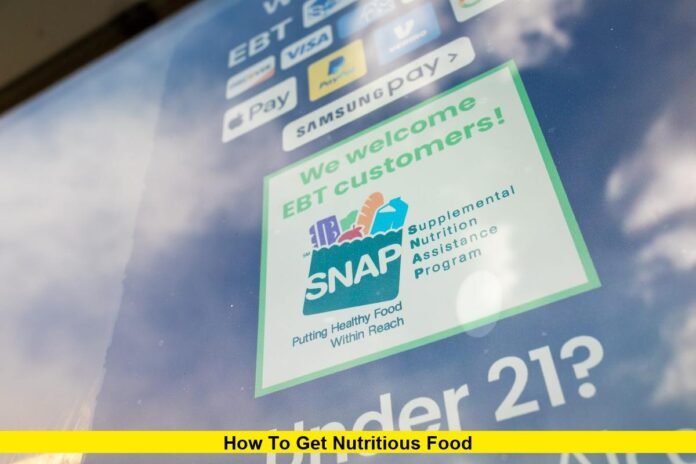

With grocery prices still squeezing household budgets across the country, millions of Americans are actively searching for answers on how to get nutritious food for themselves and their families. The federal government runs several powerful programs designed to help — SNAP (food stamps), WIC for women, infants, and children, and emergency food assistance — but 2026 has brought significant changes to how these programs work, who qualifies, and what benefits families can expect to receive. If you rely on food assistance or are thinking about applying for the first time, this guide breaks down everything you need to know right now.
Whether your household is just getting by or facing a genuine food crisis, the options available to you are real, funded, and accessible. Take action today — check your eligibility, update your case information, and apply if you haven’t yet. The programs described in this guide are currently funded and processing applications through September 2026.
What Is SNAP and How Does It Work in 2026?
SNAP — the Supplemental Nutrition Assistance Program — remains the largest and most widely used federal food assistance program in the United States. It provides monthly benefits loaded onto an Electronic Benefits Transfer (EBT) card, which works like a debit card at authorized grocery stores, supermarkets, and participating farmers markets across all 50 states.
The program is managed by the U.S. Department of Agriculture and administered through individual state agencies. More than 42 million Americans currently use SNAP each month, including low-income families with children, seniors, people with disabilities, and working adults who simply do not earn enough to cover the full cost of food.
For the 2026 fiscal year, which runs from October 1, 2025 through September 30, 2026, maximum monthly SNAP benefit amounts increased slightly due to annual Cost-of-Living Adjustment updates. A family of four in the contiguous 48 states and Washington D.C. can now receive up to $994 per month. The minimum monthly benefit for eligible one- and two-person households is $24. Households in Alaska, Hawaii, Guam, and the U.S. Virgin Islands qualify for higher maximum benefits due to elevated local food costs.
The Biggest SNAP Changes of 2026: New Work Requirements
The most sweeping change to SNAP in years came with the One Big Beautiful Bill Act, signed into law in July 2025. That legislation expanded work requirements dramatically, and those rules began rolling out in late 2025 and are now being fully enforced across most states as of early 2026.
Previously, so-called “able-bodied adults without dependents” — known as ABAWDs — between the ages of 18 and 54 were required to work, volunteer, or participate in job training for at least 80 hours per month to maintain SNAP benefits. Under the new law, that age range now extends to 64. This means adults between 55 and 64 who were previously exempt from these requirements must now document their work activity or risk losing benefits.
According to federal estimates, more than one million older adults in the 55-to-64 age group are now subject to these expanded rules. Many of these individuals have chronic health conditions, mobility limitations, or live in areas with limited job opportunities — yet unless they qualify for a documented disability exemption, they must now meet the 80-hour monthly requirement to keep their food assistance.
The exemption rules for parents changed significantly as well. Prior to the new law, any parent with a child under 18 living in the household was automatically exempt from work requirements. That protection has been narrowed. Now, the exemption only applies if the youngest child in the household is under 14. Parents whose youngest child is 14 or older must meet the 80-hour monthly work requirement.
Veterans, people experiencing homelessness, and young adults who aged out of the foster care system were also previously exempt from SNAP work requirements. Those automatic exemptions no longer exist. Beginning November 1, 2025, these groups became subject to the same work documentation rules as everyone else.
When Will People Start Losing SNAP Benefits?
States began enforcing the new work requirements on February 1, 2026. Individuals subject to the expanded requirements who do not document compliance are allowed up to three months of SNAP benefits within any three-year period. For those who began the clock in March 2026, the first potential month of benefit loss would be June 2026.
Pandemic-era waivers that had allowed states to pause enforcement of work requirements expired on February 28, 2026. Starting March 1, full enforcement is in effect in most states. Some states — including several large ones like New York — are still rolling out compliance letters and appointment notices to affected recipients. It is critical that if you receive any letter or notice from your state SNAP agency, you respond immediately.
To document work compliance, recipients must generally provide an employment verification form or written statement from an employer, proof of hours volunteered at a nonprofit, documentation of enrollment in a SNAP Employment and Training (E&T) program, or medical documentation if applying for a disability-based exemption.
SNAP Benefit Reductions: Utility Calculation Changes
Beyond the work requirements, the 2026 changes also affect how the federal government calculates your monthly benefit amount. One of the more technical but financially significant changes involves how utility costs are counted.
Households used to qualify for something called the Standard Utility Allowance — a fixed deduction representing typical utility costs — if they received any amount of energy assistance such as the Low Income Home Energy Assistance Program (LIHEAP or HEAP). Under that old system, even a $1 energy assistance payment could trigger the full standard deduction, which boosted monthly SNAP benefits for millions of families.
Under the new rules, only households with an elderly or disabled member can still automatically qualify for the Standard Utility Allowance through energy assistance enrollment. All other households must now submit actual utility bills to verify what they pay out of pocket. Only the verified, documented cost — not the full standard amount — will be counted as a deduction. For many families, this means a reduced monthly SNAP benefit, sometimes by $100 or more.
States began implementing these new utility calculation rules at each household’s next recertification appointment. That means the impact is phasing in household by household throughout 2026.
Other Eligibility Changes: Immigrant Families Affected
Immigrant families should take note of significant changes to SNAP noncitizen eligibility. Under the new law, lawful permanent residents remain eligible for SNAP, but refugees, individuals who have been granted asylum, and trafficking victims are no longer eligible. This represents a major narrowing of access for immigrant communities and took effect November 1, 2025.
If your household includes noncitizen members whose immigration status has recently changed, contact your state SNAP agency to review your case. Eligibility is determined on a per-person basis, meaning even if some household members lose eligibility, other qualifying members — including U.S.-born children — can continue receiving benefits.
WIC: Nutritious Food Support for Women, Infants, and Children
The Special Supplemental Nutrition Program for Women, Infants, and Children, better known as WIC, remains fully funded and fully operational in 2026. WIC provides food benefits, nutrition education, healthcare referrals, and breastfeeding support to low-income pregnant women, new mothers, infants, and children up to age five.
The program serves nearly seven million participants across the country every month. Benefits are loaded onto an eWIC card and can be used to purchase specific nutritious foods, including fresh fruits and vegetables, milk, eggs, whole grain products, infant formula, and baby food.
Unlike SNAP, WIC is not subject to the new work requirement expansions. Eligibility is based on income, nutritional risk factors, and which life stage applies to you — pregnancy, postpartum, breastfeeding, or having a child under five. Even if your household income has recently dropped temporarily — due to a job loss, reduced hours, or a family change — you may now qualify for WIC when you did not before.
Both SNAP and WIC are funded through September 30, 2026, meaning even a government shutdown will not delay your benefits or interrupt your access to food assistance under either program through the end of the current fiscal year.
Emergency Food Assistance: Where to Go When Programs Aren’t Enough
Even with SNAP and WIC in place, many families face gaps. Emergency food assistance programs at the federal, state, and local level exist specifically to fill those gaps without requiring prior enrollment in any federal program.
The Emergency Food Assistance Program, known as TEFAP, is a federally funded initiative that distributes nutritious food through local food banks and community organizations at no charge to low-income Americans, including seniors. You do not need to be on SNAP or WIC to access TEFAP food distributions.
The Feeding America network of food banks represents one of the fastest and most accessible routes to emergency food. With thousands of food bank partners, food pantries, and meal programs operating across every state, free food is available in nearly every community. You can find your nearest food bank by visiting feedingamerica.org and entering your ZIP code. No paperwork, no prior enrollment, and no documentation is typically required at most pantries.
During the 2025 government shutdown that delayed SNAP benefits for millions of Americans in November 2025, food banks reported a dramatic surge in demand. Many states activated emergency state-funded food assistance to bridge the gap, with some directing tens of millions of dollars in state funds directly onto recipients’ EBT cards. Local pantries, community centers, and faith organizations stepped up to feed families during the weeks that federal benefits were delayed.
How to Apply for SNAP, WIC, and Emergency Food Assistance
Getting started is simpler than many families expect. Here is what to do for each program:
For SNAP: Contact your state’s SNAP agency directly. Most states now offer online applications through their agency websites. You can also apply in person at your local SNAP office or call your state’s toll-free SNAP information hotline. If your household already receives Supplemental Security Income (SSI) or Temporary Assistance for Needy Families (TANF), you may qualify through a simplified process called categorical eligibility.
For WIC: Contact your local WIC office or state health department. Eligibility is determined based on income and whether you or a child in your household meets the nutritional risk criteria for the program. Pregnant women, postpartum women, breastfeeding mothers, infants, and children up to age five all qualify for WIC screening.
For Emergency Food Assistance: Visit feedingamerica.org or findhelp.org to locate food banks, food pantries, and community meal programs near you. These services require no application and are available immediately.
What Families Should Do Right Now
If you currently receive SNAP and are between the ages of 55 and 64, check whether you are now subject to work requirements and begin documenting your qualifying activity. If you have a health condition that limits your ability to work, speak with your doctor promptly about completing the necessary medical exemption paperwork.
If you are a parent whose youngest child is now 14 or older, confirm whether your household falls under the new work requirement rules by contacting your state SNAP agency.
If you received a notice or letter from your SNAP agency and have not responded, do so immediately. Missing appointments or failing to return required documents can result in reduced or terminated benefits, even if you are actively working and fully compliant.
If you have never applied for SNAP or WIC and your household income has declined — for any reason — do not assume you will not qualify. Eligibility thresholds adjust annually, and many households that previously earned too much now fall within the qualifying range.
The Long-Term Outlook for Food Assistance
The cuts written into the One Big Beautiful Bill Act represent the largest reduction to SNAP in the program’s history. Federal projections estimate a $186 billion reduction in SNAP funding over the next decade, with enforcement of new work requirements and utility calculation changes already underway. Beginning in October 2026, states will be required to cover 75 percent of SNAP administrative costs — a dramatic shift from the current 50-50 federal-state split that could strain already stretched state budgets.
For families who depend on SNAP, WIC, or emergency food assistance, staying informed and proactive has never been more important. Knowing how to get nutritious food through every channel available — federal programs, state resources, and community organizations — is the most practical step any family can take to protect its food security in 2026 and beyond.
Are you or someone you know navigating SNAP, WIC, or emergency food assistance this year? Share your experience in the comments below — your story could help another family find the support they need.