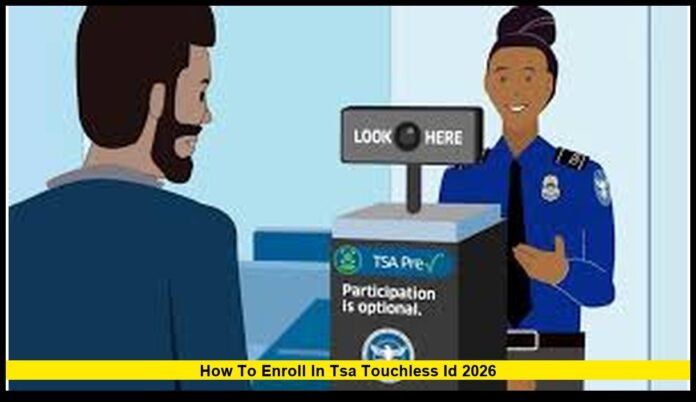

The topic how to enroll in tsa touchless id is trending in 2026 as more U.S. airports expand biometric screening, allowing travelers to verify identity using facial recognition instead of presenting physical identification.
What TSA Touchless ID Means for Travelers
TSA Touchless ID is part of a broader effort to modernize airport security. The system uses facial recognition technology to confirm a traveler’s identity at checkpoints.
Instead of handing over a driver’s license or passport, travelers look into a camera. The system then matches their live image with an existing government or airline record.
This process reduces physical contact and speeds up identity verification.
Where TSA Touchless ID Is Available in 2026
As of March 2026, TSA has introduced biometric identity verification at multiple major U.S. airports. However, availability still depends on location, airline participation, and terminal setup.
Airports with active biometric screening include:
- Hartsfield-Jackson Atlanta International Airport (ATL)
- Los Angeles International Airport (LAX)
- John F. Kennedy International Airport (JFK)
- LaGuardia Airport (LGA)
- Dallas/Fort Worth International Airport (DFW)
- Miami International Airport (MIA)
Not every checkpoint in these airports supports the system, so availability may vary.
Is Enrollment Required or Automatic
There is no single universal sign-up form labeled for this system. Enrollment typically happens through other programs or airline processes.
Travelers often gain access by:
- Opting in during airline check-in
- Using a digital ID supported by TSA
- Participating in programs like TSA PreCheck
This means enrollment is integrated rather than standalone.
Who Can Use TSA Touchless ID
Eligibility depends on a few key factors. Most U.S. travelers can use the system if they meet the requirements.
You generally need:
- A valid government-issued ID or passport
- A boarding pass for a participating flight
- Consent to biometric verification
U.S. citizens are the primary users, though some international travelers may also be eligible in certain cases.
Step-by-Step: How the Enrollment Process Works
Understanding how to enroll in tsa touchless id requires looking at the different ways travelers can opt in.
Step 1: Book a Participating Flight
Choose an airline that supports biometric identity verification. Many major carriers now offer this option.
Step 2: Opt In During Check-In
During online or mobile check-in, you may see an option to use facial recognition. Accepting this enables Touchless ID for your trip.
Step 3: Provide Consent
You must agree to the use of biometric data. This consent allows the system to match your identity at the airport.
Step 4: Arrive at a Supported Airport
Go to a TSA checkpoint equipped with facial recognition technology.
Step 5: Complete Identity Verification
Look into the camera when prompted. The system will confirm your identity in seconds.
If the system cannot verify your identity, TSA officers will check your physical ID.
Using Digital IDs With TSA
Digital identification is becoming more common in the U.S. Several states now offer mobile driver’s licenses that integrate with TSA systems.
Supported features include:
- Storing ID in a smartphone wallet
- Using secure verification at checkpoints
- Combining digital ID with facial recognition
This option adds another layer of convenience for eligible travelers.
TSA PreCheck and Touchless ID
TSA PreCheck does not require biometric verification, but it often works alongside Touchless ID at participating airports.
Travelers with PreCheck may experience:
- Faster security screening
- Access to dedicated lanes
- Optional use of facial recognition
This combination creates a smoother travel experience.
What Happens at the Checkpoint
The process at the airport is designed to be quick and simple.
Here’s what to expect:
- A camera captures your image
- The system compares it to an existing record
- TSA confirms your identity within seconds
You can then proceed to the next step of security screening.
If you choose not to participate, you can present your ID as usual.
Privacy and Security Measures
Privacy remains a top concern for many travelers. TSA has implemented safeguards to address these concerns.
Key points include:
- Participation is voluntary
- Images are used only for identity verification
- Most images are deleted after a short period
Travelers maintain control over whether they use the system.
Benefits of TSA Touchless ID
The system offers several practical advantages for travelers.
Speed
Facial recognition can reduce wait times at busy checkpoints.
Convenience
Travelers do not need to present physical documents.
Contact Reduction
The process minimizes physical interaction during identity checks.
These benefits are especially noticeable during peak travel periods.
Limitations to Keep in Mind
While the system offers advantages, it also has limitations.
- Not available at all airports
- Requires participation from airlines
- Some travelers may prefer traditional ID methods
Understanding these limitations helps travelers plan accordingly.
How It Compares to Traditional ID Checks
Traditional ID verification involves manual inspection by a TSA officer. Touchless ID replaces this step with automated verification.
Comparison:
| Feature | Traditional ID | Touchless ID |
|---|---|---|
| Process | Manual check | Facial recognition |
| Speed | Moderate | Faster |
| Contact | Physical interaction | Minimal contact |
This shift reflects broader changes in airport technology.
Why TSA Is Expanding Biometric Screening
TSA continues to expand biometric systems to improve efficiency and security.
Goals include:
- Reducing wait times at checkpoints
- Enhancing identity accuracy
- Modernizing airport operations
As more airports adopt the system, it is expected to become more common.
Common Questions Travelers Ask
Do I need to sign up in advance?
No separate application is required. Enrollment happens through airlines or digital ID programs.
Can I opt out at the airport?
Yes. You can decline and show your ID instead.
Is it available for all flights?
No. Availability depends on the airport and airline.
Is my data محفوظ?
Images are typically deleted quickly, and the system focuses on short-term verification.
Key Takeaways for 2026 Travelers
- TSA Touchless ID uses facial recognition for identity checks
- Enrollment happens through existing travel processes
- Participation is optional and flexible
- Availability continues to expand across major airports
These points reflect the current state of the program.
Conclusion
TSA Touchless ID represents a major step toward faster and more efficient airport security. As more airports adopt the technology, travelers will likely see it become a standard option for identity verification.
Would you use TSA Touchless ID for faster airport screening, or do you prefer traditional ID checks? Share your thoughts and experiences below.