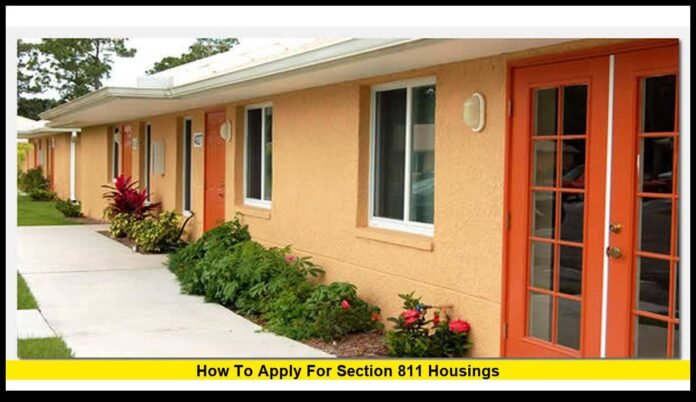

Finding affordable housing can be especially challenging for adults with disabilities who rely on fixed incomes, disability benefits, or limited financial resources. Understanding how to apply for section 811 housing can help eligible individuals explore subsidized apartments, prepare the required documents, and navigate the process of finding a suitable home. The federal program supports affordable rental opportunities for people with disabilities, helping qualifying residents live more independently in their communities.
The Section 811 Supportive Housing for Persons with Disabilities program is administered by the U.S. Department of Housing and Urban Development (HUD). It supports qualifying housing arrangements that reduce rental costs for eligible residents. Depending on the program and location, assistance may be provided through designated apartment developments or rental subsidies connected to privately owned properties.
Although Section 811 can offer an important housing opportunity, the application process is not identical nationwide. Some properties accept applications directly, while others work with state housing agencies, disability service providers, or designated referral partners. Applicants who understand these differences can better prepare their paperwork, identify appropriate housing providers, and avoid unnecessary delays.
Key Points Summary
╔════════════════════════════════════════════════════════════════════╗
║ – Section 811 helps eligible people with disabilities access affordable rental housing. ║
║ – Applicants generally need to satisfy disability, income, and property-specific eligibility rules. ║
║ – Applications may be handled by participating properties, state agencies, or authorized referral partners. ║
║ – Rent contributions are determined under the rules governing the particular housing arrangement. ║
║ – Waiting lists and apartment availability vary by location and property. ║
║ – Applicants should verify current requirements and application openings before submitting personal documents. ║
╚════════════════════════════════════════════════════════════════════╝
What Is the Section 811 Housing Program?
Section 811 is a federal initiative designed to help eligible people with disabilities obtain affordable rental housing in community settings. Its purpose is to improve access to housing for people who might otherwise face financial barriers or limited opportunities to live independently.
The program operates through different funding and housing arrangements. Some properties receive assistance through traditional Section 811 funding, while others participate in the Section 811 Project Rental Assistance program, commonly called PRA.
Under the PRA model, participating state housing agencies generally work with housing owners and relevant health or human services agencies to make designated apartments available to eligible residents. Rental assistance helps reduce the amount eligible households must pay compared with the full cost of rent.
Section 811 assistance is generally connected to a qualifying property or designated rental arrangement. It is not typically a cash benefit paid directly to an applicant. This means prospective residents need to identify participating properties and follow the application or referral process used by the responsible organization.
Some programs also coordinate access to community-based supportive services. Depending on local arrangements, residents may receive assistance with service coordination, independent living resources, or connections to disability-related support. Services differ by location, and applicants should ask which resources are available before accepting a housing offer.
Who Qualifies for Section 811 Housing?
Eligibility depends on the specific property, funding model, and applicable program requirements. Applicants should confirm the rules directly with the organization responsible for the housing opportunity.
Disability Eligibility
Section 811 is intended for eligible people with disabilities. Applicants may need to provide documentation showing that they meet the disability criteria used by the particular program.
Accepted documentation can vary. A provider may request information from a medical professional, a disability services agency, or another authorized source. Applicants should ask what evidence is acceptable before arranging appointments or submitting records.
Receiving disability benefits may help establish certain aspects of an applicant’s circumstances, but it does not automatically establish eligibility for every Section 811 property. Housing providers may need to verify additional requirements.
Income Limits and Financial Requirements
Section 811 housing generally serves people with limited incomes. The applicable income limits depend on the funding arrangement, household size, and local housing market.
Project Rental Assistance units are generally designed for extremely low-income households, commonly using an income limit tied to 30% of the area median income. Traditional Section 811 properties may use different income requirements depending on their funding and operating arrangements.
Housing providers may consider wages, Social Security benefits, Supplemental Security Income (SSI), pensions, and other income sources under the applicable rules. They may also request financial or asset information when required.
Applicants should ask for the current income limits for their specific property. A general national estimate may not accurately reflect local eligibility requirements.
Age Requirements
Section 811 generally serves adults with disabilities, but age rules depend on the program.
Some Project Rental Assistance arrangements focus on non-elderly adults with disabilities, often individuals between 18 and 61 at the time of initial occupancy. Other properties may follow different eligibility provisions.
Applicants should verify the minimum and maximum age requirements before submitting an application. People approaching age 62 may also want to ask about other HUD-assisted housing options for which they could qualify.
Citizenship and Immigration Status
Federal housing assistance may include citizenship or eligible immigration-status requirements. The rules applicable to a household depend on the specific housing program.
Applicants should ask the property manager which identity and status documents are necessary. They should not assume that every household member must provide identical paperwork or that all housing programs follow the same procedures.
Independent Living and Support Needs
Some Section 811 programs coordinate with Medicaid, disability agencies, or community-based service providers. In these arrangements, applicants may need to complete a referral process or demonstrate eligibility for specified services.
A case manager can sometimes help applicants understand the requirements, identify participating properties, and coordinate referrals. However, not every Section 811 property requires a case manager, and supportive service arrangements vary.
How to Apply for Section 811 Housing
Applying for Section 811 usually involves identifying participating properties, confirming eligibility, gathering documentation, and following the designated application process.
Step 1: Find Participating Housing Providers
Begin by identifying Section 811 properties or rental assistance opportunities in your state. HUD housing information, state housing finance agencies, and local disability services organizations can help you determine where to inquire.
Ask whether the property currently participates in Section 811, whether applications are being accepted, and whether units are available. Confirm that the apartment is actually part of the program rather than simply being advertised as affordable housing.
It can be useful to contact more than one provider, particularly if the first property has a closed waiting list. Keep a written record of the names of organizations you contact and the instructions they provide.
Step 2: Confirm the Correct Application Route
Some properties accept applications directly from prospective residents. Others require an initial referral from a state agency, disability services organization, or designated case manager.
Certain state-administered programs coordinate referrals through health or human services agencies. In these situations, contacting the property manager alone may not be sufficient to start the process.
Ask who is responsible for screening applicants, where the paperwork must be submitted, and whether an initial referral is necessary. Confirm whether the process is completed online, by mail, through an appointment, or through another approved method.
Step 3: Review Income and Eligibility Rules
Before completing the application, request the property’s current eligibility criteria. Review the income limits, disability requirements, age rules, and any other applicable conditions.
Prepare information about your household members and income sources. If you receive SSI, Social Security Disability Insurance (SSDI), a pension, or other benefits, ask which records are required to verify those payments.
If you are unsure whether you qualify, request clarification from the housing provider. Avoid assuming that a particular benefit automatically guarantees approval or makes you ineligible.
Step 4: Gather the Required Documents
Preparing paperwork in advance can help prevent delays. Depending on the property’s procedures, you may need:
- Government-issued identification.
- Social Security number documentation, when required.
- Proof of household income.
- Current SSI, SSDI, or other benefit award letters.
- Disability verification.
- Household composition information.
- Bank or asset records, if requested.
- Citizenship or eligible immigration-status documentation, when applicable.
- Referral information from a case manager, if required.
This list is a general preparation guide rather than a universal checklist. The responsible housing provider should explain exactly which documents are necessary.
Protect your personal information when submitting paperwork. Confirm that the organization is authorized to handle your application before providing sensitive medical, financial, or identity records.
Step 5: Complete and Submit Your Application
Fill out the required forms accurately and include all requested supporting documents. Review the information about household members, income, disability-related eligibility, and contact details before submitting the paperwork.
Depending on the provider, applications may be accepted online, on paper, through an appointment, or through a designated referral process.
Keep copies of your application and supporting documents. If you receive a confirmation number or written acknowledgment, save it for future reference.
Submitting an application does not necessarily mean you have been approved. The provider may still need to verify your information and determine whether an appropriate unit is available.
Step 6: Follow Up With the Housing Provider
After submitting your application, ask how the organization communicates with applicants and whether additional steps are required.
Respond promptly to requests for updated income information, missing forms, or disability verification. If your telephone number, email, or mailing address changes, notify the provider so you do not miss important notices.
Keep a record of the dates you contact the agency and any instructions you receive. Organized records can make it easier to follow the process and resolve questions.
Step 7: Understand Waiting Lists and Selection
Demand for affordable housing can exceed the number of available apartments. As a result, some Section 811 properties maintain waiting lists or temporarily stop accepting applications.
Ask how applicants are selected, whether preferences apply, and whether you must periodically confirm your continued interest. Find out how the provider will contact you when your application advances.
Waiting periods vary by property and location. Even an applicant who meets all eligibility requirements may need to wait for a suitable unit to become available.
Step 8: Complete Final Verification and Review the Lease
When an apartment becomes available, the housing provider may conduct final eligibility checks and request updated documentation.
Before signing a lease, review the monthly rent, utility responsibilities, accessibility features, occupancy requirements, and any permitted additional charges. If you need disability-related accommodations, ask how to request them.
Make sure you understand the lease terms and know whom to contact about maintenance, rent payments, and property policies.
How Much Rent Do Section 811 Residents Pay?
One of the program’s primary benefits is that rental assistance can make housing more affordable for eligible households.
In many HUD-assisted housing arrangements, the tenant’s contribution is generally calculated at approximately 30% of adjusted household income. The exact calculation depends on the applicable program rules, eligible deductions, utility allowances, and the property’s subsidy structure.
For example, an eligible resident with limited income may pay substantially less than the apartment’s full market rent. The subsidy generally helps cover eligible housing costs rather than providing cash directly to the resident.
Applicants should request an estimate of their expected monthly rent before signing a lease. They should also ask whether utilities, deposits, or other permitted charges are handled separately.
What If the Section 811 Waiting List Is Closed?
A closed waiting list does not necessarily mean that every housing opportunity is unavailable. Properties may reopen their lists when vacancies arise or when they are authorized to accept additional applicants.
Applicants can contact other participating properties, ask state agencies about referral procedures, and investigate opportunities in nearby communities.
Other housing programs may also be worth exploring, including public housing, project-based rental assistance, and the Housing Choice Voucher program. Each has separate eligibility requirements and application procedures.
People experiencing homelessness or facing an immediate housing crisis should contact local housing assistance organizations to ask about emergency resources while pursuing longer-term options.
Latest Section 811 Housing Developments
HUD announced a fiscal year 2026 Project Rental Assistance funding opportunity in May 2026, making approximately $158 million available to eligible state housing agencies and other authorized applicants. The application deadline for that funding opportunity was July 13, 2026.
The funding opportunity was intended for eligible agencies rather than individual tenants. It should not be mistaken for an open application period for people seeking apartments.
For prospective residents, the most relevant updates involve participating properties, newly available units, reopened waiting lists, and changes to local referral procedures. Federal funding announcements do not automatically mean that an individual apartment is immediately available.
Applicants should verify the current status of their local program and ask whether new applications are being accepted. Maintaining contact with housing providers can help applicants identify opportunities as they arise.
Frequently Asked Questions
Can I apply for Section 811 housing online?
Some participating properties accept online applications, while others require paper forms, direct contact with property management, or a referral through a designated agency. The correct method depends on the local program.
Can people receiving SSI or SSDI qualify?
Yes, they may qualify if they meet the applicable disability, income, and other eligibility requirements. Receiving SSI or SSDI does not automatically guarantee approval.
Is Section 811 housing free?
Generally, no. Eligible residents usually pay a calculated portion of their income toward rent, while rental assistance helps cover eligible housing costs.
Does every applicant need a case manager?
No. Some properties accept applications directly, while certain state-administered programs require referrals through designated agencies or case managers.
How long does approval take?
There is no standard nationwide processing period. The timeline depends on the provider’s verification procedures, waiting-list position, referral requirements, and availability of appropriate units.
What if I do not qualify for Section 811?
You may be eligible for other housing assistance programs, including public housing, project-based rental assistance, or a Housing Choice Voucher. Each program has its own eligibility criteria and waiting lists.
Final Thoughts
Section 811 can provide an important path toward affordable housing for eligible adults with disabilities. Understanding the eligibility requirements, identifying participating properties, preparing documentation, and following the correct referral process can help applicants navigate the system more effectively.
Because program rules and apartment availability vary, prospective residents should confirm the latest information with the responsible housing provider or state agency. If no suitable unit is currently available, exploring other rental assistance programs may provide additional options.
Have questions about disability housing or your experience applying for rental assistance? Share your thoughts in the comments and stay tuned for more affordable housing news, eligibility updates, and practical application guides.