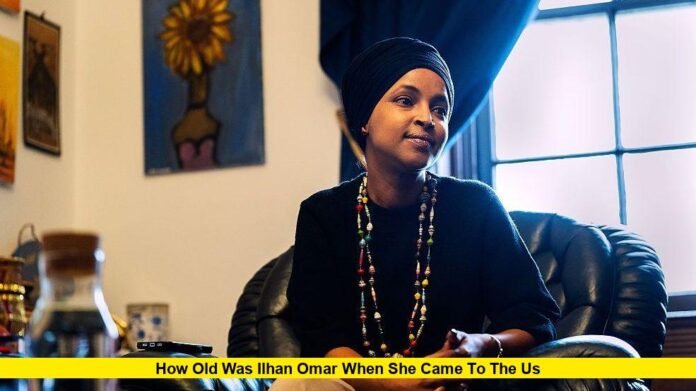

The question how old was Ilhan Omar when she came to the US has attracted renewed attention as the Minnesota congresswoman faces fresh scrutiny over her immigration history. Omar was 12 years old when she arrived in the United States in March 1995, according to her publicly documented biography. Born in Mogadishu, Somalia, she came to America with her family after fleeing the Somali civil war and spending several years in a refugee camp in Kenya.
Her childhood journey eventually led her into American public life, first through community organizing and state politics and later through her election to the U.S. House of Representatives. Her background has also become part of renewed political and legal debate surrounding her immigration records. Understanding the timeline requires distinguishing the established details of her early life from the questions being examined in the current investigation.
If you want to understand why Omar’s age at arrival matters, the key is to look at her childhood, her family’s move to the United States, her path to citizenship, and the recent developments surrounding her immigration history.
Ilhan Omar Was 12 When She Arrived in America
Ilhan Omar’s publicly documented birth date is October 4, 1982. Her family arrived in the United States in March 1995, when she was 12 years old. She was still a child adjusting to a new country, a different school system, and a language she had not yet mastered.
Her arrival was not simply a move from one country to another. It followed a period of displacement caused by conflict in Somalia. Omar and her family had left their home country and spent years in Kenya before resettling in the United States.
The distinction between her arrival age and her age when she became a citizen is important. Omar arrived as a refugee in 1995 and became a U.S. citizen in 2000, when she was publicly reported to be 17.
These events occurred at different stages of her childhood and adolescence. Her arrival marked the beginning of her family’s life in America, while naturalization represented a later milestone in her legal status.
Why Ilhan Omar and Her Family Left Somalia
Omar was born in Mogadishu, the capital of Somalia. Her childhood unfolded during a period of instability that profoundly affected her family and many other Somali households.
The Somali civil war forced families to leave their homes in search of safety. Omar’s family fled the country when she was a young child, years before they reached the United States.
The conflict disrupted ordinary life, separated communities, and forced people to make difficult decisions about where they could live safely. For families caught in such circumstances, leaving home often meant abandoning familiar surroundings, relationships, and routines without knowing when they might return.
Omar’s experience was part of this wider displacement. Her family’s departure from Somalia did not immediately lead to a permanent home elsewhere. Instead, they spent years in Kenya before being admitted to the United States.
That period matters when considering her age at arrival. Although she reached America at 12, she had already experienced displacement and spent a substantial part of her childhood outside her birth country.
Four Years in a Refugee Camp in Kenya
Before coming to the United States, Omar and her family spent approximately four years in a refugee camp in Kenya. This period formed an important part of the family’s journey from Somalia to America.
Refugee camps provide temporary shelter for people displaced by conflict, but living in one can involve significant uncertainty. Families may have limited control over where they live, when they can move, and how quickly they can establish a stable future.
For a child, such circumstances can interrupt schooling, friendships, and the familiar patterns of everyday life. The experience of displacement can also shape how a young person understands safety, belonging, and the meaning of a permanent home.
Omar’s family eventually secured permission to resettle in the United States. Their arrival in March 1995 brought an end to that particular period of displacement and began a new chapter in America.
The four years in Kenya also explain why her journey cannot be reduced to a single date. Her family’s move involved several stages: leaving Somalia, living in a refugee camp, obtaining permission to resettle, and establishing a new life in the United States.
What Happened When Ilhan Omar First Arrived in the United States?
Omar’s family initially settled in Virginia after arriving in the United States. She was entering adolescence, an age when many children are navigating changes in education, identity, friendships, and independence even without the added challenge of moving to a new country.
Adjusting to American life involved learning how to communicate comfortably in English and becoming familiar with an unfamiliar school and social environment. Omar has described the difficulties she experienced as a young immigrant, including bullying connected to her Somali background and Muslim identity.
The adjustment was not instantaneous. Learning a language, understanding cultural expectations, and building relationships require time, particularly for children who have already experienced displacement.
Omar has recounted using television as one way to become more familiar with spoken English. Experiences like these illustrate how ordinary parts of American life can become informal learning tools for a newly arrived child.
Her early years in the United States also involved confronting prejudice. Being a Somali immigrant and wearing a hijab made her visibly different from many of her classmates. She has spoken about the harassment she experienced at school and how her family encouraged her to stand up for herself.
These experiences became part of her public account of growing up in America. They also help explain why immigration, representation, religious freedom, and equal treatment have featured prominently in her political life.
When Did Ilhan Omar Move to Minnesota?
Omar did not settle permanently in Minnesota immediately upon arriving in the United States. Her family first lived in Virginia before moving to Minneapolis in 1997.
She was approximately 14 years old when the family moved to Minnesota. By then, she had spent several years adapting to life in the United States after arriving as a refugee.
Minneapolis became the place where she completed much of her education and developed the connections that would later influence her public career. Her family settled in the Cedar-Riverside neighborhood, an area known for its Somali immigrant community.
Living in a community with people who shared aspects of her family’s background offered a different setting from her initial adjustment in Virginia. Minneapolis would eventually become central to her identity as a community organizer and elected representative.
Omar attended Edison High School in Minneapolis before continuing her education at North Dakota State University. Her subsequent career included work in community engagement, political campaigns, and public service.
Her move to Minnesota therefore represents another important point in the timeline. She arrived in America at 12, moved to Minnesota at about 14, and began building the educational and professional foundations of her later career there.
When Did Ilhan Omar Become a U.S. Citizen?
Omar became a naturalized U.S. citizen in 2000, at the age of 17, according to her publicly documented biography. That milestone came approximately five years after her family’s arrival in the country.
Her citizenship timeline is especially relevant to current discussions about her immigration history because it separates three distinct events: her birth in Somalia, her arrival in the United States as a refugee, and her later acquisition of U.S. citizenship.
These events should not be treated as interchangeable. Arriving in the country as a refugee does not automatically mean someone becomes a citizen on the day of arrival. Immigration status and citizenship involve different legal processes.
For Omar, the publicly reported timeline places her arrival in March 1995 and her citizenship in 2000. She subsequently built her education and career in the United States, eventually entering elected office.
Her citizenship also preceded her political career by many years. Omar entered the Minnesota House of Representatives in 2017 and was elected to the U.S. House in 2018, taking office in January 2019.
The timeline helps explain why questions about her early immigration documents have become politically significant. They concern events from decades before she became a nationally prominent politician.
Why Is Ilhan Omar’s Age at Arrival Receiving Attention Again?
Omar’s immigration history has returned to the headlines amid a federal investigation into her historical immigration and naturalization paperwork.
Recent developments in October 2026 have brought renewed attention to questions concerning her records, including reported scrutiny of her birth date and the circumstances surrounding her family’s immigration process.
Federal agents searched Omar’s Washington, D.C., home in October as part of the investigation. The operation and its handling have prompted objections from her legal team, which has challenged the authorities’ conduct and demanded the return of property seized during the search.
Omar has denied wrongdoing and characterized the investigation as politically motivated. The allegations under examination should not be treated as established misconduct, and the existence of an investigation does not itself establish that immigration fraud occurred.
The renewed attention makes it particularly important to distinguish her publicly documented biography from unresolved questions about historical records.
Her commonly reported birth date is October 4, 1982, and her reported arrival date is March 1995. On that timeline, she was 12 when she entered the United States.
However, the investigation’s reported focus on historical documentation means that questions about the underlying records should be described carefully. Public reporting about an inquiry is not the same as a final legal finding, and allegations do not independently establish a different birth date.
For readers seeking a straightforward answer, the publicly documented timeline remains the starting point: Omar was 12 when she arrived in the United States as a refugee.
What Is the Difference Between Her Arrival Age and Her Citizenship Age?
The distinction is easier to understand when the major events are placed in chronological order.
| Milestone | Year or date | Reported age |
|---|---|---|
| Birth in Mogadishu, Somalia | October 4, 1982 | Birth |
| Family flees Somalia | During her childhood | About 8 |
| Arrival in the United States | March 1995 | 12 |
| Family moves to Minnesota | 1997 | About 14 |
| Becomes a U.S. citizen | 2000 | 17 |
| Elected to the U.S. House of Representatives | November 2018 | 36 |
The ages in this timeline reflect her publicly reported birth date and biographical chronology. The events serve different purposes in understanding her life.
Her arrival age identifies how old she was when she physically moved to the United States. Her citizenship age identifies when she acquired American citizenship. Neither number should be substituted for the other.
The distinction is also useful when discussing immigration more broadly. Refugee resettlement, permanent residency, and citizenship are separate stages that can occur at different times, depending on the circumstances and applicable law.
In Omar’s case, the five-year interval between her reported arrival and citizenship is an important part of the publicly described timeline.
How Old Was Ilhan Omar When She Began Her Political Career?
Omar was already an adult when she began her elected political career. Her path from refugee resettlement to Congress took more than two decades.
After completing high school, she attended North Dakota State University, where she earned a bachelor’s degree. She later worked in community engagement and political roles before pursuing elected office.
In 2016, Omar won election to the Minnesota House of Representatives. She took office in 2017, becoming a prominent figure in state politics.
In 2018, she won election to represent Minnesota’s 5th Congressional District in the U.S. House of Representatives. She began serving in Congress in January 2019.
Her election made her the first Somali American elected to Congress and one of the first two Muslim women elected to the House. Her political career brought national attention to her experiences as a refugee and immigrant.
By the time she entered Congress, Omar had lived in the United States for more than 23 years. Her political rise was therefore the result of a lengthy period of education, community involvement, and public service rather than an immediate transition from arriving in the country to holding office.
That history also explains why her childhood and immigration timeline continue to attract public interest.
Why Her Story Matters Beyond Her Age
The question of how old Omar was when she came to the United States has a simple numerical answer, but her experience provides a broader illustration of refugee resettlement.
A child who arrives in a new country must often adapt to unfamiliar institutions while developing a sense of belonging. Schooling, language acquisition, family stability, and community support can all influence that process.
Omar’s reported experience included an initial settlement in Virginia, a later move to Minnesota, and an eventual career in public service. Those stages show how a family’s initial resettlement can become the beginning of a much longer personal and professional journey.
Her background has also made her a prominent participant in American debates about immigration policy. As a congresswoman who arrived as a refugee, she has spoken publicly about the experiences of immigrants and displaced families.
At the same time, her political prominence means that her personal history is frequently examined through partisan arguments. Readers benefit from separating verifiable biographical milestones from allegations, political rhetoric, and unresolved legal questions.
That distinction is especially important during an active investigation. A fair assessment requires attention to what is publicly documented, what authorities are examining, what the subject has said in response, and whether any legal conclusions have been reached.
Her story illustrates why dates and ages matter in public reporting: even a seemingly simple biographical question can become part of a larger discussion about immigration, citizenship, and political accountability.
The Bottom Line: Ilhan Omar Was 12 When She Came to the U.S.
Ilhan Omar was 12 years old when she arrived in the United States in March 1995, according to her publicly documented biography. She came from Somalia with her family after they fled the country’s civil war and spent approximately four years in a refugee camp in Kenya.
Her family initially settled in Virginia before moving to Minnesota in 1997. Omar became a U.S. citizen in 2000, at the age of 17, and later built a career in American politics, winning election to Congress in 2018.
Renewed scrutiny of her historical immigration records in October 2026 has brought her early life back into public discussion. The ongoing investigation should be distinguished from any final determination of wrongdoing, as Omar has denied the allegations against her.
The central answer remains clear based on the publicly documented timeline: she was 12 when she came to America.
What do you think about Ilhan Omar’s journey from arriving in the United States as a child to serving in Congress? Share your thoughts in the comments and stay tuned for further developments.