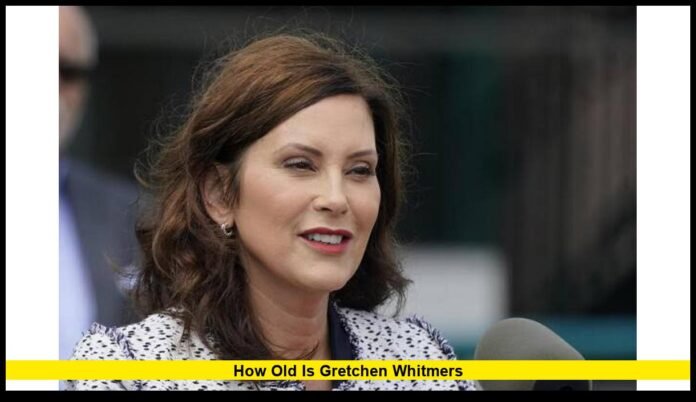

As of October 25, 2026, how old is Gretchen Whitmer? The Michigan governor is 55 years old, having been born on August 23, 1971, in Lansing, Michigan. Her years in state government, two successful gubernatorial campaigns, and growing national profile have made her a prominent figure in American politics. With her second term approaching its final stretch, attention remains focused on her policy record and plans beyond the governor’s office.
Gretchen Whitmer’s Age and Birth Date
Gretchen Whitmer turned 55 on August 23, 2026. Born and raised in Michigan, she developed a political career centered on the state’s economy, public services, education, and infrastructure.
Her age places her among experienced Democratic leaders who have spent decades working in government. Whitmer entered elected office in 2001 and gradually moved into positions with greater responsibility, eventually becoming the state’s chief executive.
Her professional journey reflects years of legislative work, election campaigns, and executive decision-making rather than a rapid transition into national politics.
From Lansing Roots to Statewide Leadership
Whitmer was born in Lansing, the capital of Michigan. Her connection to the state has remained an important part of her political identity, particularly in campaigns emphasizing local priorities and economic challenges facing Michigan residents.
She attended Michigan State University, earning an undergraduate degree before completing her law degree at the university’s College of Law. Her education helped prepare her for public service and a career involving legislation, government administration, and legal policy.
Whitmer entered the Michigan House of Representatives in 2001. She later won election to the Michigan Senate, where she served as a Democratic lawmaker and eventually became the chamber’s Democratic leader.
Her legislative experience gave her an understanding of how state budgets are negotiated, how laws move through the legislature, and how political disagreements affect public policy.
When Did Gretchen Whitmer Become Michigan Governor?
Whitmer won the Michigan gubernatorial election in November 2018, defeating Republican Bill Schuette. She took office on January 1, 2019, becoming Michigan’s 49th governor.
Her first term brought a range of policy challenges, including the COVID-19 pandemic, economic disruption, debates over public health restrictions, and continuing concerns about transportation infrastructure.
She won reelection in November 2022, securing a second four-year term that began in January 2023. The victory strengthened her position within Michigan’s Democratic Party and increased national interest in her political approach.
As governor, Whitmer has worked with lawmakers, state agencies, local officials, employers, and community organizations on issues affecting Michigan’s residents.
The Main Priorities Shaping Whitmer’s Governorship
Whitmer’s administration has emphasized several areas of public policy. The results and costs of these initiatives remain important subjects for voters and political observers.
Roads, bridges, and transportation
Michigan’s transportation network has been a major focus of Whitmer’s agenda. Her administration has promoted road repairs, bridge improvements, and infrastructure spending intended to make travel safer and support commercial activity.
Infrastructure is particularly important in a state with extensive manufacturing operations and communities that depend on reliable road connections.
Education and student opportunities
Whitmer has supported public education funding, literacy initiatives, and efforts to improve educational opportunities. School budgets, teacher recruitment, student performance, and access to training remain significant issues for Michigan families.
Jobs and economic investment
Michigan’s economy has historically depended on manufacturing, particularly the automotive industry. Whitmer has promoted business investment, workforce development, and efforts to attract projects involving advanced manufacturing and clean energy.
The state’s economic performance depends on several factors, including national demand, business decisions, employment trends, and broader economic conditions.
Health care and household expenses
Affordability has also featured in Whitmer’s policy agenda. Housing, health care, utility bills, and other everyday costs affect household budgets across Michigan.
Her administration has pursued measures addressing selected family expenses, while debates continue over the effectiveness and long-term financial implications of state policies.
A Political Future Beyond 2026
Whitmer’s second gubernatorial term is scheduled to conclude at the end of 2026. Michigan’s term limits prevent her from seeking another consecutive term, meaning the state will choose a new governor in the November 2026 election.
Her next move has attracted considerable attention. In May, Whitmer initially said she would not be part of the 2028 presidential field. Later that day, however, she softened the statement, saying people should never say never and that she had nothing to announce about a potential campaign.
The distinction matters: Whitmer has not established a presidential campaign, and her comments leave room for uncertainty about her longer-term political plans. She has indicated that she wants time to consider her next steps after leaving the governor’s office.
For now, her remaining time in office includes continuing work on the state budget, education, housing, economic development, and other priorities.
Family Life and Personal Background
Whitmer is married to Marc Mallory, a dentist, and has two daughters and three stepsons. Her family has featured in her public biography, and she has often discussed the importance of creating opportunities for children and working families.
She lives in Lansing, maintaining her connection to the city where she was born and where Michigan’s state government operates.
While her political career has brought national recognition, her public responsibilities remain centered on Michigan. The concerns of the state’s residents, businesses, schools, and communities continue to shape the issues she addresses as governor.
Why Gretchen Whitmer Remains a National Political Figure
Whitmer’s influence extends beyond Michigan because the state plays a significant role in national elections and the American manufacturing economy. Its mix of urban centers, suburban communities, and rural areas makes it an important political battleground.
Her victories in 2018 and 2022 demonstrated her ability to win statewide elections in a competitive political environment. Her record on economic development, infrastructure, education, and reproductive rights has also contributed to her national visibility.
Supporters point to her emphasis on practical state priorities and economic investment. Critics question aspects of her policy choices, government spending, and approach to regulation. These disagreements are part of the broader debate over her performance in office.
Her eventual departure from the governorship will provide an opportunity to assess her administration’s longer-term impact and determine how her experience may shape her future work.
Frequently Asked Questions About Gretchen Whitmer
How old is Gretchen Whitmer in 2026?
Gretchen Whitmer is 55 years old as of October 25, 2026. Her birthday is August 23, 1971.
When was Gretchen Whitmer born?
She was born on August 23, 1971, in Lansing, Michigan.
What political party does Gretchen Whitmer belong to?
Whitmer is a member of the Democratic Party.
When does Gretchen Whitmer’s term as governor end?
Her second term is scheduled to end on December 31, 2026. Michigan’s term limits prevent her from seeking another consecutive term.
Is Gretchen Whitmer planning to run for president in 2028?
Whitmer initially said in May 2026 that she would not run in 2028, but later qualified that statement. She has not announced a presidential campaign.
What did Gretchen Whitmer do before becoming governor?
She served in the Michigan House of Representatives and the Michigan Senate. She also held leadership roles in the state legislature before winning the 2018 gubernatorial election.
Conclusion
At 55, Gretchen Whitmer has spent more than 25 years in Michigan’s elected political system, progressing from the state legislature to the governor’s office. Her administration has focused on infrastructure, education, economic growth, and issues affecting household budgets.
With her second term ending in 2026, the next phase of her career remains uncertain. Her remarks about a possible 2028 presidential campaign have evolved, and she has not made a definitive announcement about what she will do after leaving office.
For anyone asking about her age, birthday, and political background, Whitmer’s story combines deep Michigan roots with a career that has attracted attention throughout the United States.