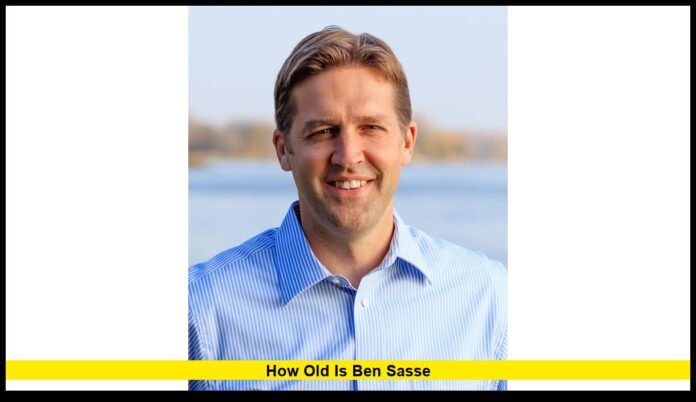

As of December 2025, former U.S. Senator and current University of Florida president Ben Sasse is 53 years old. For anyone asking how old is Ben Sasse, he was born on February 22, 1972, in Plainview, Nebraska. Over the course of five decades, he has built an impressive career that bridges academia, politics, and leadership. From serving in the U.S. Senate to guiding one of the nation’s leading public universities, Sasse’s professional path has made him a nationally recognized figure in both government and education.
At 53, Sasse’s career continues to evolve. His transition from Capitol Hill to higher education reflects his deep interest in institutional renewal, civic engagement, and preparing future generations for leadership in a rapidly changing world.
Early Life and Education
Ben Sasse was raised in Plainview, a small farming town in northeastern Nebraska known for its strong community roots. Growing up in a middle-class household, Sasse’s upbringing emphasized education, faith, and civic responsibility — principles that shaped his personal and professional outlook.
After graduating from Creighton Preparatory School in Omaha, he pursued a Bachelor of Arts in Government at Harvard University, completing his degree in 1994. His time at Harvard introduced him to the study of constitutional principles, policy design, and American governance — subjects that would later define much of his political career.
As a Marshall Scholar, Sasse continued his academic journey at the University of Oxford, focusing on modern history. He later earned both a Master’s degree and Ph.D. in History from Yale University, where his doctoral dissertation examined leadership and institutional change within American cultural and political systems.
His academic path established a foundation in both historical perspective and leadership theory, qualities that later became central to his roles in education administration and national politics.
Early Career and Academic Leadership
Before entering the U.S. Senate, Ben Sasse spent much of his early career working in education reform and government advisory roles. His leadership trajectory began in the early 2000s when he worked as a consultant and policy advisor, helping organizations and government agencies navigate institutional challenges.
His career took shape through a series of high-profile roles:
- Chief of Staff in the Office of Legal Policy at the U.S. Department of Justice, where he focused on judicial nominations and policy development.
- Assistant Secretary for Planning and Evaluation at the U.S. Department of Health and Human Services from 2007 to 2009, where he worked on public health and budget strategy.
- President of Midland University in Fremont, Nebraska, beginning in 2010, where he led a major financial and academic turnaround.
When Sasse took over as Midland University’s president, the institution faced financial instability and low enrollment. Through cost management, academic restructuring, and community engagement, he guided Midland from near insolvency to record growth. Enrollment more than doubled during his tenure, making him one of the youngest university presidents in the United States at the time.
This period highlighted Sasse’s ability to apply private-sector and policy expertise to education management — experience that later proved invaluable when he became president of the University of Florida.
Political Career in the U.S. Senate
Ben Sasse entered the political spotlight in 2014, when he was elected as the U.S. Senator from Nebraska. He officially began his term on January 3, 2015, and quickly gained attention as one of the Senate’s youngest members and a policy-driven conservative known for his independent streak.
During his time in the Senate, Sasse earned a reputation for his intellectual rigor and focus on long-term issues rather than short-term political battles. He was known for emphasizing constitutional governance, national security, and the importance of civic education in sustaining American democracy.
Committee Work and Legislative Focus
Throughout his Senate career, Sasse served on several key committees:
- Senate Finance Committee – Addressed national fiscal and tax policy.
- Senate Judiciary Committee – Oversaw judicial nominations and constitutional oversight.
- Senate Intelligence Committee – Worked on cybersecurity and intelligence issues.
He became a leading voice on topics such as:
- Cybersecurity preparedness and national defense.
- Higher education reform and workforce development.
- Trade and technology policy in the context of U.S.-China relations.
- Civic responsibility and bipartisan cooperation in Congress.
Sasse’s approach often reflected a mix of academic analysis and moral reasoning. He consistently warned against political polarization, arguing that the United States needed more civic literacy and less partisanship.
His stance sometimes placed him at odds with both major political parties, but it also earned him recognition as one of the Senate’s more thoughtful and principled members.
Resignation and Move to the University of Florida
In 2022, Ben Sasse announced he would step down from the Senate before the end of his term to become the next president of the University of Florida (UF). His resignation took effect in January 2023, marking a major career shift from national politics to higher education.
The University of Florida Board of Trustees had selected Sasse as their top candidate in late 2022, citing his leadership record and academic expertise. He officially began his tenure as UF’s 13th president on February 6, 2023, at the age of 50.
Sasse described his decision as a continuation of his lifelong focus on civic renewal and education reform, stating that higher education offered a platform to shape future generations and strengthen public discourse.
His appointment came during a period of transformation at UF, as the university sought to expand its global research presence and adapt to new technologies shaping higher education.
Leadership at the University of Florida
Since taking office, Ben Sasse has focused on positioning the University of Florida as a top-tier public institution committed to innovation, free expression, and student success.
Under his presidency, UF has:
- Expanded partnerships with major industries, particularly in biotechnology, engineering, and artificial intelligence.
- Enhanced digital and hybrid learning options, making education more accessible for working professionals.
- Strengthened research initiatives, increasing federal grant funding and private investment.
- Elevated UF’s national ranking, keeping it consistently among the top five public universities in the United States.
Sasse’s leadership emphasizes accountability, innovation, and open dialogue on campus. He has publicly encouraged students and faculty to embrace disagreement as part of the learning process, promoting an academic culture of debate without division.
He has also prioritized student mental health, investing in campus wellness programs, and increasing access to academic counseling. His strategic vision centers on preparing students not only for careers but for lifelong civic engagement.
Personal Life and Family
Ben Sasse has been married to Melissa Sasse since 1994. The couple has three children and lives in Gainesville, Florida, near the University of Florida campus.
Melissa Sasse has a background in education and counseling, and she has remained active in student advocacy and community outreach. The couple’s shared passion for education and faith-based service has been a consistent part of their public image.
Outside of his administrative and political career, Sasse is also a published author. His books address generational change, civic responsibility, and the challenges of modern American life.
Books by Ben Sasse:
- The Vanishing American Adult (2017) – Explores the loss of personal responsibility in modern culture.
- Them: Why We Hate Each Other and How to Heal (2018) – Examines political polarization and social fragmentation.
His writing reflects a consistent theme: the belief that American renewal begins with strong families, communities, and institutions that teach purpose and discipline.
Public Image and Leadership Philosophy
Ben Sasse’s leadership has long been shaped by his commitment to civic values, integrity, and institutional trust. Across every role he has held — from university president to U.S. senator — his style reflects a consistent focus on accountability, intellectual rigor, and the belief that institutions must serve the public with both honesty and humility.
A Leadership Style Rooted in Principles
Throughout his career, Sasse has positioned himself as a leader who values transparency, dialogue, and responsibility over short-term politics or popularity. Whether addressing students, faculty, or policymakers, he has emphasized the need for strong institutions that protect truth, promote debate, and prepare individuals for civic life.
His approach to leadership is often described as “principled pragmatism.” He believes that decisions should be guided by clear moral convictions but executed through practical, data-informed strategies. This philosophy has allowed him to navigate complex challenges in both government and academia while maintaining a reputation for integrity and consistency.
Sasse often reminds his audiences that good leadership requires listening before deciding — a trait that has earned him respect even among critics. He promotes an environment where disagreement is not a threat but a foundation for growth and understanding.
At the University of Florida: Analytical, Empathetic, and Forward-Thinking
As president of the University of Florida, Ben Sasse has worked to translate his civic-minded philosophy into academic leadership. Faculty and administrators describe his approach as “analytical but empathetic,” balancing rigorous management with a human-centered vision for education.
He prioritizes evidence-based decision-making, using data and long-term planning to improve academic outcomes and institutional efficiency. At the same time, he maintains open communication with faculty, students, and staff, frequently engaging in forums and discussions about campus issues.
Under Sasse’s leadership, UF has seen an increase in collaboration between departments, a renewed emphasis on research innovation, and expanded mental health and mentorship programs for students. His goal, as he’s stated publicly, is to make the University of Florida “a model for what higher education can be — a place that values both discovery and dignity.”
He often describes universities as “guardians of civilization,” institutions that not only produce knowledge but also shape the moral and civic character of the next generation. This belief has guided many of his administrative decisions, from faculty recruitment to student life initiatives.
Balancing Tradition and Innovation
Sasse’s leadership philosophy also reflects his effort to balance academic freedom with the evolving needs of a 21st-century university. He recognizes that higher education must adapt to new technologies, new forms of learning, and new social expectations — but he insists that such adaptation should never compromise the university’s core mission of truth-seeking and intellectual integrity.
He encourages faculty to embrace innovation while upholding scholarly rigor. For example, his administration has supported interdisciplinary programs that blend computer science, ethics, and policy — ensuring that students graduate prepared not just to work in modern industries but to think critically about their impact on society.
At the same time, Sasse has championed academic freedom and open discourse, making it clear that universities must remain spaces where diverse ideas can be debated respectfully. He has urged both students and professors to engage with differing perspectives rather than retreat into ideological silos.
This balance between preserving tradition and fostering progress has become a hallmark of his presidency — and one reason the University of Florida has continued to rise in national rankings under his guidance.
Public Perception: A Leader Who Invites Discussion
Publicly, Ben Sasse is often seen as a thoughtful and measured leader, someone who prioritizes the long-term health of institutions over momentary trends. Supporters describe him as a reformer who brings moral clarity and a sense of purpose to the organizations he leads. They highlight his ability to communicate complex ideas in relatable ways, whether he’s speaking to lawmakers or first-year college students.
Critics, meanwhile, sometimes question his willingness to challenge entrenched norms or political pressures. Yet even among opponents, there is recognition that Sasse leads with sincerity and intellectual consistency. His detractors often concede that he brings depth and seriousness to debates about education, governance, and the future of American democracy.
Sasse’s blend of academic intellect and Midwestern pragmatism has made him a unique figure in modern leadership. He speaks often about the importance of humility — that leadership is not about power or recognition, but stewardship and service.
The Philosophy Behind His Decisions
At the heart of Sasse’s leadership philosophy is a belief in institutional renewal through personal responsibility. He argues that America’s greatest institutions — universities, families, communities, and government — must focus on cultivating character, curiosity, and courage in the people they serve.
His guiding principles include:
- Integrity in Leadership: Making decisions based on long-term values rather than short-term gains.
- Transparency and Accountability: Keeping institutions open and responsive to the people they serve.
- Dialogue over Division: Encouraging discussion between people with differing perspectives.
- Education as a Moral Endeavor: Treating learning as not only an intellectual pursuit but a civic responsibility.
He often draws from his academic background in history to frame leadership as a calling rather than a career — a responsibility to leave institutions stronger than he found them.
Adapting to the Digital Age
Ben Sasse has also been vocal about the challenges facing higher education in the digital era. He acknowledges that universities must evolve to meet the demands of modern technology while maintaining their mission as spaces for critical thinking and civic learning.
Under his administration, the University of Florida has expanded its digital infrastructure, developing new programs in artificial intelligence, cybersecurity, and data science. Yet Sasse continues to emphasize that technology should enhance — not replace — human connection and creativity.
He has warned against what he calls “algorithmic isolation,” where technology reduces people to consumers rather than engaged citizens. His leadership encourages students to use technology as a tool for collaboration and innovation rather than division.
This forward-looking vision reflects Sasse’s broader belief that higher education must adapt to modern realities without losing its soul.
A Legacy of Civic Leadership
Beyond the university campus, Ben Sasse remains a respected voice on the national stage. His speeches and essays often address the intersection of education, citizenship, and democracy. He argues that rebuilding public trust requires leaders who are willing to tell hard truths and model respectful disagreement.
His reputation as both a scholar and a statesman allows him to bridge the gap between academia and public service. This dual identity gives him credibility among educators, policymakers, and community leaders alike.
Sasse’s leadership, at its core, is about rebuilding faith in institutions — not by making them perfect, but by making them honest, effective, and resilient.
Ben Sasse’s leadership philosophy stands out in an age of polarization and uncertainty. His focus on dialogue, integrity, and the long-term strength of institutions has made him a model for civic-minded leadership in both government and education. Whether in the halls of Congress or on a university campus, he continues to demonstrate that enduring leadership begins with character and a willingness to serve.
Age, Accomplishments, and Continuing Impact
To restate clearly, Ben Sasse is 53 years old as of December 2025, and his professional timeline already spans multiple fields:
- Education – Leadership roles at two major universities.
- Government – Eight years as a U.S. Senator focused on national security and education reform.
- Writing and Advocacy – Two bestselling books on civic engagement and generational resilience.
His age and career trajectory make him one of the few figures in public life to have achieved national prominence in both politics and higher education before turning 55.
Looking ahead, Sasse’s ongoing presidency at the University of Florida places him at the forefront of national discussions on free speech, technological transformation, and the future of higher education.
Read Also :- Truman White House Renovation: America’s Landmark Reconstruction That Saved the Executive Residence
Ben Sasse’s life story exemplifies how academic rigor, public service, and moral conviction can intersect to shape leadership in America. At 53, his influence extends far beyond politics — reaching into the classrooms and institutions where the next generation of citizens is being prepared to lead.