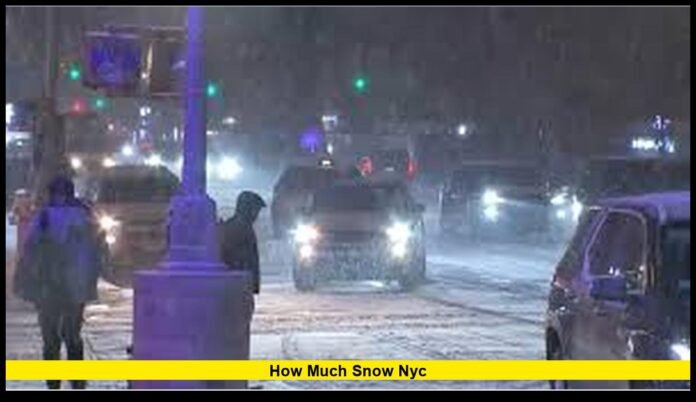

How much snow NYC received during the late December 2025 winter storm became a major question for residents, travelers, and businesses as the city experienced its most noticeable snowfall in several years. The storm moved through New York City between December 26 and December 27, leaving behind measurable accumulation across all five boroughs and creating widespread effects on travel, daily routines, and public services.
This report provides a complete, up-to-date look at snowfall totals, neighborhood variations, storm timing, impacts across the city, and how this event fits into New York City’s recent winter patterns.
When the Snow Began and How the Storm Unfolded
Snowfall in New York City began late Friday evening, December 26, as colder air settled over the region. Light snow quickly intensified overnight, with heavier bands moving through the city during the late night and early morning hours.
By midnight, steady snowfall was visible across Manhattan, Brooklyn, Queens, the Bronx, and Staten Island. Snow continued into Saturday morning before gradually tapering off as the storm system moved east. Temperatures stayed cold enough for snow to stick immediately on roads, sidewalks, and open surfaces.
The timing of the storm played a major role in its impact. With the snow arriving during overnight hours and continuing into the early weekend morning, many New Yorkers woke up to snow-covered streets and travel disruptions.
Confirmed Snow Totals: How Much Snow NYC Actually Got
After the storm ended, official measurements confirmed how much snow NYC received from this event. Snowfall totals varied slightly by location, but the overall pattern showed consistent accumulation across the city.
Citywide Overview
- Most of New York City recorded between 3 and 5 inches of snow.
- The storm produced the largest single snowfall the city has seen in nearly four years.
Borough-Level Snowfall Breakdown
- Manhattan: Central Park measured approximately 4.3 inches, serving as the city’s primary reference point. Many surrounding neighborhoods reported similar totals.
- Brooklyn: Snowfall averaged around 4 inches, with some areas seeing slightly more depending on elevation and exposure.
- Bronx: Several locations recorded about 4.3 inches, closely matching Manhattan totals.
- Queens: Snowfall varied more widely, with totals ranging from 2 to nearly 5 inches in different neighborhoods.
- Staten Island: Accumulations generally fell between 3 and 4 inches, with localized differences based on proximity to the coast.
These figures confirm that New York City experienced a solid snow event, even though some early forecasts had suggested higher totals.
Why Snow Totals Varied Across the City
Snowfall differences across NYC were influenced by several factors:
- Mixed precipitation: At times, sleet and freezing rain mixed with snow, limiting how much pure snow accumulated.
- Coastal influence: Areas closer to the water, particularly parts of Queens and Staten Island, saw slightly lower totals.
- Storm track: Heavier snow bands shifted north and east of the city, placing the most intense snowfall just outside NYC.
Despite these factors, snow covered the entire city, creating consistent winter conditions across boroughs.
How This Storm Compared to Early Forecasts
In the days before the storm arrived, weather forecasts suggested that New York City could see between 4 and 8 inches of snow. Some projections even hinted at higher totals if the storm strengthened closer to the coast.
As the system developed, warmer air above the surface caused periods of sleet and freezing rain, reducing total snow accumulation. As a result, actual snowfall came in closer to the lower end of forecast ranges.
Even so, the final totals still made this storm one of the most impactful winter events the city has experienced in recent years.
Regional Comparison: Snow Outside New York City
While New York City received moderate snowfall, surrounding regions saw heavier accumulation:
- Long Island: Many areas recorded 6 to 8 inches, with isolated spots approaching higher totals.
- Hudson Valley: Communities north of the city commonly saw 5 to 7 inches.
- Connecticut: Snow totals exceeded those in NYC, with several towns receiving 8 inches or more.
These differences highlight how narrowly focused the heaviest snow bands were and why NYC totals stayed lower than nearby areas.
Impact on Transportation and Travel
Understanding how much snow NYC got is only part of the story. The snowfall had real effects on transportation systems across the city.
Airports and Flights
- Flights at major airports experienced delays and cancellations as snow accumulated on runways and aircraft.
- Crews worked overnight to clear snow and maintain operations, but holiday travel schedules were disrupted.
Road Conditions
- Snow-covered roads and bridges became slick overnight.
- Snowplows and salt trucks were deployed across all boroughs.
- Alternate side parking rules were suspended to allow for effective snow removal.
Public Transit
- Subways and buses continued operating, though some routes experienced slower service.
- Commuters were advised to allow extra time for travel during the storm’s peak.
City Response and Snow Removal Efforts
City agencies prepared well ahead of the storm. Snow removal equipment was staged across the five boroughs, and crews worked through the night as snow fell.
Key response actions included:
- Continuous plowing of major streets and highways
- Salting of roads, bridges, and pedestrian areas
- Coordination between transportation, sanitation, and emergency services
These efforts helped keep the city moving despite challenging conditions.
How Residents Experienced the Snow
For many New Yorkers, the snowfall brought a mix of inconvenience and seasonal atmosphere. Snow-covered parks, rooftops, and streets created classic winter scenes, especially in the early morning hours.
At the same time:
- Weekend plans were adjusted
- Outdoor workers faced hazardous conditions
- Pedestrians navigated icy sidewalks
The snow also prompted many residents to reflect on how infrequent significant snow events have become in recent winters.
Historical Context: Snowfall in Recent NYC Winters
New York City averages just under 30 inches of snow per year, but actual totals vary widely.
In recent years:
- Some winters produced minimal snowfall
- Others included one or two notable storms rather than steady accumulation
The December 2025 storm stands out as:
- The city’s most significant snowfall since early 2022
- A reminder that meaningful winter storms still occur despite recent milder seasons
What This Storm Means for the Rest of Winter
With several inches of snow already on record, attention now turns to what the remainder of winter may bring. One storm does not define an entire season, but it does establish an early benchmark.
Factors that will influence future snowfall include:
- Temperature patterns
- Storm tracks along the East Coast
- Frequency of cold air intrusions
While it is too early to predict seasonal totals, this event confirms that New York City remains vulnerable to impactful winter weather.
Why the Question “How Much Snow NYC” Matters
The search for how much snow NYC received reflects more than curiosity. Accurate snowfall information affects:
- Travel decisions
- Business operations
- Public safety planning
- Insurance and liability concerns
Reliable snowfall totals help residents and officials understand both immediate conditions and broader climate trends.
Looking Ahead After the Storm
As cleanup continues and snow melts, the city returns to normal routines. Streets clear, transit stabilizes, and attention shifts to future weather systems.
This storm will be remembered not for record-breaking totals, but for its timing, its widespread coverage, and its role as the most meaningful snow event New York City has experienced in several years.
Bold Closing Line:
Did this snowfall change your weekend plans or commute? Share your experience and keep checking back for the latest NYC weather updates.